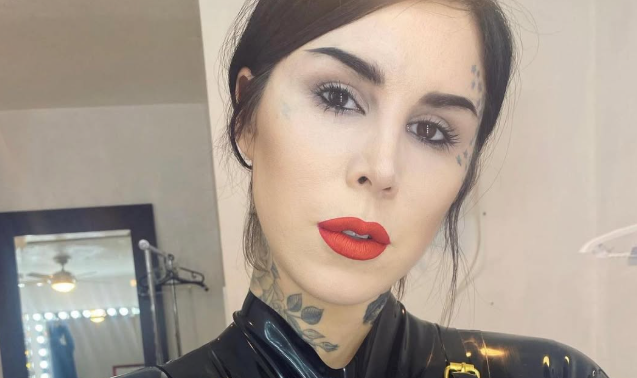
Tattoo artist and television personality Kat Von D has filed a federal copyright lawsuit against the owners of Black Ink, a tattoo brand and studio, alleging that they used her original tattoo designs without permission and profited from them in ways that violate her intellectual property rights.
The lawsuit, filed in the United States District Court in California, asserts that the defendants reproduced and distributed designs created by Kat Von D that she did not authorise. According to court documents, the disputed artwork includes a series of tattoo images that were originally created by Von D and shared publicly on social media and professional platforms. The complaint states that the defendants reproduced those designs on merchandise, promotional material and other commercial products without licensing or consent.
Kat Von D, who first gained wide public recognition through her work on reality television programs centered on tattoo culture, including her own show, has also established a career as a visual artist and public creative figure. Her signature tattoo style has been featured in galleries and on clients around the world, and her social media accounts have served as a platform for both commissioned work and original artistic content.
In the lawsuit, Von D’s legal team argues that the defendants knowingly used her artwork for commercial gain. The complaint alleges that Black Ink sold products bearing reproductions of her tattoo designs and that those sales generated revenue for the defendants. The filing seeks monetary damages, a declaration that the use of her designs constituted copyright infringement, and an order preventing further unauthorised use.
Copyright law in the United States protects original works of visual art, including tattoo designs, from being copied and distributed without the artist’s consent. Legal experts say that while tattoos themselves carry complex questions under intellectual property law, the reproduction of tattoo images on separate merchandise typically raises clear copyright issues if the underlying artwork is owned by the creator and used without a licence.
According to the court filing, the allegedly infringing designs first appeared on Black Ink’s products following posts on Von D’s accounts that showcased the original artwork. The complaint asserts that the defendants had access to the material and used it in ways that went beyond permissible fair use, citing the commercial nature of the products and the lack of any agreement with Von D.
Lawyers for Von D have submitted copies of licensing agreements and registration certificates to establish ownership of the disputed designs. The filing states that the designs were registered with the United States Copyright Office and that the registration predated the alleged unauthorised use by the defendants.
The defendants have not immediately filed a formal response to the complaint in publicly accessible court records. It is common in copyright cases for defendants to seek to dismiss claims on procedural grounds or to argue that the use of the work falls under fair use exceptions, which can involve factors such as commentary, parody, or educational use. However, when works are used for direct commercial resale, courts have often found that fair use does not apply.
Intellectual property attorneys said in background interviews that the outcome of such cases often hinges on whether the court determines that the defendant’s use of the artwork was transformative or merely exploitative. If the reproduced designs are substantially similar to the originals and used in a commercial context without significant artistic modification, judges are more likely to find in favour of the copyright holder.
Kat Von D’s legal action reflects ongoing tensions in the creative community over how artistic work shared online can be protected in an era where digital images are widely disseminated and easily reproduced. Artists across multiple mediums have increasingly turned to litigation to enforce intellectual property rights against what they characterise as unauthorised commercial exploitation.
The filing asks the court to award damages for past infringements and to bar any future unauthorised use of the designs. It also seeks compensation for the profits the defendants allegedly earned from the unauthorised use of the artwork, a remedy that can significantly increase the financial stakes in copyright litigation.
The case is expected to proceed through pretrial litigation, which may include motions to narrow the issues or challenge specific allegations. If the matter is not resolved through settlement or dismissal, it could move to a trial where both sides present evidence on ownership, infringement and potential defences.
Observers in the legal community say the case could have implications beyond the immediate parties, as it may clarify how copyright law applies to tattoo art and similar visual designs that originate in personal or client contexts but later find audiences online. As more artists protect their work through registration and litigation, courts may produce a body of case law that offers clearer guidance on digital reproduction and commercialisation of artwork first shared on social media.
For now, the lawsuit lays out a basic assertion by Kat Von D that her original artistic work was used without authorisation, and it calls on the federal judiciary to enforce her rights under copyright law. The defendants’ response and the court’s subsequent rulings will determine how the dispute progresses in the coming months.