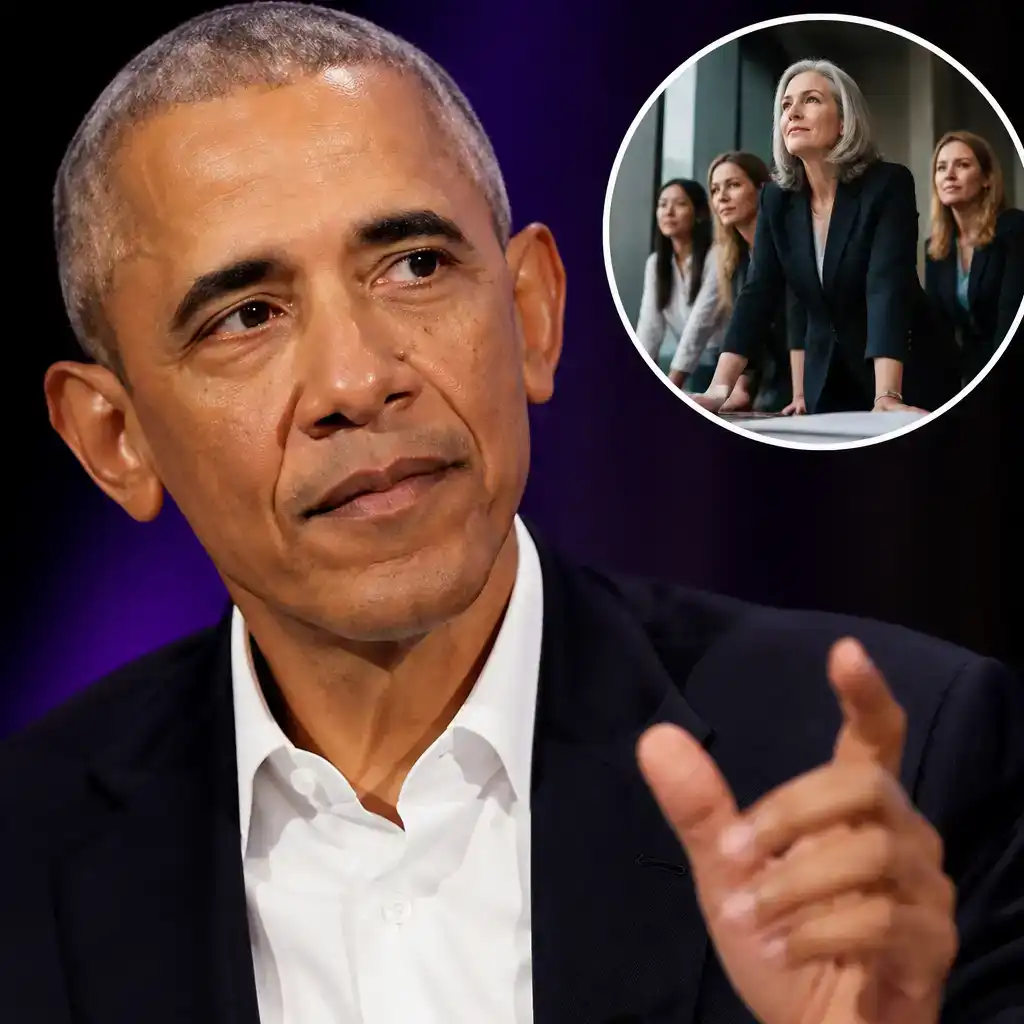
In December 2019, Barack Obama suggested that the world would be a better place if women ran every country for two years. Nearly seven years later, new international data offers a revealing perspective on how much political leadership has changed — and how far the world remains from the scenario he imagined.
The former US president made the remarks during a leadership event in Singapore on 16 December 2019. As reported at the time by Channel NewsAsia, Obama argued that greater female leadership could improve living standards, children's welfare and international relations.
He also criticised older political leaders, particularly men, who remain in positions of power rather than making way for younger generations. His comments were an argument for changing who gets to govern, rather than a description of any political experiment that had actually taken place.
What has changed since Obama's 2019 remarks?
Women have made gains in political representation since Obama spoke, but the latest figures reveal that men continue to dominate the world's most powerful positions.
According to the United Nations women's leadership statistics, as of 1 September 2026, 30 women held head-of-state or head-of-government positions across 28 countries.
That represents progress compared with 2019, when the Inter-Parliamentary Union recorded 19 countries with women serving in those senior leadership roles. Nevertheless, the overwhelming majority of countries still have men occupying their highest political offices.
The picture is similarly uneven in national parliaments. Figures from the Inter-Parliamentary Union's historical records show that women occupied approximately 24.3% of parliamentary seats at the beginning of 2019. By January 2026, that figure had reached 27.5%.
The increase amounts to just 3.2 percentage points over seven years. Women's representation has improved, but the pace remains relatively slow.
There has also been progress within governments themselves. Women accounted for 18.3% of government ministers in 2019, compared with 22.4% in January 2026. However, the IPU and UN Women reported that ministerial representation had actually fallen from 23.3% in 2024.
Only 14 countries had reached gender parity in their cabinets, while eight countries had no women serving as ministers at all.
The figures suggest that progress is neither automatic nor irreversible. Women are entering political institutions in greater numbers, but those gains do not always translate into equal access to executive authority.
Would female leaders actually make the world better?
Obama's prediction raised a question that political representation statistics alone cannot answer: does having more women in power produce better government?
There is credible research showing that women's participation can influence political priorities. A 2004 study by economists Raghabendra Chattopadhyay and Esther Duflo examined village councils in India where leadership positions had been randomly reserved for women.
The researchers found that the gender of the council leader affected decisions about public spending. Women-led councils invested more in infrastructure addressing concerns particularly relevant to women, demonstrating that who holds political power can influence which public needs receive attention.
That finding is significant, but it does not establish that women are universally more effective leaders, or that placing women in charge of every country would automatically reduce conflict or improve economic performance.
National outcomes depend on far more than a leader's gender, including political institutions, economic conditions, international relationships and the policies governments choose to pursue.
The distinction matters because the evidence supports a more precise conclusion than Obama's original prediction: greater representation can change whose interests are reflected in political decisions, without guaranteeing better results in every area.
How long could political equality take?
The United Nations' Gender Snapshot 2026 highlights another obstacle. Based on current progress, the report estimates that gender parity in national parliaments remains approximately 63 years away.
The same report found that just 31 of 175 chief justices worldwide were women, demonstrating that unequal representation extends beyond elected politics into the judiciary.
Meanwhile, the distribution of political responsibilities remains highly uneven. UN Women and the IPU found that female cabinet ministers were more frequently associated with portfolios concerning gender equality, social protection and human rights, while men continued to dominate many other areas of government, including defence, economic affairs and justice.
That imbalance illustrates why the number of women holding office is only part of the story. The authority attached to those positions, and the policy decisions leaders are empowered to make, are equally important.
Obama's hypothetical two-year experiment has never taken place. What the figures from 2019 to 2026 reveal instead is a gradual shift in political representation, accompanied by persistent inequality at the highest levels of government.
His broader argument about making room for women in leadership remains relevant. Whether women would govern the world better than men is a different question — and one that the available evidence does not settle.