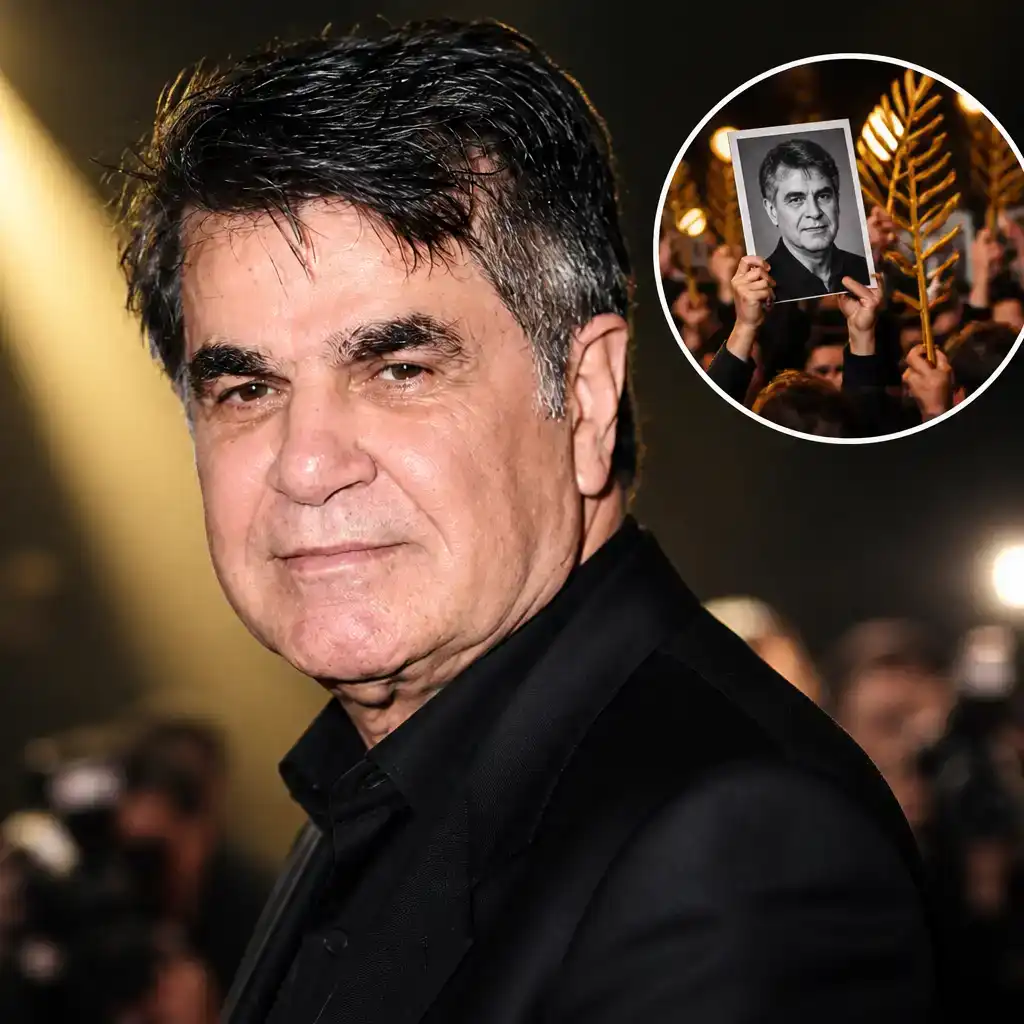
The Jafar Panahi prison sentence has prompted more than 200 figures and institutions from across the international film industry to demand that Iran end its prosecution of the celebrated filmmaker. Mark Ruffalo, Tilda Swinton, Michael Moore, Barry Jenkins and Alex Gibney are among those backing the statement, alongside the directors of major festivals including Venice and Berlin.
The signatories say they are “deeply concerned” by reports that the Tehran Revolutionary Court has sentenced Panahi to five years and one month in prison. The court has also reportedly ordered the confiscation of his assets, frozen his bank accounts and imposed two-year bans on both international travel and social media use. Apparently, making internationally acclaimed films was not considered punishment enough.
What penalties does Jafar Panahi face?
The latest statement was organized by the International Coalition for Filmmakers at Risk in collaboration with filmmakers in the United States and Europe. It describes a widening set of restrictions aimed not only at imprisoning Panahi, but also at limiting his ability to work, communicate and support himself.
According to the statement, the measures include:
- A prison term of five years and one month
- Confiscation of assets
- Frozen bank accounts
- A two-year travel ban
- A two-year ban from social media
The new ruling follows an earlier sentence issued in December, when Iran ordered Panahi to serve one year in prison and barred him from leaving the country for two years.
Despite that ruling, Panahi returned to Iran in March. The statement says he made the decision while fully aware of the risks, having repeatedly spoken about his love for the country and his wish to continue living and working there.
His return placed him back within reach of a judicial system that has repeatedly restricted his filmmaking, movement and public expression. The outcome was not subtle.
Cannes and major festivals join the protest
The coalition’s appeal follows a separate statement released by the Cannes Film Festival on Tuesday. Cannes said it “condemns the judicial persecution of Jafar Panahi” and called for the removal of every restriction preventing him from travelling, creating films and expressing himself freely.
Senior festival officials who signed the broader industry statement include Alberto Barbera, director of the Venice Film Festival, and Tricia Tuttle, director of the Berlin International Film Festival.
They were joined by:
- Giona Nazzaro, artistic director of the Locarno Film Festival
- Vanja Kaludjercic of the International Film Festival Rotterdam
- Dennis Lim, artistic director of the New York Film Festival
- Julie Huntsinger, executive director of the Telluride Film Festival
- Karel Och and Krystof Mucha of the Karlovy Vary International Film Festival
- Isabel Arrate Fernandez and Cees van t’Hullenaar of the International Documentary Film Festival Amsterdam
- Nashen Moodley of the Sydney International Film Festival
- Andrés Bayona of the Bogotá International Film Festival
- Renata de Almeida of the São Paulo International Film Festival
- Ilda Santiago of the Rio de Janeiro International Film Festival
- Margarita Díaz of the Cartagena International Film Festival
The Tokyo, Hong Kong and Busan international film festivals also signed, as did the German Film Academy, Austrian Film Academy, Académie des César and Kawakita Memorial Film Institute.
Which filmmakers and actors signed the statement?
The list brings together actors, directors, producers, cinematographers, editors and Academy of Motion Picture Arts and Sciences members. Among its best-known names are actors Mark Ruffalo, Tilda Swinton and Alice Braga, as well as directors Michael Moore, Barry Jenkins, Laura Poitras and Alex Gibney.
Other filmmakers supporting Panahi include Kleber Mendonça Filho, Rithy Panh, Lucrecia Martel, Asif Kapadia, Jacques Audiard, Olivier Assayas, Catherine Breillat, Dominik Moll, Liz Garbus, Roger Ross Williams, Abigail Disney and Arthur Harari.
The statement also carries the names of Apichatpong Weerasethakul, Mstyslav Chernov, Petra Costa, Pan Nalin, Rob Epstein, Joe Berlinger, Nick Broomfield, Orlando von Einsiedel, Kirby Dick, Shari Springer Berman, Brett Story, Rintu Thomas, Sushmit Ghosh, Lisa Cortés and Geeta Gandbhir.
Documentary filmmakers and producers make up a substantial part of the coalition. Signatories include Chris Hegedus, Joslyn Barnes, Gini Reticker, Connie Field, Joan Churchill, Michèle Stephenson, Alison Klayman, Grace Lee, Beth Aala, Amy Ziering, Robert Kenner, Lana Wilson and Julie Goldman.
The list has continued to grow, suggesting that the industry’s response is not confined to the usual handful of public statements and carefully arranged photographs.
Why Panahi’s films matter internationally
Panahi has spent three decades making films about life in Iran, often under severe legal and political pressure. His work has won top prizes at Cannes, Venice and Berlin, giving international audiences a view of Iranian society that state authorities have repeatedly tried to restrict.
His major films and awards include:
- The White Balloon (1995), winner of the Caméra d’Or at Cannes
- The Circle (2000), winner of the Golden Lion at Venice
- Offside (2006), winner of the Silver Bear at Berlin
- Taxi (2015), winner of the Golden Bear at Berlin
- No Bears (2022), winner of the Special Jury Prize at Venice
- It Was Just an Accident (2025), winner of the Palme d’Or at Cannes
The statement says Panahi’s films have “bridged critical gaps in understanding between the world and the Iranian people for the last 30 years.”
It argues that his work is particularly important because he has continued portraying the “beauty and diversity” of Iranian culture despite sustained pressure to remain silent. His films, the signatories say, have kept Iran and its people visible internationally during periods of repression and political isolation.
What are the signatories demanding?
The coalition is calling on the Tehran Revolutionary Court to withdraw every measure intended to imprison or otherwise penalize Panahi. It also wants Iran to comply with the International Covenant on Civil and Political Rights, to which the Iranian government is a signatory.
“We stand in solidarity with Mr. Panahi and all Iranians facing persecution for their work at the hands of their own government,” the statement says.
The signatories argue that artists who create understanding across national borders become especially important during periods of conflict and political tension. They describe their intervention as an effort to bear witness and defend artistic expression internationally.
For Panahi, however, the consequences remain immediate rather than symbolic: years in prison, financial restrictions and another attempt to prevent him from working or speaking publicly. The international film community has made its position clear. Whether the Tehran Revolutionary Court intends to listen is the considerably less cinematic part of the story.