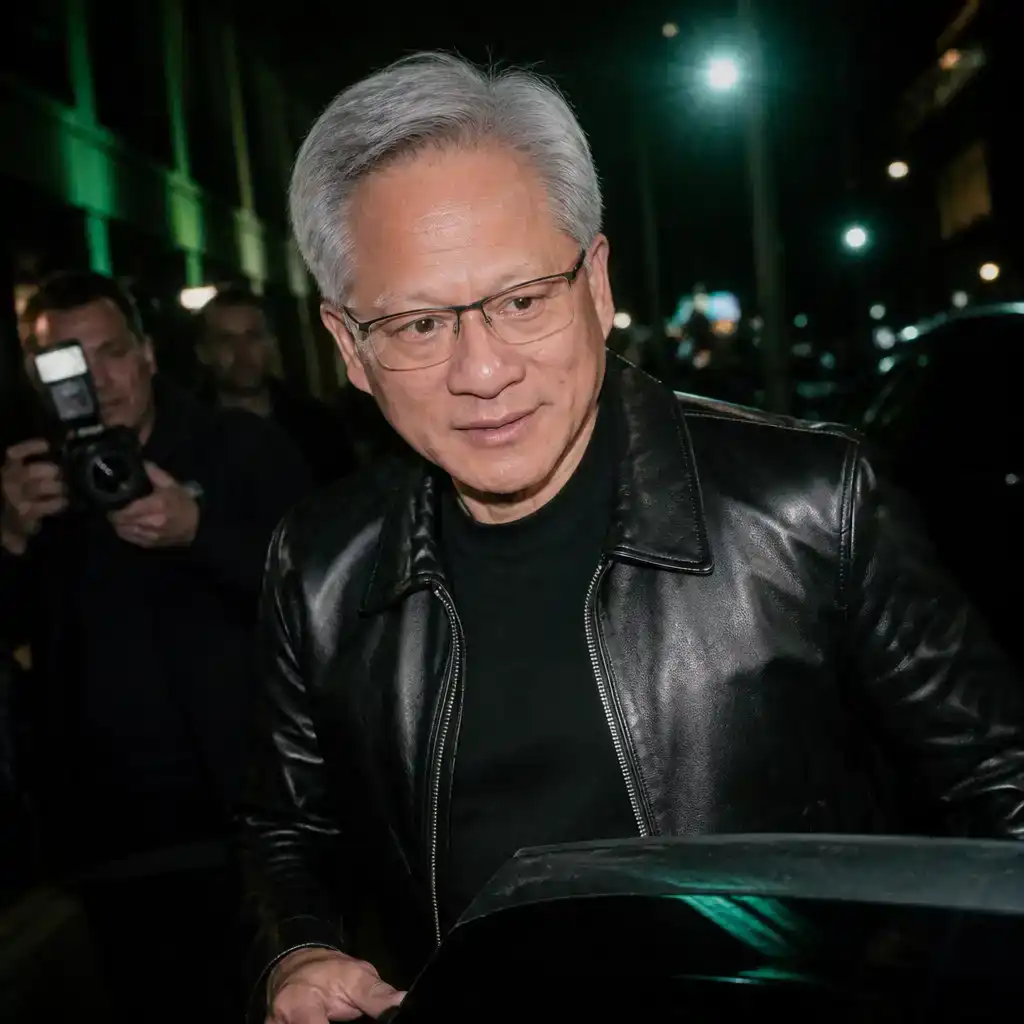
The Jensen Huang resignation has handed Nvidia its most consequential leadership change since the company was founded in 1993. Huang stepped down immediately on November 12 as president, chief executive and board member, four days after Nvidia opened an investigation into reports involving a suspected Chinese intelligence operation.
Nvidia did not give a reason for his departure or explain whether he would continue cooperating with the inquiry. That omission left investors to consider the timing, the national security questions and the awkward reality that Nvidia’s identity has been tied to one person for 33 years.
Colette Kress, the company’s executive vice president and chief financial officer, became interim chief executive while keeping her finance role. Nvidia said its board would consider internal and external candidates for the permanent job.
For a company selling much of the hardware behind the artificial intelligence boom, the immediate challenge is distinctly human: replacing the founder while reassuring customers, regulators and shareholders that the machinery will keep running.
What prompted Nvidia’s investigation?
Nvidia announced an independent investigation on November 8 after reports that Huang had an extramarital relationship with Alice Huang, a former executive at Singapore technology company Megaspeed. The two are not related.
US intelligence officials reportedly suspected Alice Huang of working for Chinese intelligence. Nvidia appointed outside legal counsel to oversee the inquiry but said at the time that it had no reason to believe company information or national security had been compromised. The board also expressed confidence in Jensen Huang and said he would cooperate.
Huang later told employees that he had been unfaithful to his wife. He apologized to his family and colleagues while insisting that he remained committed to Nvidia. His message did not establish that Alice Huang was an intelligence operative.
That distinction matters. China’s Foreign Ministry denied running an operation, while Singaporean authorities found insufficient evidence that Alice Huang had committed a crime. The Associated Press reported that Singapore questioned her, confiscated her passport during an investigation into Megaspeed and later barred her from returning.
Reports of a second affair increased pressure on Huang. The Associated Press said the allegation involved an Nvidia employee who reported to him, and The New York Times identified her as Kimberly Powell, Nvidia’s vice president of healthcare.
Why Megaspeed is attracting scrutiny
The controversy extends beyond Huang’s private conduct because Megaspeed became a major buyer of Nvidia hardware while Washington was tightening controls on advanced chips destined for China.
Singapore corporate filings showed Megaspeed’s assets rising roughly 90-fold to nearly $3 billion in 2024. Its revenue increased from zero to more than $294 million. Senators Elizabeth Warren and Chris Coons said the company had purchased more than $4.8 billion in Nvidia chips since June 2024.
The senators requested federal orders preserving relevant records by November 17. Members of Congress are also examining whether US officials weakened export-control enforcement after Nvidia intervened during the Megaspeed inquiry, according to the Associated Press.
Megaspeed chief executive Tan Yong Pong said the company intended to work “constructively and transparently” with Washington. It also hired a US law firm to audit its chips and compliance with export restrictions.
Three House committee chairs separately requested a closed-door briefing with Huang for November 18. They wanted answers about his dealings with Alice Huang and Nvidia’s security procedures. Nvidia’s announcement did not say whether he would still attend after leaving the company.
None of this proves that company secrets were stolen or that Alice Huang worked for Beijing. It does explain why the matter moved quickly from a personal scandal to a congressional concern. Advanced AI chips tend to make private complications public with impressive efficiency.
Can Colette Kress steady the company?
Kress joined Nvidia in September 2013 and has overseen its finances through the company’s explosive expansion in artificial intelligence and data centres. She now holds both the interim chief executive and chief financial officer positions, a practical arrangement that also gives one person a considerable list of urgent tasks.
Harvey C. Jones became Nvidia’s first board chair as part of the transition. Jones has more than 30 years of technology industry experience and said the company’s operations, customer commitments and product roadmap should continue “without interruption.”
“Colette has helped lead NVIDIA through a period of extraordinary growth and has a deep understanding of our business, customers, operations and financial position,” Jones said. He added that the board had full confidence in Kress and the existing leadership team.
Kress thanked Huang for building the company over more than three decades and said Nvidia would continue its work in accelerated computing and AI.
“Our focus remains on serving our customers, partners, developers and shareholders,” she said.
Operational continuity is the official message, as one would expect. Investors must now decide whether Nvidia’s leadership bench can compensate for the sudden loss of a founder who served as chief salesman, technical authority and public symbol of the AI boom.
Why Huang’s departure shook the market
Nvidia shares fell 14% at the opening bell on November 12 before reducing the decline to 9.7%, the Associated Press reported. The sell-off also pulled the Nasdaq lower, illustrating how Nvidia’s problems can now become everyone else’s market problem.
The stock had already lost 27% from its October record through November 11. Even so, it had risen 1,722% over four years, a surge built around demand for Nvidia’s AI accelerators and Huang’s close association with the company’s strategy.
The scale of the business makes the succession risk difficult to dismiss. Nvidia reported fiscal 2026 revenue of $215.9 billion, up 65%. Fourth-quarter data-centre revenue alone reached $62.3 billion.
Those figures give Kress a strong company to inherit temporarily, but they also raise the cost of disruption. Nvidia’s advanced processors remain subject to US export restrictions, and its dealings involving China are under growing political scrutiny. Customers want supply certainty, lawmakers want records, and shareholders would presumably prefer fewer surprises before breakfast.
What happens next?
Nvidia is scheduled to report its third-quarter fiscal 2027 results on November 17, followed by an earnings call later that day. The company said both events would proceed as planned.
Several questions remain unanswered:
- Why did Huang resign immediately after Nvidia publicly backed him?
- Will he continue cooperating with the independent investigation?
- Will he attend the requested congressional briefing on November 18?
- What did Nvidia know about Megaspeed’s purchases and export-control compliance?
- Can the board find a permanent successor without disrupting its product plans?
The company’s formal announcement addressed none of those points. It confirmed the leadership change, praised Kress and promised continuity.
That may be enough to keep products shipping. Restoring confidence after espionage allegations, congressional scrutiny and the abrupt exit of a founder is a less tidy assignment.