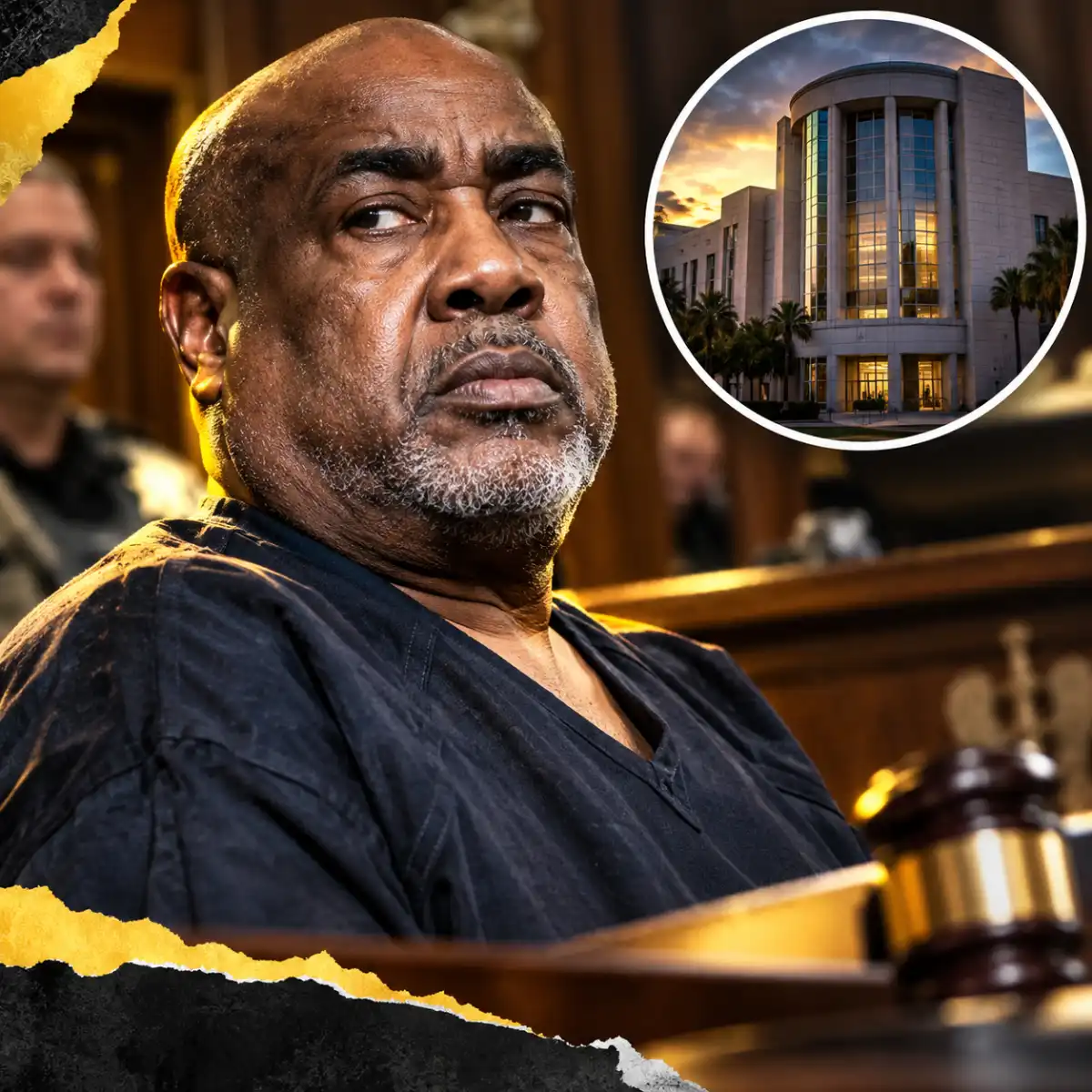
Duane “Keefe D” Davis has been sentenced to 40 years to life for the murder of Tupac Shakur, giving the decades-old case its first conviction while leaving one rather significant question unresolved: who fired the fatal shots.
Judge Carli Kierny imposed the sentence in Las Vegas on Tuesday, October 13, more than 30 years after Shakur was attacked near the Las Vegas Strip. Davis, 63, received two consecutive terms of 20 years to life, one for first-degree murder and another for using a deadly weapon.
The court credited Davis with 731 days already served. The Associated Press reported that he would not become eligible for parole until he is at least 100 years old, so the practical difference between this sentence and life without parole is not especially generous.
Why was Davis convicted if he was not identified as the gunman?
A jury convicted Davis on August 31, 2026, after deliberating for less than three hours. He was the only person ever charged in Shakur’s killing.
Prosecutors did not need to prove that Davis pulled the trigger. Under Nevada law, an accomplice who helps arrange or carry out a murder can be held responsible for the killing. Their case was that Davis organized a retaliatory attack and supplied the weapon.
Hours before the shooting, Shakur, Death Row Records executive Marion “Suge” Knight and others attacked Davis’s nephew, Orlando Anderson, inside the MGM Grand. Prosecutors said Davis later passed a .40-caliber handgun to the back seat of a Cadillac carrying the group involved in the retaliation.
Shakur was shot on September 7, 1996, while riding with Knight. He died six days later, on September 13, at age 25.
Reuters reported that the identity of the person who actually fired the shots remains judicially unresolved. Three decades of investigation, it turns out, can still leave a fairly central blank space.
What produced the 40-year minimum sentence?
Reuters and the Los Angeles Times reported that Kierny imposed two consecutive 20-years-to-life terms: one for murder and one for use of a deadly weapon. Some reports described the second term as punishment for Davis profiting from the killing, but the court’s sentencing structure tied it to the weapons count.
Davis had originally been convicted of murder with the use of a deadly weapon and with the intent to promote, further or assist a criminal gang. Prosecutors later dismissed the additional gang-related penalty because of logistical problems involving witnesses.
The claim that Davis profited from Shakur’s death still featured heavily during sentencing. Prosecutors argued that his book and years of media interviews prolonged the family’s suffering while allowing him to benefit financially from public accounts of the crime.
Defense attorney Michael Sanft countered that authorities could have charged Davis years earlier but chose not to. The defense has maintained that Davis embellished his stories to attract attention and make money, an argument that requires the court to accept that the incriminating accounts were merely highly inconvenient marketing.
What did Tupac Shakur’s family tell the court?
Shakur’s sister, Sekyiwa Shakur, delivered an emotional statement about the damage her brother’s death caused across their family. She said the men in the family had never been the same and compared Tupac’s cultural influence with figures including Malcolm X, Martin Luther King Jr. and John F. Kennedy.
She asked how history might have changed if those men had died at 25, the age her brother was when he was killed. Sekyiwa also said Tupac believed he could change the world.
His stepbrother, Mopreme Shakur, spoke about the life the rapper never had, including the chance to raise children of his own or watch his nieces and nephews grow up. Both relatives urged Kierny to impose the maximum sentence.
The hearing also included a tense exchange between Davis and the judge, with Davis reportedly rolling his eyes during their interaction. Kierny told him: “The world never forgot about him and his death and neither did Las Vegas.”
Clark County District Attorney Steve Wolfson said he hoped the punishment would bring Shakur’s family “some measure of closure and peace.” A sentence can close a court proceeding more easily than it can settle 30 years of grief.
Will Davis appeal the conviction?
Davis continues to deny taking part in the murder. After his conviction, he told The Hollywood Reporter that he was at a bar in West Los Angeles near the University of California, Los Angeles, following a Mike Tyson fight and was nowhere near the shooting scene.
That account conflicts with his earlier public statements suggesting he was involved in the events surrounding the attack. His lawyers say those remarks were exaggerated or fabricated for publicity and financial gain.
At sentencing, Davis told the court: “I’m good. I’m going to appeal this case, for sure.” Sanft also announced plans to challenge the conviction. As of October 14, however, no notice of appeal had been reported as filed.
The verdict delivered the first criminal conviction in one of the most scrutinized killings in music history. It did not identify the shooter in court, and the promised appeal means the legal process is not necessarily finished. After 30 years, the case has achieved a form of resolution, though not the unusually tidy kind.