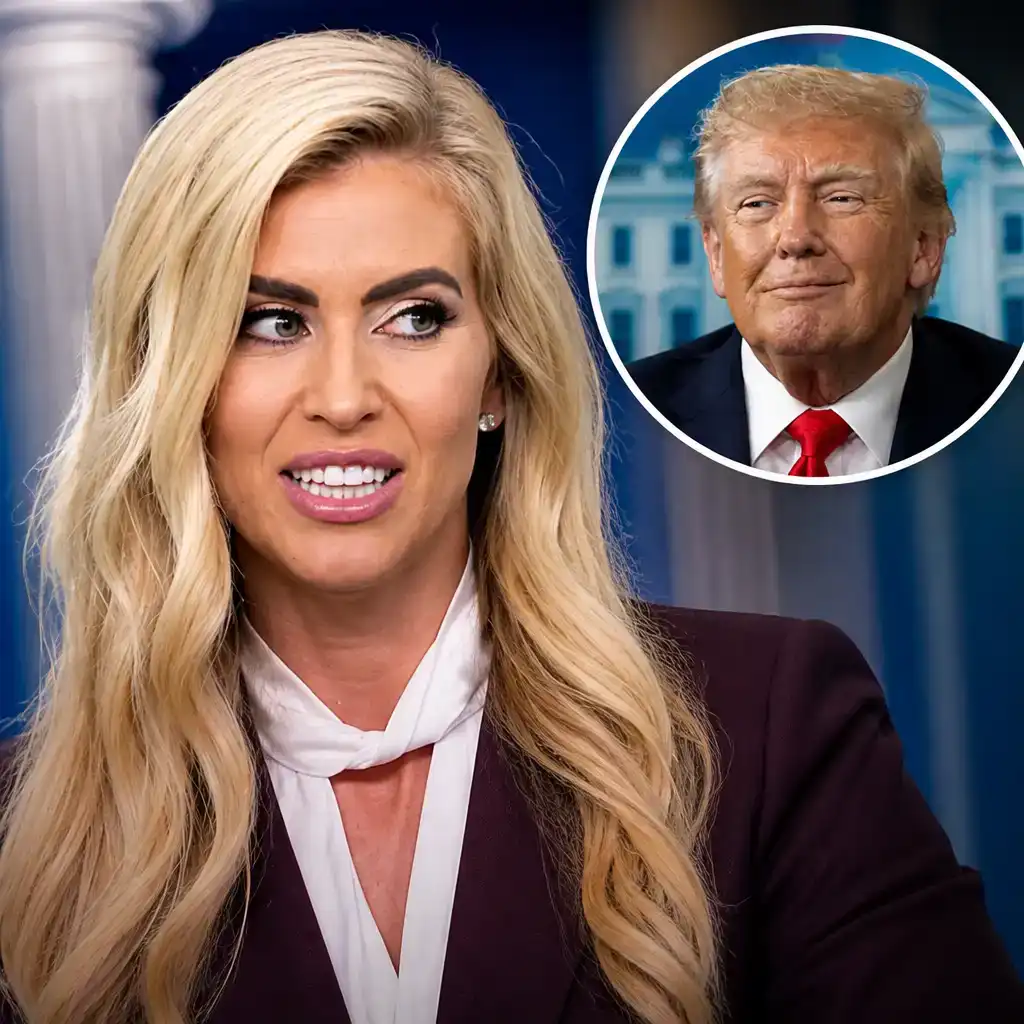
Donald Trump's new White House press secretary, Katie Zacharia, reportedly found herself at the centre of an awkward moment during her debut briefing after accidentally referring to her husband as "my president".
The apparent verbal mix-up came during a remarkably short appearance behind the White House podium, with Zacharia answering just three questions from reporters before bringing the briefing to an end after approximately 14 minutes.
Despite criticism of her performance, Trump appeared considerably more impressed than some of the journalists watching. Asked about his new spokesperson, the president offered a straightforward assessment: she had done a "great job".
A family question takes an unexpected turn
The most memorable moment of Zacharia's debut reportedly came when a reporter asked about her family, prompting a response that quickly attracted attention for reasons she probably had not intended.
While discussing her husband, Zacharia accidentally used the phrase "my president", creating an awkward crossover between her personal life and her new professional responsibilities.
The slip was particularly unfortunate given the setting. A White House press secretary is expected to communicate the administration's positions clearly, often while navigating difficult questions under intense scrutiny.
Instead, a seemingly straightforward question about family became the defining talking point of her first appearance.
There is no indication in the information available that the mistake was anything more than an accidental verbal mix-up. Nevertheless, it provided an unexpected distraction during an event intended to introduce the administration's new public-facing spokesperson.
Trump receives enthusiastic praise during the 14-minute briefing
Before the awkward exchange, Zacharia had used part of her limited time with reporters to deliver an enthusiastic endorsement of her boss.
She described Trump as "his own best spokesperson", suggesting that the president's ability to communicate directly with the public was one of his defining political strengths.
Zacharia also called him "the most family-friendly president we've ever had", a sweeping assessment that reflected her support for the administration rather than an independently established conclusion.
Both remarks were striking in a briefing that reportedly lasted only 14 minutes.
With just three questions answered, journalists had relatively little opportunity to press the new spokesperson on the administration's policies or priorities.
The brevity of the event consequently became almost as notable as the verbal mistake itself.
Reporters are redirected to Marine One as the briefing ends
Shortly after the family-related slip-up, Zacharia ended the press conference and directed reporters with remaining questions to Marine One, the presidential helicopter.
The decision meant that her first formal encounter with the White House press corps concluded without an extended exchange or an opportunity for additional follow-up questions.
Critics in the media reportedly characterised the debut as a disaster, pointing to the combination of enthusiastic presidential praise, the embarrassing mistake and the unusually limited questioning.
However, the available account does not establish whether the briefing ended early because of the slip-up or whether its short duration had been planned in advance.
That distinction matters. An awkward moment followed by a quick departure may create an unfortunate impression, but the sequence alone does not prove that one caused the other.
Trump praises a performance that drew criticism
Whatever the reaction outside the administration, Trump reportedly had no complaints about his new press secretary's performance.
Speaking to reporters afterward, he said Zacharia had done a "great job", offering a notably positive verdict on a briefing that had attracted criticism elsewhere.
The contrast illustrates the different expectations placed on a White House spokesperson. A president may value loyalty and a forceful defence of the administration, while journalists are likely to judge the same performance by the clarity of its answers and the opportunities it provides for scrutiny.
In my view, the most revealing part of this debut is not the accidental reference to her husband but the limited opportunity reporters had to ask questions. Verbal mistakes happen, particularly during high-pressure public appearances, and a single slip should not define someone's professional ability. But a press secretary's effectiveness should ultimately be measured by how well they explain government decisions and respond to scrutiny. Three questions in 14 minutes provide a rather narrow basis on which to demonstrate either skill.
Trump's endorsement may reassure Zacharia that she retains the president's confidence, but it does not resolve the broader question of how she intends to handle future briefings.
For now, her first appearance has produced an uncomfortable combination: a memorable verbal blunder, criticism of the briefing's brevity and an approving review from the person whose administration she represents.
Her next appearance will offer a better opportunity to demonstrate whether this was simply an unfortunate debut or an indication of how the White House intends to communicate with the press.
And after a first briefing dominated by an accidental reference to "my president", a few more questions about the actual president would probably be a useful start.