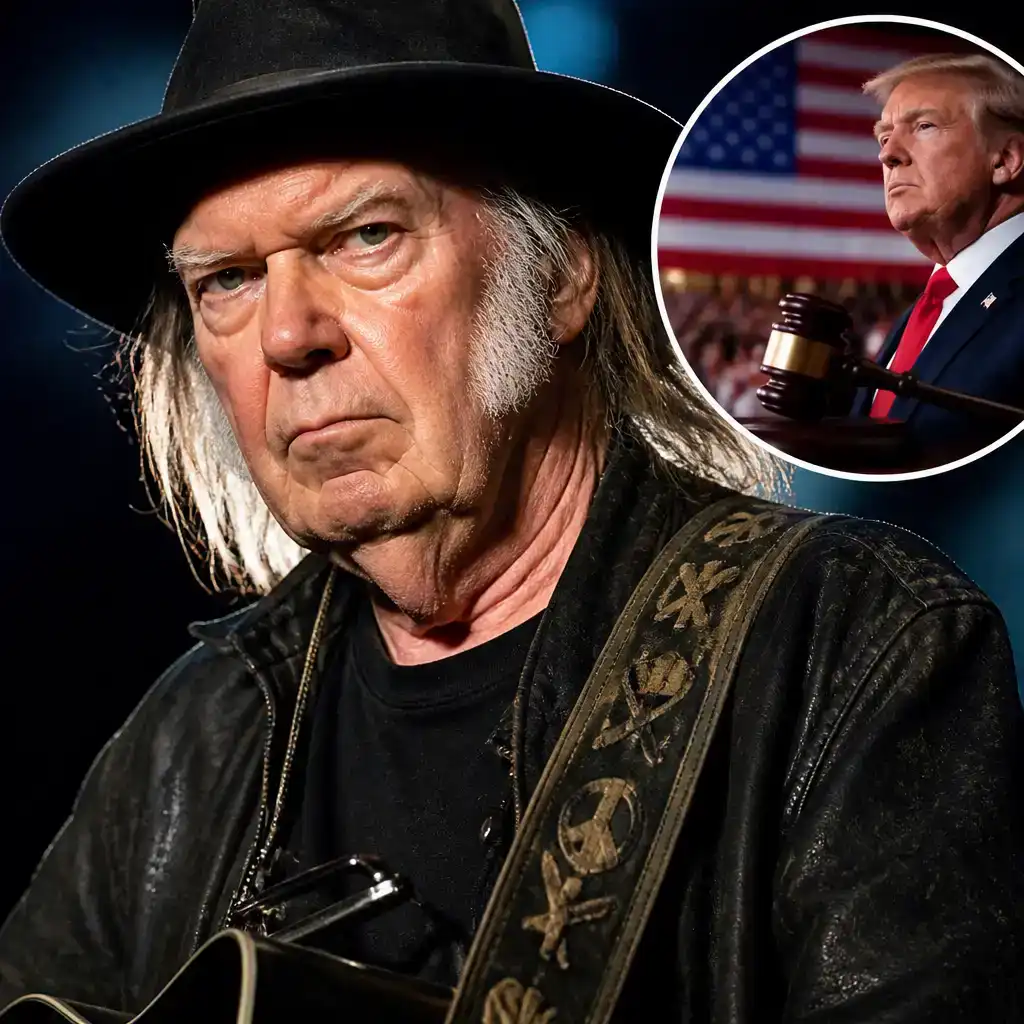
Neil Young is taking Donald Trump's political operation to court again, demanding $10 million after his 1989 protest anthem, "Rockin' in the Free World", was allegedly played at a Republican campaign rally despite years of objections from the musician.
The lawsuit, filed on October 26, 2026, in the US District Court for the Eastern District of Virginia, targets Trump 47 Committee Inc., a political fundraising organisation. According to the five-page federal complaint, the committee played Young's song shortly before Trump appeared at a rally in Youngstown, Ohio, on October 12.
Trump is not personally named as a defendant. The lawsuit also identifies five currently unnamed defendants and alleges that the committee arranged for the song to be played at other rallies ahead of the November 3 midterm elections.
The complaint makes Young's objections unmistakable, describing the song as a critique of political promises that ignore poverty and hardship. It concludes that the music represents "the opposite of everything that Donald J. Trump stands for."
Neil Young already sued Trump's campaign in 2020
The dispute stretches back to Trump's first presidential campaign announcement in 2015, when "Rockin' in the Free World" was played at Trump Tower despite Young's opposition to its political use.
In August 2020, Young sued Donald J. Trump for President Inc., alleging unauthorised use of both "Rockin' in the Free World" and "Devil's Sidewalk" at campaign events.
That earlier legal action ended on December 7, 2020, when Young voluntarily dismissed his claims with prejudice.
But there is an important distinction between what the public court records establish and what Young now alleges.
The new lawsuit states that Trump's previous campaign organisation settled the 2020 dispute and promised not to use the song again without obtaining a licence and Young's permission. The publicly accessible dismissal document confirms that the earlier case ended, but does not disclose the terms of any settlement.
The current defendant is also a different legal organisation. Whether the previous agreement has any direct legal consequences for Trump 47 Committee is not established by the newly filed complaint.
Why is Neil Young demanding $10 million?
The enormous damages request is one of the most striking aspects of the case, but it should not be confused with an amount Young has already been awarded.
Under Section 504 of the US Copyright Act, statutory damages for wilful copyright infringement can reach $150,000 per work. Copyright owners may alternatively pursue actual damages and profits attributable to an infringement, subject to the applicable legal requirements.
Young's complaint seeks $10 million but provides no detailed calculation explaining that figure. Establishing liability and justifying any eventual award will be separate questions for the court.
The musician's lawyers argue that the alleged unauthorised performances have harmed his reputation by creating the impression that he supports Trump politically. The filing also alleges that the committee acted knowingly despite being aware that permission was required.
Alongside the financial demand, Young is seeking preliminary and permanent court orders preventing the committee and those acting under its authority from publicly performing his compositions without authorisation.
The central question is therefore about more than a familiar rock song playing before a political speech. Young is asking a federal court to determine whether a Trump-linked fundraising organisation infringed his copyright after an earlier dispute had already put Trump's campaign on notice of his objections.