Donald Trump has claimed he could have won the Vietnam War in just one week, while insisting that the nearly two-decade American military campaign in Afghanistan could have been won in three weeks.
Speaking at a political rally in Dubuque, Iowa, on November 1, 2026, the US president criticised previous administrations for failing to pursue decisive military victories.
But it was his proposed approach to Vietnam that raised a particularly awkward historical question: Trump appeared to identify a city that served as the capital of America's South Vietnamese ally as a target that could have helped secure victory.
Trump says he could have won Vietnam in seven days
During his speech, Trump contrasted America's lengthy military engagements in Vietnam and Afghanistan with his preferred approach to warfare.
He accused previous presidents of fighting without a clear determination to win, before claiming that he could have brought both conflicts to a much faster conclusion.
According to a transcript of the November 1 rally, Trump said he could have won the Vietnam War in a week and the Afghanistan war in three weeks.
The remarks were part of a wider discussion about American military operations, including his administration's actions involving Iran and Venezuela.
Trump did not present a detailed military plan explaining how either conflict could have been resolved within those timeframes.
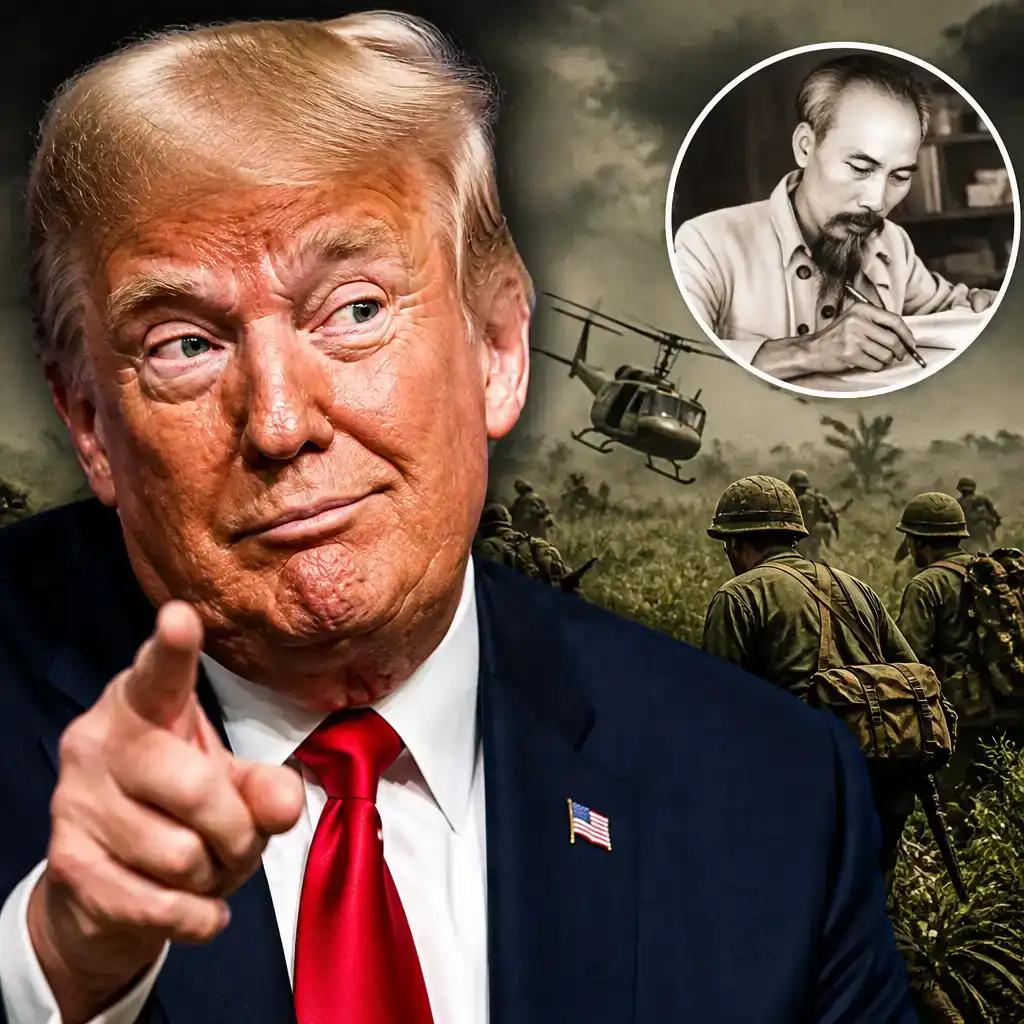
His reference to Ho Chi Minh City creates a historical problem
Trump also criticised the American military's use of Agent Orange, the toxic herbicide deployed extensively during the Vietnam War to destroy vegetation and expose enemy positions.
He suggested that American forces should instead have concentrated on attacking Ho Chi Minh City and other locations.
There is a significant historical complication with that suggestion.
During the Vietnam War, the city now known as Ho Chi Minh City was called Saigon. It served as the capital of South Vietnam, the government supported by the United States against communist North Vietnam and its allies.
Saigon fell to North Vietnamese forces on April 30, 1975, marking the end of the war. The city was subsequently renamed Ho Chi Minh City.
Trump's reference therefore creates an obvious ambiguity. Taken literally, his proposed target was the capital of the American-backed government, rather than the capital of its northern adversary.
It is possible that Trump intended to refer more broadly to major military targets in Vietnam, rather than specifically advocating an attack on an allied capital. His remarks did not clarify that distinction.
What makes the statement notable is that the geographical confusion appeared in the middle of an argument that previous American leaders had fundamentally misunderstood how to win the war.
Why the Vietnam War was not simply a question of military speed
American involvement in Vietnam developed over many years, with major US ground combat operations beginning in 1965. The last American combat troops withdrew in 1973, while the conflict continued until the fall of Saigon in 1975.
More than 58,000 American service members died during the conflict.
Yet the difficulties facing the United States extended beyond conventional battlefield victories. The war involved guerrilla warfare, political legitimacy, the resilience of North Vietnamese forces and the challenge of sustaining a South Vietnamese government capable of surviving without extensive American support.
Winning individual battles did not necessarily translate into achieving those broader political objectives.
Trump's suggestion that the conflict could have been settled in seven days did not address those complications or explain what a successful political settlement would have looked like.
Trump has made similar claims about Afghanistan before
The Iowa speech was not the first occasion on which Trump suggested that America's longest war could have been ended dramatically faster through overwhelming military force.
In July 2019, during his first presidency, Trump claimed that the United States could win the war in Afghanistan within a week, while suggesting that such an approach would cause an enormous loss of life.
His latest remarks therefore continue an established argument that American military restraint and political leadership, rather than the complexity of the conflicts themselves, prevented rapid victories.
But the Afghanistan war ultimately lasted from the US-led invasion in October 2001 until the withdrawal of American forces in August 2021, followed by the Taliban's return to power.
The contrast between Trump's proposed timelines and the actual duration of both conflicts is striking. His remarks, however, leave the central question unanswered: what specific military and political strategy could have delivered the victories he described?