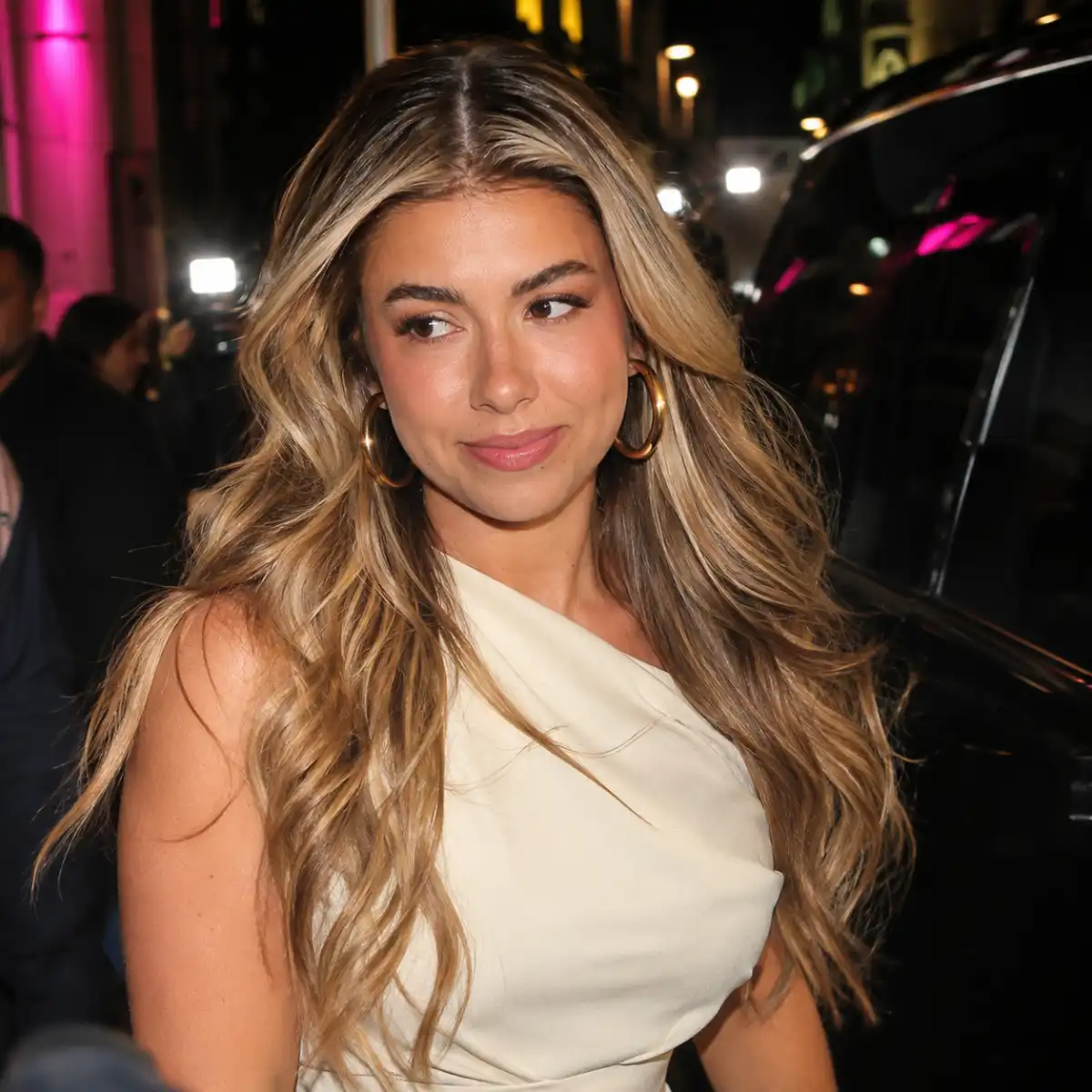
Mckenna Grace rejects nude roles at this stage of her career, but she would like everyone to stop treating that decision as part of a grand Disney strategy. After several entertainment headlines linked her boundary to her ambition of playing a princess, the 20-year-old actor said the remarks were separate and the attention was “silly.”
The confusion followed a Cosmopolitan profile in which Grace discussed both subjects. Asked whether she would refuse certain parts, she answered: “At this point, I definitely don’t do nudity or very hypersexual things.”
“I respect anybody who can, but it’s terrifying to me,” she added. “I don’t know if that’ll ever change.”
Later in the interview, Grace said her work need not be wholesome, noting that Ghostface guts her character in Scream 7. She then mentioned her hope of becoming a Disney princess someday. Separate answers, separate points. Hollywood headlines, apparently unwilling to leave two nearby quotes unmarried, supplied the causal connection themselves.
Why Grace corrected the headlines
Cosmopolitan presented Grace’s limits and her Disney ambition alongside one another without explicitly saying one caused the other. TheWrap reported that Variety, Deadline and People framed the princess goal as her reason for avoiding nudity and highly sexual material. The Independent similarly suggested the ambition prevented her from accepting certain work.
Grace responded on Instagram, writing: “The two quotes being used right now in these titles are unrelated.”
She explained that she was not uncomfortable with nude scenes or hypersexual roles simply because she wanted to play a Disney princess. Instead, she said the boundary reflected “my own personal comfortability I have with that sort of thing right now at this point in my life.”
The distinction matters. Grace did not condemn performers who accept intimate work, campaign for cleaner entertainment or claim Disney demanded anything from her. She stressed, “I respect everyone who does.” Her position was narrower and considerably less dramatic: she currently does not want to perform that material.
Grace also said there were “so many more important things to talk about.” That assessment did not prevent the quotes from becoming a small media event, because restraint is rarely the most profitable interpretation.
What roles has Mckenna Grace taken?
Grace has worked professionally since childhood, building a résumé that already includes the Ghostbusters films, Scream 7 and Hulu’s The Handmaid’s Tale. The Television Academy records one Emmy nomination for her performance in the dystopian drama.
Her next major project is Lionsgate’s The Hunger Games: Sunrise on the Reaping, scheduled for theatrical release on November 20. According to TheWrap, she plays two characters: District 12 tribute Maysilee Donner and Maysilee’s twin sister, Merrilee.
That casting hardly suggests she is restricting herself to gentle family entertainment. The Hunger Games franchise tends to involve authoritarian violence, children selected for lethal competition and adults making terrible decisions with elaborate costumes. Grace’s point is that dark material and sexual material are not interchangeable categories.
Her Disney comment was an aspiration, not a purity pledge. Amy Adams has described making a more direct calculation after playing Giselle in Disney’s 2007 film Enchanted. Adams said she rejected a sexually explicit Saturday Night Live musical sketch proposed by Andy Samberg because she was conscious of the young girls watching the film. Grace has not offered that explanation for her own choice.
How Hollywood handles consent in intimate scenes
Grace’s decision also fits within established contractual protections rather than representing an unusual rebellion against the industry. SAG-AFTRA rules require prior written consent, set out in a rider, for performances involving nudity or simulated sex.
The union’s intimacy-coordinator protocols call for several safeguards, including:
- Clear disclosure of what a scene requires
- Individual consent checks with performers
- Closed sets during intimate filming
- Modesty garments where appropriate
- Ongoing consent throughout production
Under SAG-AFTRA’s 2026 TV/Theatrical Agreement, producers must also use their “best efforts” to hire intimacy coordinators when background performers take part in nudity or simulated sex.
Those standards recognize a fairly basic principle: accepting an acting job does not erase a performer’s control over intimate material. Actors can also revise their limits over time. Grace repeatedly described this as her position “at this point,” leaving her future choices to her future self, an arrangement that should not require emergency analysis.
Other actors have drawn similar lines
Grace is not the only performer to place restrictions on intimate scenes. Penn Badgley said on his Podcrushed podcast in 2023 that he asked for fewer sex scenes in Netflix’s You, citing his marriage. Neal McDonough has long said he will not perform sex scenes or kiss other actors on screen because of his Catholic faith and respect for his wife.
Entertainment critic Christian Toto speculated to Fox News Digital that Grace’s early work on family programming, including Crash & Bernstein, may have influenced her. He also suggested she could have observed former child stars taking more sexualized roles and decided against that path. Grace herself cited neither explanation, so both remain Toto’s theories rather than reported motives.
A separate industry debate concerns studios imposing content standards across entire productions. Angel Studios has announced “The Angel Promise,” which bars on-screen sex, nudity and gratuitous profanity from its original releases. Co-founder and chief content officer Jeff Harmon said the company wants to serve families he believes Hollywood has increasingly neglected.
That corporate policy is broader than Grace’s personal boundary. One dictates what audiences and performers will see across a studio’s catalogue. The other is one actor deciding what she is comfortable doing. Combining the two may produce a tidier argument about Hollywood values, but it does not produce a more accurate account of what Grace said.