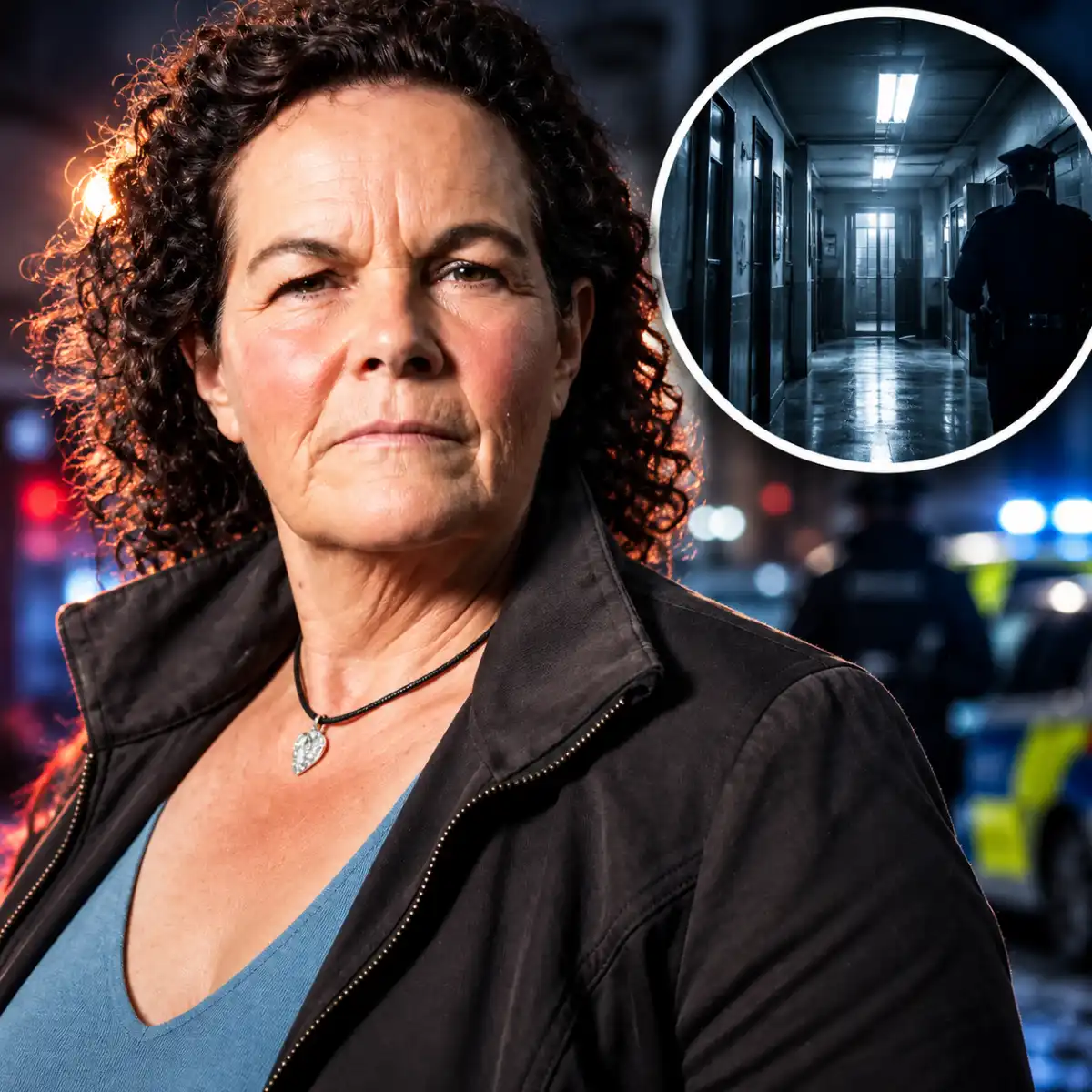
The Met handling of Linda Williams’s rape case left the serving detective feeling as though she had been “raped all over again”, she has told the BBC. Detective Constable Williams, who was attacked by fellow officer David Carrick in 2004, has now called for Metropolitan Police Commissioner Sir Mark Rowley to resign.
Williams, 60, waived her legal right to anonymity after settling a civil claim against the Metropolitan Police Service. The force paid compensation without accepting liability. She had argued that it failed to protect her from Carrick and created a culture in which she felt unable to report him.
The civil proceedings lasted four years. Williams, who has post-traumatic stress disorder, said the process made her suicidal and compounded the damage caused by the attack.
How the Met challenged her account of trauma
According to Williams, lawyers acting for the commissioner questioned the severity of her PTSD. The BBC reviewed a Met document stating that a key factor when assessing damages was that the “abuse itself was isolated to a single episode”.
“I don’t know how many times you have to be raped to have severe PTSD,” Williams said.
The same document argued that for at least 15 years after the rape, her psychological harm was “not such as to significantly impact her on a day-to-day basis”. Williams said the Met also relied on her strong work record to suggest she had shown no significant psychological trauma.
She rejected that reasoning, saying it misunderstood how trauma can present. Continuing to perform well at work did not mean the attack had left her unharmed.
Her solicitor, Sophie Bullimore of Penningtons Manches Cooper, said reducing the rape on paper to a single isolated event ignored how it had affected every part of Williams’s life. She said the matter needed to be handled with greater care.
The Met disputed Williams’s description of its approach. It told the BBC that it had tried to limit further distress and retraumatisation while handling her claim as quickly and compassionately as possible.
Why Williams did not report Carrick for years
Carrick raped Williams while she was on a three-month attachment with him in south London, far from her usual workplace. He suggested that she stay at his home rather than drive a long distance late at night and return early the next morning.
When she told him no during the attack, she said he replied: “It’s what I do. I’m going to carry on.” Williams believed he would become violent if she resisted physically. Afterwards, she told nobody.
At the time, Williams worked on rape investigations and supported victims through the reporting process. Yet she did not believe her own force would protect her.
“I supported victims through rape but didn’t report myself. I think that says loads,” she said.
Williams believed reporting Carrick would have ended her career. In her view, he would probably have been interviewed and released without charge, leaving her labelled as the officer who had accused a colleague of rape.
She described a deeply sexist workplace culture in which colleagues stamped “Property of the Met” on her forehead and once locked her in the boot of a police car for an entire shift.
Williams eventually reported the rape in 2021 after seeing that Carrick had been charged with attacking another woman. Hertfordshire Constabulary, rather than the Met, investigated her allegation.
Carrick’s offending continued despite repeated warnings
Carrick was jailed for life in 2023 for sexual offences against Williams and 11 other women. Two more women later came forward, leading to nine further convictions and another life sentence on 20 November 2025. Hertfordshire Constabulary says he is now serving 37 concurrent life sentences with a minimum term of 30 years.
The Associated Press reported that Carrick faced repeated complaints from 2001 but remained a police officer until his arrest in 2021. Rowley later described that institutional record as a “spectacular failure”. After Carrick’s first sentencing, the commissioner apologised to his victims and said: “We have failed and I’m sorry. He should not have been a police officer.”
Formal disciplinary accountability has proved harder to locate. The Independent Office for Police Conduct said proceedings examining how earlier allegations against Carrick were handled ended in March 2026 without misconduct or gross misconduct being proved against any officer involved.
That outcome sits awkwardly beside the force’s broad admission of failure. The system failed repeatedly, but the disciplinary process did not establish that any individual officer committed misconduct.
What changed inside the Met after Carrick
Carrick’s crimes emerged during a wider crisis for the force. Rowley became commissioner in 2022 after serving officer Wayne Couzens murdered Sarah Everard and officers shared photographs of the bodies of murdered sisters Bibaa Henry and Nicole Smallman.
In March 2023, Baroness Casey’s official review described the Met as institutionally misogynistic and operating like a “boys’ club”. The force subsequently began reviewing allegations of domestic abuse and sexual offending involving its own personnel.
The Met says its completed Operation Onyx review identified 1,636 serving personnel, produced 34 new or reopened investigations and led officers to renew contact with 200 victims. Separately, the Associated Press reported that the force reviewed 1,633 domestic abuse or sexual offence cases involving 1,071 employees.
London City Hall says about 1,500 officers have been removed since the Casey review. Internal misconduct reports also rose from roughly 400 in 2021-22 to 1,400 in 2024-25. City Hall commissioned Dr Gillian Fairfield to assess how far the promised reforms have progressed.
Those figures show substantial activity. Williams’s account raises the more difficult question of whether an officer accusing a colleague of abuse can now trust the institution to respond safely and fairly.
Why Williams wants Mark Rowley to resign
Williams said she waited after Carrick’s 2023 conviction to see whether Rowley would contact her personally. When he did not, she emailed him, explaining that she was a serving officer and “one of his troops”.
They later met and Rowley apologised, but Williams said the apology lacked detail and “meant nothing”. She believes he is more concerned with the force’s public image than with supporting victims and officers.
“I would like him to resign. I don’t think he’s fit for the job,” she said. While praising the support she received from colleagues, she said help from senior management had been absent.
The Met said Rowley has repeatedly recognised Williams’s courage in speaking publicly and has asked whether she would meet him again to discuss her concerns.
Williams remains unconvinced. She said she would not report a rape to the Met today because she has “no faith” that it would deal with the allegation correctly. Although she believes the force can recover, she does not believe Rowley can lead that process.
The effects of the attack remain extensive. Williams said she has not had a relationship with a man since 2004 and feels she lost the opportunity to have a family. She attributes 90% of her PTSD to the Met’s response and 10% to Carrick himself.
She also carries guilt for not reporting him sooner, although her explanation points directly to the institution that made silence appear safer than disclosure. Williams said she is speaking publicly now to help other victims, whether they are police officers, police staff or members of the public.