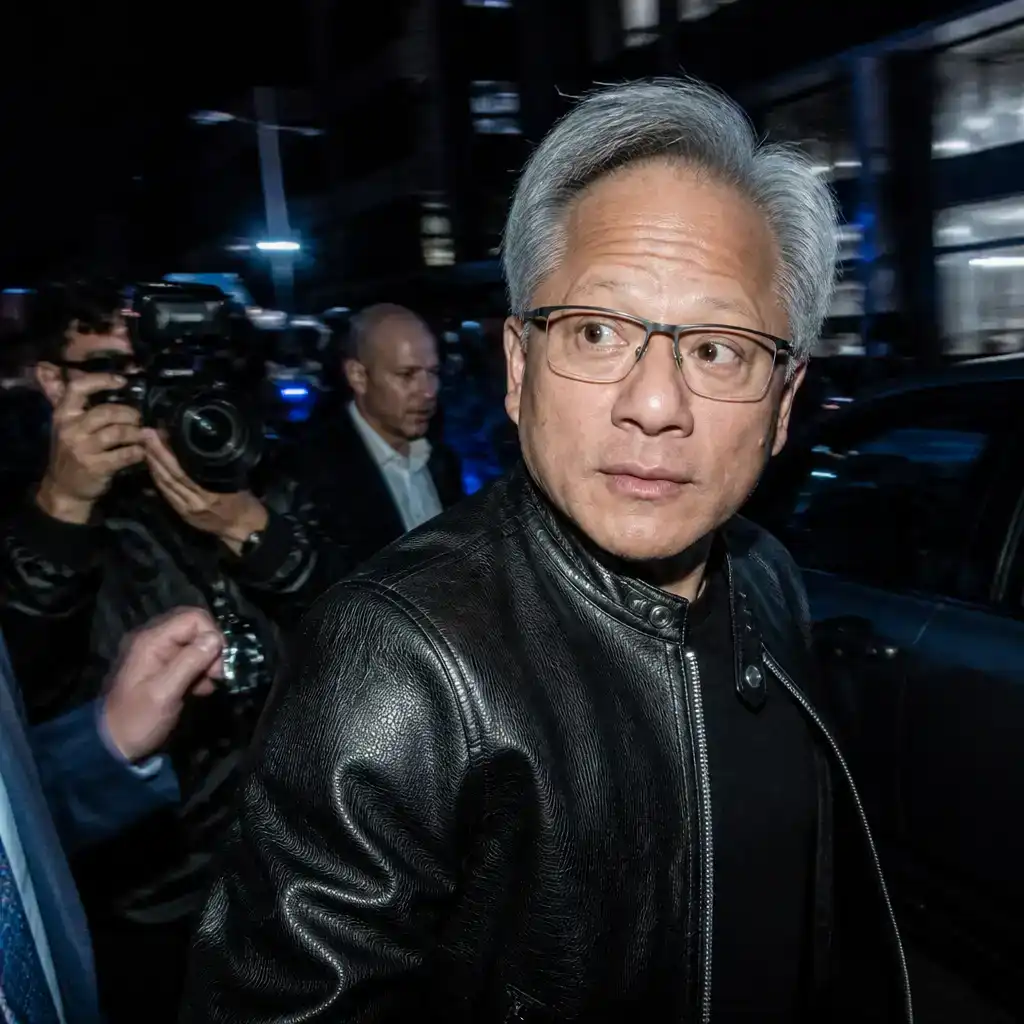
Nvidia and its chief executive, Jensen Huang, are facing a shareholder lawsuit that raises a question extending beyond the alleged relationship at the centre of a Chinese espionage investigation: did the world's most valuable chipmaker mislead investors about a potential national security risk?
The proposed class action, filed in California on November 9, accuses Nvidia and Huang of making misleading statements about the company's dealings with Megaspeed, a Singapore-based technology business whose former executive, Alice Huang, has been identified in media reports as a suspected Chinese intelligence asset.
The lawsuit follows an extraordinary few days for the AI giant, including an admission of marital infidelity by its chief executive, the launch of an independent board investigation and a sharp fall in Nvidia's market value.
What Nvidia shareholders are accusing Jensen Huang of
The case, brought by investor Mark Kistenmacher, targets Nvidia securities purchased or acquired between October 9, 2025, and November 8, 2026.
According to the federal court complaint, shareholders allege that Nvidia's public statements about Megaspeed and Huang's interactions with Alice Huang concealed information that could have affected the company's reputation, commercial prospects and share price.
The filing specifically challenges Nvidia's previous descriptions of its relationship with Megaspeed, which has faced scrutiny over suspicions that advanced American AI chips could be reaching Chinese companies in violation of US export restrictions.
In October 2025, Nvidia publicly defended its checks on Megaspeed, saying its employees had found no evidence of chip diversion during visits to the company's facilities.
The complaint also disputes Nvidia's portrayal of Jensen Huang's interactions with Alice Huang as ordinary business contacts. It points to remarks reported by Bloomberg on October 30, 2026, in which the chief executive described the company's dealings with Megaspeed as "normal and not unusual".
Shareholders argue that those assurances were materially misleading because of the alleged personal relationship and the associated national security concerns.
That distinction is central to the legal case. The lawsuit is not a finding that Huang committed espionage or knowingly assisted Chinese intelligence. It alleges that investors were given an incomplete and misleading picture of risks facing Nvidia.
What Jensen Huang and Nvidia have confirmed
In a message published by Nvidia on November 8, Huang acknowledged that he had been unfaithful to his wife and apologised to his family, colleagues and shareholders.
He did not identify the person involved in the affair in that public message. Reports linking him to Alice Huang have emerged through investigations by news organisations, including The New York Times.
More importantly for investors, Nvidia has acknowledged that the allegations warrant an independent investigation.
In its official statement, the company's board announced that independent directors, supported by outside legal counsel, would examine reports that Huang had been targeted by a foreign intelligence operation.
The board said it had no reason to believe Nvidia secrets or US national security had been compromised. It also expressed confidence in Huang's leadership and confirmed his cooperation with the investigation.
That position is significant: while the board considers the allegations serious enough to investigate, it has not announced a finding that confidential company information was obtained by foreign intelligence.
Nvidia loses around $190 billion in market value
The controversy has already had substantial financial consequences.
Nvidia shares declined approximately 4.3% on Monday, November 9, closing at $178.67 and wiping roughly $190 billion from the company's market capitalisation, according to Reuters.
The shareholder lawsuit was filed five minutes after the US stock market closed, meaning the day's decline preceded the legal action rather than resulting from its filing.
The plaintiffs are seeking unspecified damages under federal securities laws, arguing that Nvidia's alleged omissions contributed to artificially inflated securities prices and subsequent investor losses.
Whether those claims can be established will depend on the evidence presented during the legal proceedings. A fall in a company's share price does not, by itself, establish securities fraud.
Congress has also demanded answers from Nvidia
The shareholder case is only one of the challenges facing Huang.
Three senior Republican lawmakers, Brian Mast, John Moolenaar and Rick Crawford, have requested a closed-door congressional briefing on his interactions with Alice Huang and Nvidia's safeguards against foreign espionage.
The lawmakers requested a meeting on November 18 and asked Huang to accept that date or suggest an alternative by November 11.
The congressional scrutiny reflects a broader concern about American technology reaching China, particularly the advanced processors used to train and operate artificial intelligence systems.
For Nvidia, the immediate issues are now distinct but closely connected: whether sensitive information was compromised, whether its internal safeguards were adequate, and whether its public disclosures gave shareholders an accurate understanding of the risks.
The court case will address allegations about investor disclosures, while the company's independent investigation and congressional scrutiny examine different aspects of the reported intelligence concerns. None has yet established wrongdoing by Huang or Nvidia.