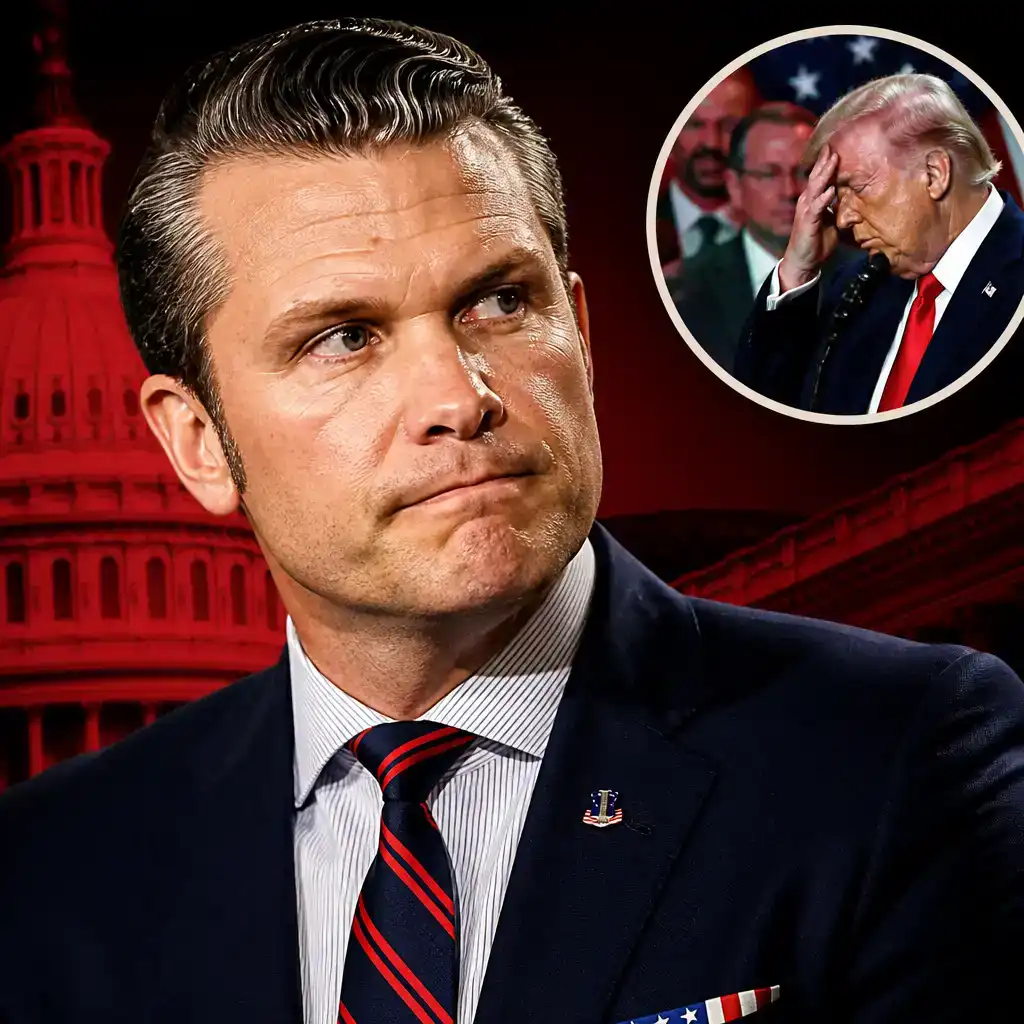
US Defence Secretary Pete Hegseth could face an impeachment vote as early as Wednesday, November 11, after a Republican congressman launched a fresh challenge to his position following Donald Trump's heavy midterm election losses.
Thomas Massie, a Republican from Kentucky and a longstanding critic of Trump, introduced eight articles of impeachment on Monday, accusing Hegseth of abusing his authority and overseeing military operations that violated US law.
The move has gained support from Democratic leaders, creating the possibility of a rare bipartisan impeachment of a sitting Cabinet secretary. Trump, however, has publicly defended Hegseth and dismissed Massie as a "loser".
What is Pete Hegseth accused of?
The central dispute concerns the US war against Iran, which began in February 2026 and has become a major political liability for the Trump administration.
According to the eight impeachment charges published by Massie's office, Hegseth continued military operations without the necessary congressional authorisation and disregarded restrictions imposed by the War Powers Resolution of 1973.
Three of the eight articles focus specifically on the Iran conflict. The remaining accusations concern civilian casualties, deadly strikes against suspected drug-trafficking vessels, alleged retaliation against Democratic Senator Mark Kelly, military operations in Yemen and the capture of former Venezuelan leader Nicolás Maduro.
Massie argues that Hegseth has repeatedly exceeded the legal limits of his position. These are allegations contained in the impeachment resolution, not established findings of wrongdoing.
Hegseth rejects the accusations and maintains that the administration's military decisions were necessary. Speaking to reporters on Monday, he defended the Iran campaign as a response to the country's nuclear ambitions and said he was prepared to defend the administration's record.
Why the impeachment vote could happen within days
Massie's latest move carries an important procedural consequence: by introducing the resolution as a privileged matter, he has created a mechanism that could bring it before the House within two legislative days.
But a vote does not necessarily mean lawmakers will decide whether to impeach Hegseth.
Republican leaders can attempt to block the effort by voting to table the resolution or referring it to a congressional committee instead. As Roll Call reported, House Speaker Mike Johnson must first address the resolution's procedural status.
Massie previously introduced impeachment articles in September, but the House adjourned before a vote could take place. His renewed effort comes in a substantially different political environment.
Democrats won control of both the House and Senate in the November 3 midterm elections, although Republicans retain their congressional majorities until the new Congress takes office in January 2027.
Democratic House leader Hakeem Jeffries has already indicated his support for impeachment. With Democrats expected to vote largely together, a small number of Republican defections could potentially give the resolution enough support to pass.
Could Pete Hegseth actually be removed from office?
Even if the House votes to impeach Hegseth, that would not automatically remove him from the Pentagon.
Under the US Constitution, impeachment requires a simple majority in the House, while removal from office requires conviction by a two-thirds majority in the Senate.
The Senate could also consider dismissing the charges rather than conducting a full trial. That distinction is particularly relevant because Republicans still control the chamber, and there is no clear indication that enough senators would support removing Hegseth.
There is a recent precedent. In 2024, the Republican-controlled House impeached Homeland Security Secretary Alejandro Mayorkas, but the Senate dismissed the charges without a trial.
Only two Cabinet secretaries have ever been impeached by the House: Mayorkas and Secretary of War William Belknap in 1876.
For Trump, the more immediate challenge may be political rather than constitutional.
The Iran war has become deeply unpopular. An Associated Press report cited election polling indicating that roughly six in ten voters believed the United States had made the wrong decision to take military action against Iran.
Trump has continued to praise Hegseth's leadership, claiming military success in both Iran and Venezuela. Secretary of State Marco Rubio has also defended his Cabinet colleague, arguing that the criticism is unfair.
Massie, meanwhile, has suggested that Trump should replace Hegseth before Democrats assume control of Congress in January, when the administration could face more extensive investigations.
The immediate question is whether Republican lawmakers will allow an impeachment vote to proceed. A decision to block it could protect Hegseth from an immediate confrontation, but it would not prevent the incoming Democratic majority from revisiting his conduct next year.