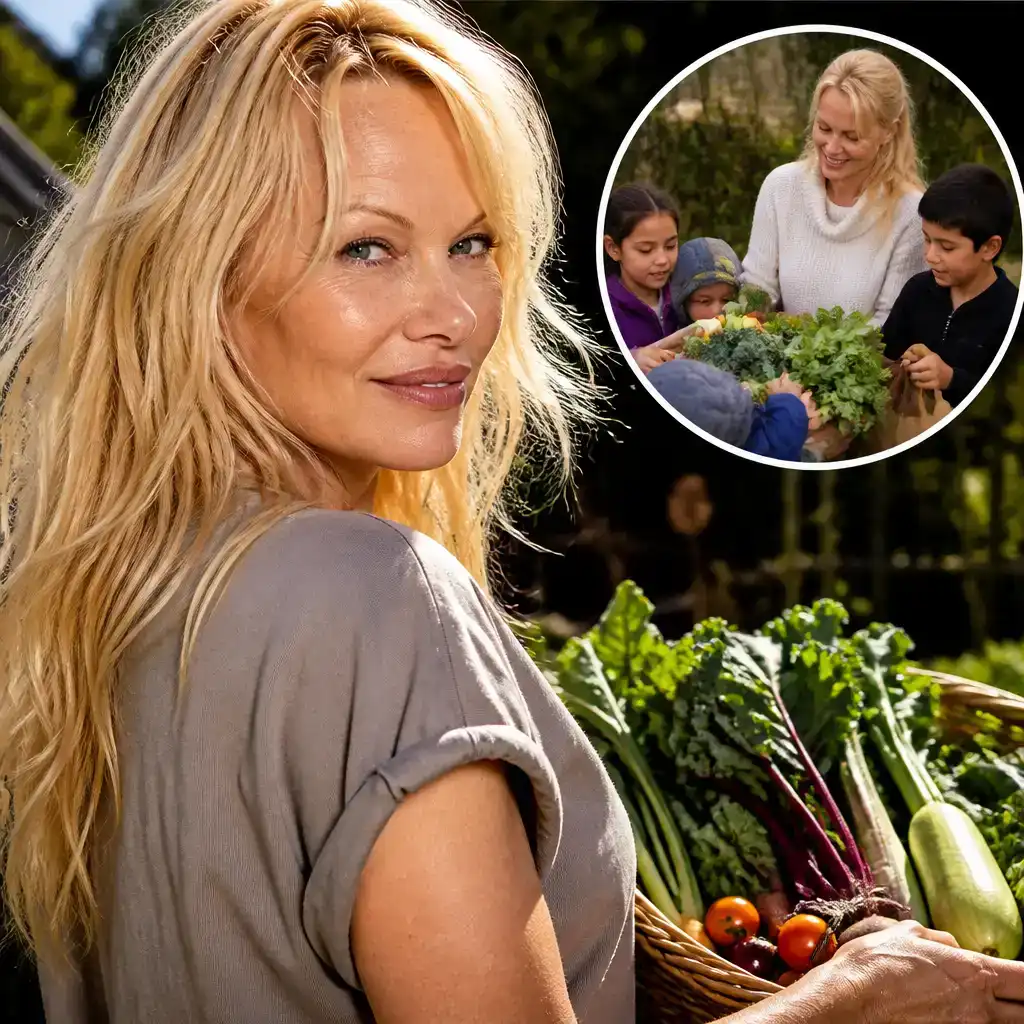
Pamela Anderson has found a rather different use for the land surrounding her family home on Vancouver Island. The former Baywatch star has transformed part of the seven-acre estate into a 15,000-square-foot working garden, growing fresh food not only for herself but also for people in her local community.
The project represents a personal shift for Pamela Anderson, whose public image was once defined by Hollywood glamour and red-carpet appearances. These days, her attention is increasingly focused on vegetables, herbs, fruit and the practical business of getting fresh produce to people who need it.
Anderson's harvest regularly makes its way to local food banks, soup kitchens and churches, turning what might otherwise have been a private gardening project into a community effort.
From Hollywood glamour to a working garden
The scale of Anderson's garden makes it considerably more ambitious than a few raised beds behind the house.
Covering approximately 15,000 square feet, the cultivated area occupies a substantial portion of her family's Vancouver Island property. The garden produces a variety of vegetables, herbs and fruits, with Anderson taking an active role in working the soil and planting seeds.
It is a striking contrast with the celebrity image that followed her throughout much of her career. Anderson became internationally famous through Baywatch, a television phenomenon that made her one of the most recognisable faces of the 1990s.
Her current project, however, has a purpose that extends well beyond appearances. Growing food provides an opportunity to contribute something tangible to the surrounding community.
There is also something refreshingly uncomplicated about the arrangement. The work begins with planting, continues through cultivation and ends with food that somebody can actually eat.
Why Pamela Anderson is donating her harvest
The most important aspect of Pamela Anderson's Vancouver Island garden is what happens after the produce is harvested.
Rather than keeping everything for her household, Anderson routinely distributes fresh vegetables, herbs and fruit through local organisations serving people in need.
Food banks, soup kitchens and churches are among the recipients, allowing the garden's output to reach people beyond the boundaries of her estate.
Those donations give the project a practical charitable dimension. Fresh produce can be a valuable addition to the food distributed by community organisations, particularly when it supplements other essential supplies.
The available details do not establish how much food Anderson donates, how frequently individual organisations receive deliveries or how many people ultimately benefit. Nevertheless, the reported routine of sharing her harvest demonstrates that community support is a continuing part of the project rather than simply an occasional gesture.
It also offers a different model of celebrity philanthropy: one built around producing and sharing something useful.
Her son Brandon is helping shape the project
Anderson is not developing the garden entirely on her own.
Her son, Brandon, is involved in designing the planting plots, contributing to the organisation of the growing space and making the project a family collaboration.
That involvement adds another dimension to the work. The garden is both a personal undertaking for Anderson and something she is building alongside a member of her family.
Designing a productive garden of this size requires decisions about how the available land is divided and used. Brandon's contribution to the layout forms part of the effort to turn the estate into a functioning growing space.
For Anderson, the appeal of gardening also appears to be closely connected to the physical experience of working outdoors. The image of the actress barefoot in the soil is far removed from the carefully managed glamour traditionally associated with her celebrity status.
Yet the more consequential detail is not how she looks while gardening. It is where the food goes afterwards.
Why this chapter of Anderson's life matters
Celebrity lifestyle changes often attract attention because they offer a dramatic contrast with an established public image. Anderson's move towards gardening certainly provides that contrast, but the community element gives the story more substance.
In my view, the most compelling part of Anderson's project is its combination of personal fulfilment and practical generosity. A celebrity creating an attractive private garden would hardly be unusual. Building a productive growing space and routinely sharing its harvest with local organisations makes the undertaking more meaningful. That does not establish the scale of its impact, which remains unclear, but it does give the project a purpose beyond personal reinvention.
The distinction matters because the story could easily be reduced to another account of a Hollywood star embracing a quieter lifestyle.
Anderson's gardening may reflect a change in her priorities, but the donations are what connect that personal decision to the needs of other people.
A different kind of legacy on Vancouver Island
There are still unanswered questions about the garden's long-term development, including whether Anderson intends to expand production or increase the amount of food distributed through local organisations.
No specific expansion plans have been established in the information currently available.
What is known is that Anderson has already converted a sizeable area of her family's property into a productive garden, involved her son in its design and made charitable food donations part of its purpose.
For someone whose career placed her in front of cameras around the world, the project offers a notably different way of making an impression.
The garden may be on private land, but its harvest is finding its way beyond the gates. That is what makes this chapter of Pamela Anderson's life worth paying attention to.