The proposed £100 bus fine for loud music is not a nationwide penalty that suddenly appeared on every service in England. Local transport authorities must first write their own rules, consult the public and secure government approval. In practice, whether a passenger faces a fine may depend heavily on their postcode and whether the council can afford officers to issue one.
The government says the measures will help tackle loud audio, littering, vaping and threatening behaviour across public transport. Prime Minister Andy Burnham said passengers were tired of people playing music and videos through phone speakers.
“We've all been on the train when someone starts blasting music or videos from their phone,” he said. “It gets on your nerves and can quickly spoil the journey.”
The public appears to agree. Transport for London found that 70% of 1,000 customers surveyed considered loud music and speakerphone calls a nuisance. Apparently, being forced to hear someone else's short-form video feed has not become more charming with repetition.
When could bus passengers actually be fined?
The new powers come from sections 28 and 29 of the Bus Services Act 2025, which took effect on 5 August 2026. They allow local transport authorities in England to create bus byelaws covering nuisance and antisocial conduct.
No council can immediately begin handing out penalties, however. Each authority must:
- Draft its own byelaws
- Hold a public consultation lasting at least 28 days
- Submit the rules for approval by the Transport Secretary
- Arrange authorised officers to enforce them
Only after completing that process can an authority issue fixed penalties of up to £100. The Department for Transport has set no national timetable or minimum staffing requirement, leaving councils to decide whether the scheme is a priority and how much they are prepared to spend on it.
That creates an uneven rollout. One area could introduce visible patrols and penalties while a neighbouring authority does nothing beyond considering a consultation sometime later. National policy, local implementation and the familiar administrative pause between the two.
Councils can keep money collected through fixed penalties, but they must spend it on local transport, enforcement or public education. Government guidance also states that the system must not be used to generate revenue.
Who will enforce the new bus rules?
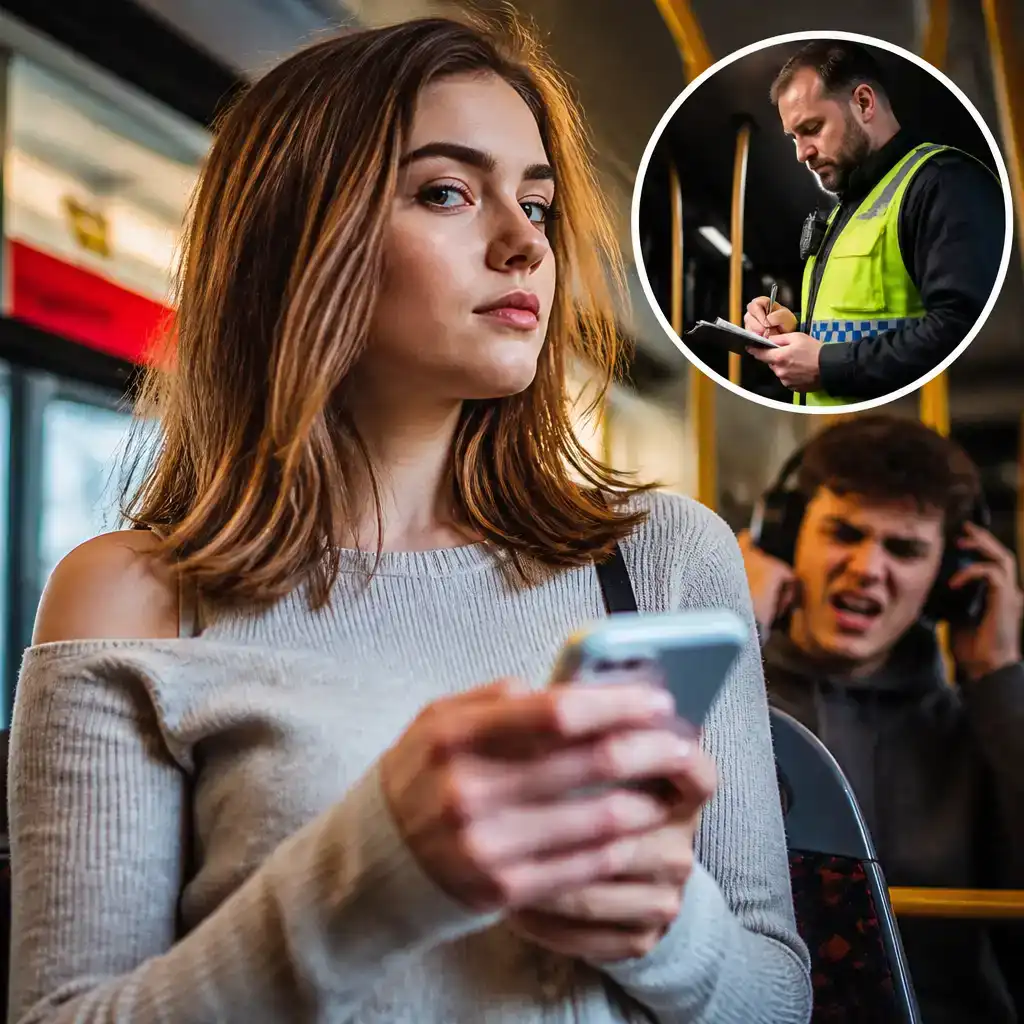
Bus drivers will not be expected to confront offenders or issue penalties. The government says authorised personnel, including Transport Safety Officers and police officers, will handle incidents.
Guidance recommends a three-stage approach: engagement, explanation and enforcement. Officers should initially ask someone to stop the behaviour, explain the rules and escalate only if the passenger refuses to cooperate.
Authorised officers will have substantial powers. They may require a suspected offender to provide their name and address, order them to leave the bus and use reasonable force to remove someone who refuses.
Science, Research and Innovation Minister Chris McDonald told BBC Breakfast that passengers could report incidents to transport staff or the British Transport Police rather than confronting someone themselves. That route is clearer on trains than buses, where British Transport Police officers are not routinely present.
This distinction worries passengers and campaigners. Dave from Derby questioned whether a lone driver would effectively become responsible when no officer was available, potentially exposing them to verbal abuse or assault.
Michael Solomon Williams of the Campaign for Better Transport also raised questions about how local police would respond to incidents on bus services. The organisation's chief executive, Ben Plowden, said the powers should help if they were “properly and visibly enforced”. The word if is doing important work there.
What are the rules on trains?
Playing loud music and singing on trains have already been covered by railway byelaws since 2005. The government is launching a national campaign telling passengers to “share the journey, not the noise”, with notices appearing on operator websites, social media and inside carriages.
Rail staff can ask passengers to stop playing content aloud. Someone who refuses may be removed from the train or reported for prosecution. The widely cited £1,000 figure is the maximum court fine, not an automatic charge for briefly using a phone speaker.
Transport for London already prohibits passengers from playing music or other content aloud on its services. Enforcement officers normally begin by asking the person to stop, and TfL says most comply. Those who refuse can be told to leave or reported for possible prosecution.
TfL recorded just 69 relevant complaints across the Underground and Overground between October 2022 and September 2025. That sits awkwardly beside its survey finding that seven in 10 passengers consider the behaviour disruptive, suggesting formal complaints capture only a small share of the irritation.
The practice has acquired labels including “loudcasting” and “sodcasting”, though giving it a name has not made the audio any quieter. Polling by Ofcom, YouGov and TfL has consistently found broad public dislike for speakerphone calls, music and videos played without headphones.
Will fines address wider safety concerns?
Campaigners and unions broadly support action against nuisance behaviour but argue that loud phones are only one part of a more serious safety problem.
Maryam Eslamdoust, general secretary of the Transport Salaried Staffs' Association, called the measures “a step in the right direction” but urged the government to address violence, threats and abuse against passengers and workers. She also called for increased British Transport Police funding.
Unite general secretary Sharon Graham described the package as “wholly inadequate” in the face of escalating abuse of transport workers. Liberal Democrat transport spokesperson Olly Glover said the rules would have little value without funded officers on the ground and called for £1,000 penalties for repeat offenders.
Shadow transport secretary Richard Holden said assaults against rail staff had risen by 68% while prosecutions had fallen under Labour. He accused the government of focusing on a visible nuisance while failing to deal adequately with violence against workers.
West Midlands Mayor Richard Parker supported the crackdown, saying antisocial behaviour “ruins the experience for everyone”. Transport Focus offered evidence of the wider effect: four in 10 passengers said antisocial behaviour had made them feel vulnerable while travelling.
For some, it already affects how they travel. Justin from Newcastle-upon-Tyne said noise and other antisocial behaviour had pushed him away from buses and into his car. Campaigners warn that disabled passengers and people with other accessibility needs may be particularly discouraged by unpredictable or intimidating journeys.
The new powers give councils tools to respond. Whether they change daily travel will depend less on the maximum fine than on officer numbers, enforcement budgets and consistent local action. A penalty that exists only in guidance is unlikely to persuade anyone to find their headphones.