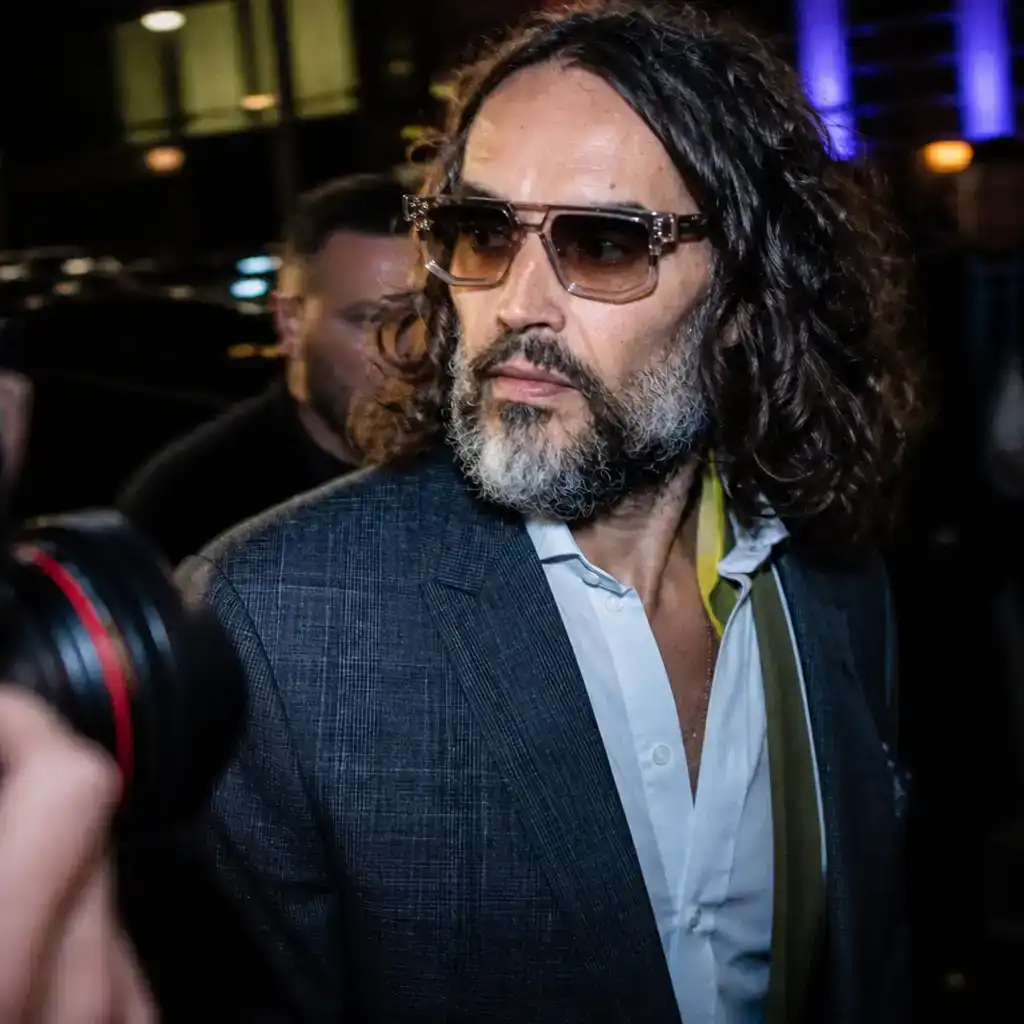
The reported Russell Brand prison transfer to HMP Wakefield remains just that: reported. The Ministry of Justice had not confirmed a destination by Thursday morning, despite claims that the comedian could leave HMP Wandsworth within days or weeks.
Brand, 51, was sentenced on Monday to 10½ years in prison after being convicted of raping one woman and sexually assaulting three others. The Associated Press confirmed the sentence and all four convictions.
According to the official sentencing remarks, Mr Justice Bennathan imposed nine years for rape. Brand also received terms of nine, 18 and eight months for the sexual assaults. Those three terms run concurrently with each other, with the resulting 18 months added to the rape sentence.
Has Brand’s move to HMP Wakefield been confirmed?
No. The claim comes from an unnamed source quoted by The Sun, who said Brand was undergoing a risk assessment for a possible move from Category B HMP Wandsworth to Category A HMP Wakefield in West Yorkshire.
The source said staff at Wakefield were expecting him, although there were still “some hoops to go through”. They also described the prison as a likely destination for high-profile inmates and said it was considered safer for Brand because staff were better equipped to manage the risks surrounding him.
That may ultimately prove accurate. For now, however, a reported destination is not the same as a confirmed prison allocation, inconvenient though that distinction may be for a dramatic headline.
The absence of official confirmation also raises a basic security question. Publishing a possible destination while an assessment is still taking place can draw attention to an inmate’s movements before prison authorities have announced any decision.
There is also no reliable confirmation that Brand is being held on Wandsworth’s vulnerable-prisoner wing. Reports have suggested that his fame and wealth could make him a target, but the Ministry of Justice has not publicly disclosed his placement inside the prison.
Is HMP Wakefield safer than Wandsworth?
HMP Wakefield is a high-security prison holding men considered among the greatest risks to the public. HMP Wandsworth, by comparison, is a 170-year-old Victorian prison whose overcrowding and poor conditions have repeatedly attracted criticism.
Calling Wakefield “safer”, though, requires some context.
An inspection by His Majesty’s Inspectorate of Prisons in 2025 found that 75% of surveyed prisoners said they had felt unsafe, while 45% said they felt unsafe at the time of the inspection.
A follow-up inspection in April 2026 found that reorganising the population so almost all prisoners were classified as vulnerable had substantially reduced violence between inmates. Inspectors still found that prisoners spent long periods locked in their cells and that health services had deteriorated.
So Wakefield may offer tighter security and more specialised management, but it is not exactly a quiet retreat with reinforced doors.
What happened to Ian Watkins at Wakefield?
Former Lostprophets singer Ian Watkins died at HMP Wakefield on October 11, 2025. The 48-year-old was serving a 29-year sentence for child sexual offences, including the attempted rape of a baby.
Watkins was fatally stabbed in his cell. The Prisons and Probation Ombudsman is investigating his death.
He had previously suffered a serious attack at the prison in 2023. Three inmates held him hostage for six hours and repeatedly stabbed him before officers found him and took him to hospital.
During later court proceedings, prison officer Simon Rothwell said Watkins had been vulnerable because other prisoners knew he had money. Rothwell had worked on the same wing as Watkins for about a decade before the singer was moved.
The incidents do not prove that Brand would face the same risks. They do show why claims about any prison being categorically safe deserve more than an unnamed assurance.
What further allegations is Brand facing?
The criminal case may not be the end of the matter. Police and prosecutors are assessing other allegations, although reports suggesting women came forward only after Brand was sentenced do not give the full chronology.
The Metropolitan Police said two additional rape complainants approached investigators before Brand was charged. Their allegations were not included in the trial that produced the four convictions.
Separately, an investigation by The Times and The Sunday Times reported allegations of sexual misconduct and predatory behaviour from six additional women. One woman alleged Brand continued having sex with her after she asked him to stop. The Guardian and The Independent also reported the claims.
Brand has denied engaging in non-consensual sex. Prosecutors have not announced further charges.
At sentencing, Mr Justice Bennathan told him: “Whatever women wear, wherever they go, whatever they drink, they retain the right to say no.”
Senior prosecutor David Roberts said the sentence could not reverse the harm suffered by the victims but might provide “some measure of justice”.
Why the case extends beyond Brand
The conviction has intensified scrutiny of the entertainment companies, broadcasters, agents and production staff that worked with Brand during his rise to fame. The wider question is no longer limited to what he did, but what people around him allegedly witnessed, dismissed or failed to investigate.
Culture Secretary Lisa Nandy called the conviction a “wake-up call” for employers across the entertainment industry.
That institutional reckoning is likely to continue regardless of whether Brand remains at Wandsworth or is eventually moved to Wakefield. His prison destination matters for security and welfare. The failures that may have allowed his conduct to continue matter well beyond the prison gates.