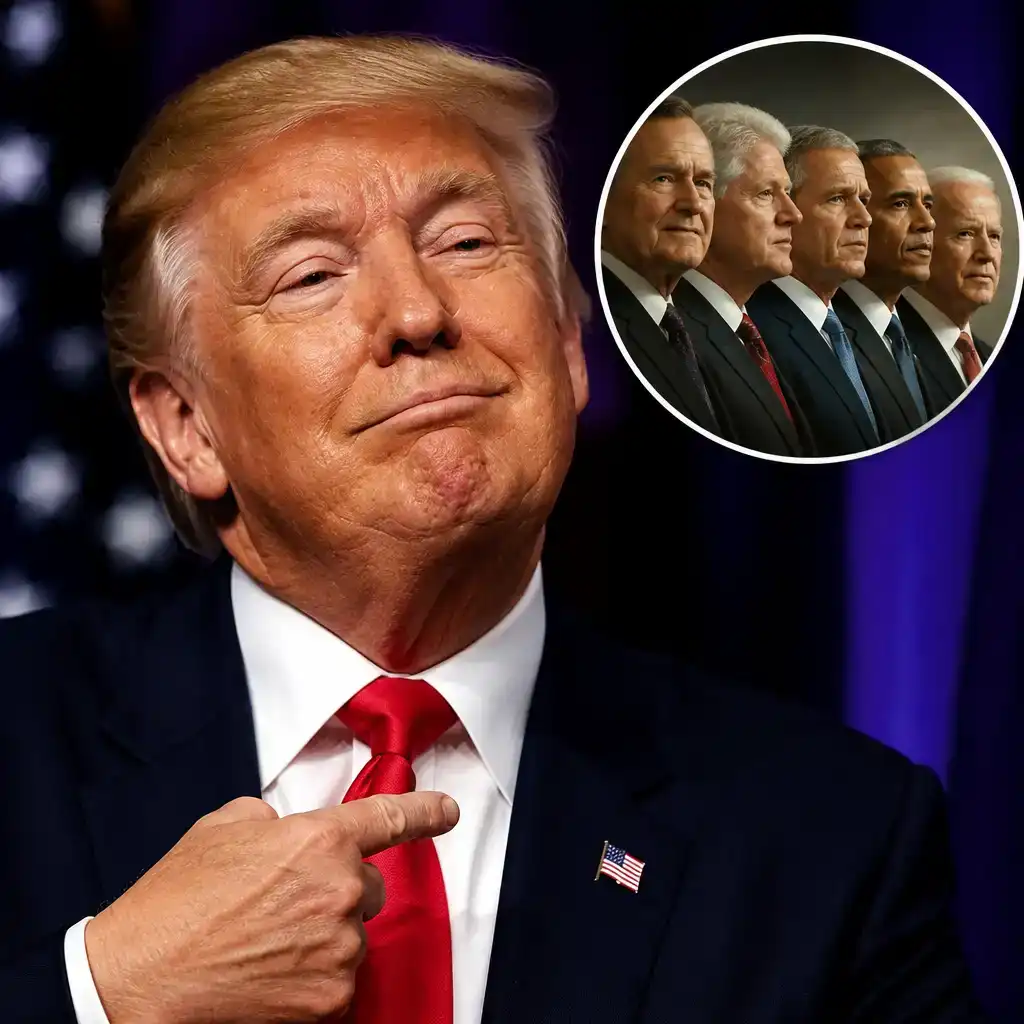
Donald Trump has a new name for himself if Democrats take control of Congress after the November 3 midterm elections: "Mr. Veto".
The US president has outlined a strategy built around rejecting Democratic legislation until his political opponents agree to negotiate. But while the threat could give Trump considerable leverage over Congress, it would not prevent Democrats from exercising some of their most important powers.
Speaking to New York Post columnist Miranda Devine on her Pod Force One podcast, released on Monday, November 2, Trump explained how he would respond to losing Republican control of Capitol Hill.
"I guess I'll become Mr. Veto," he said, before describing a period of rejected legislation followed by negotiations.
Trump suggested Democrats would eventually recognise that repeatedly sending bills to the White House was getting them nowhere. He nevertheless expressed hope that Republicans would retain their congressional majorities, making the strategy unnecessary.
What could Trump's 'Mr. Veto' strategy actually achieve?
The distinction between Democrats winning one chamber of Congress and winning both is crucial.
Under the US legislative process, a bill must pass both the House of Representatives and the Senate in identical form before reaching the president.
If Democrats capture the House but Republicans retain the Senate, many Democratic proposals could be blocked before Trump ever has an opportunity to veto them.
If Democrats secure both chambers, however, they could pass legislation and send it to the president. Trump could then reject those bills, although Congress would retain the constitutional power to override his veto with a two-thirds majority in each chamber.
That threshold is considerably higher than the simple majority generally required to pass ordinary legislation, making a presidential veto a formidable obstacle when lawmakers are divided along party lines.
Trump's threat is therefore legally credible. His prediction that Democrats would return to negotiate after a month or two is less certain: nothing in the veto process requires lawmakers to reach an agreement within that period.
One major power Trump's veto cannot stop
Even an aggressive veto strategy would not prevent a Democratic-controlled House from launching congressional investigations.
Congressional oversight is separate from the process of passing legislation. As the House of Representatives' official historical records explain, Congress possesses investigative authority connected to its legislative responsibilities.
That means Democratic committee leaders could pursue hearings, demand documents and issue subpoenas without first passing legislation for Trump to sign. The administration could contest particular demands through established legal processes, but the president could not simply veto the investigations themselves.
This is not merely a hypothetical concern for the White House.
According to a Reuters investigation published on November 1, senior administration officials have been preparing for a possible Democratic takeover for months.
Reuters reported that White House officials have examined ways to continue pursuing policies involving immigration, tariffs, housing and federal spending through executive authority, while lawyers have been preparing officials for potential congressional inquiries.
The reported preparations suggest that Trump's publicly stated veto strategy is only one part of the administration's response to a possible shift in power.
Why the midterm results matter beyond legislation
Tuesday's elections will determine all 435 seats in the House of Representatives and approximately one-third of the Senate.
Republicans entered the contest controlling both chambers, but a Democratic victory in either would change the administration's ability to advance legislation over the remaining two years of Trump's presidency.
A Democratic House could increase scrutiny of the administration and obstruct its legislative priorities. Democratic control of the Senate would introduce another obstacle, potentially allowing the opposition to block presidential nominees who require Senate confirmation.
There is also a practical limit to prolonged confrontation: the federal government still depends on Congress to approve funding legislation. Disagreements over spending could therefore create pressure for negotiations, regardless of which party controls Capitol Hill.
Trump has framed repeated vetoes as a route to eventual compromise rather than permanent political paralysis. Whether that strategy would succeed depends not only on the election results, but also on which chamber changes hands and how willing both parties are to negotiate.
For now, "Mr. Veto" remains a contingency plan. The November 3 results will determine whether Trump ever needs to put it into practice.