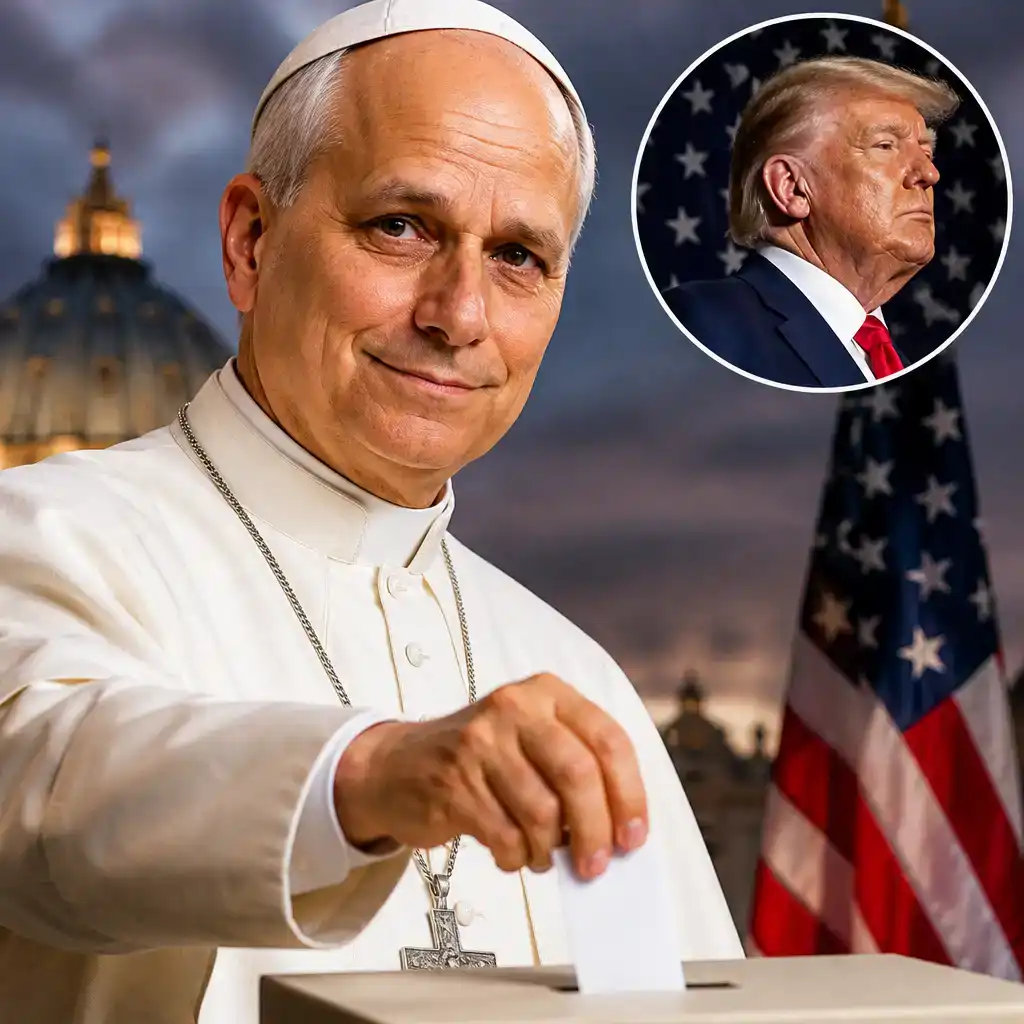
Pope Leo XIV has made history in an unlikely place: the American ballot box. The Chicago-born pontiff has submitted a postal vote for the US midterm elections on November 3, becoming the first sitting pope known to have voted in an American election.
What began as an unusual request for an absentee ballot has now been confirmed by the Vatican itself. In an official statement on October 30, the Holy See said the 71-year-old pontiff had exercised his rights as an American citizen, turning a story about papal paperwork into a remarkable moment in US electoral history.
And while the leader of the world's Catholic Church has made his position on democratic participation clear, there is one thing nobody outside the voting booth knows: which candidates received his support.
The Vatican confirms Pope Leo XIV has voted
The story first attracted national attention after the Chicago Sun-Times reported that Leo, born Robert Francis Prevost, had requested a mail-in ballot from the Will County clerk's office in Illinois on October 3.
Kim Fladhammer, chief of staff at the clerk's office, confirmed that Prevost appeared on the list of voters requesting postal ballots. The pope remains registered in New Lenox, a suburb southwest of Chicago.
On October 30, the Holy See Press Office issued its own confirmation, stating that Leo had submitted his mail-in ballot in Chicago.
The Vatican added that the pontiff believes in the "right and the duty of citizens to participate in democratic processes."
That confirmation establishes something the initial reports could not: Leo did more than simply request a ballot. He submitted one. However, the announcement does not independently establish when election officials received it or whether it has already been accepted for counting.
His voting history reveals an interesting detail, but not his politics
Leo's participation in American elections is not new. According to voting records examined by the Chicago Sun-Times, the future pontiff voted in Democratic primaries in 2008 and 2010, before requesting Republican primary ballots in 2012, 2014 and 2016.
Those records could invite political speculation, but they reveal considerably less than they might appear to.
Illinois does not require voters to register permanently with a political party. Instead, voters participating in a partisan primary select which party's ballot they wish to receive. Choosing a Republican or Democratic primary ballot does not establish which party someone supports in a general election, much less which candidates they actually voted for.
Leo's previous participation in elections is therefore documented. His political allegiances, however, cannot be reliably determined from those records.
The same distinction applies to his latest ballot. The Vatican has not disclosed his choices, and there is no verified evidence identifying which candidates the pope supported.
Why can a pope vote in an American election?
Despite holding one of the world's most prominent religious offices, Leo retains his American citizenship. He also holds Peruvian citizenship, having spent many years living and serving the Catholic Church in Peru.
The Vatican's October 30 statement confirmed that he had previously voted in Peru whenever he was eligible, establishing that his participation in elections has extended beyond the United States.
American citizens living overseas can participate in federal elections through absentee voting arrangements established under US law. The Federal Voting Assistance Program's Illinois guidance explains the process and deadlines for eligible overseas voters, while the Illinois State Board of Elections provides separate information for military personnel and citizens abroad.
The pope's ballot is associated with an election in which Illinois voters will decide who succeeds retiring US Senator Dick Durbin, whether Democratic Governor JB Pritzker receives another term, and a range of congressional, county and judicial contests.
Yet the significance of Leo's participation is not that he has endorsed a particular political agenda. The documented development is that a reigning pontiff has chosen to exercise an ordinary citizen's voting rights while continuing to lead the Catholic Church.
From Vatican City to suburban Illinois, it is an extraordinary journey for a ballot. But the most important distinction remains straightforward: the pope has confirmed that he voted, not who he voted for.