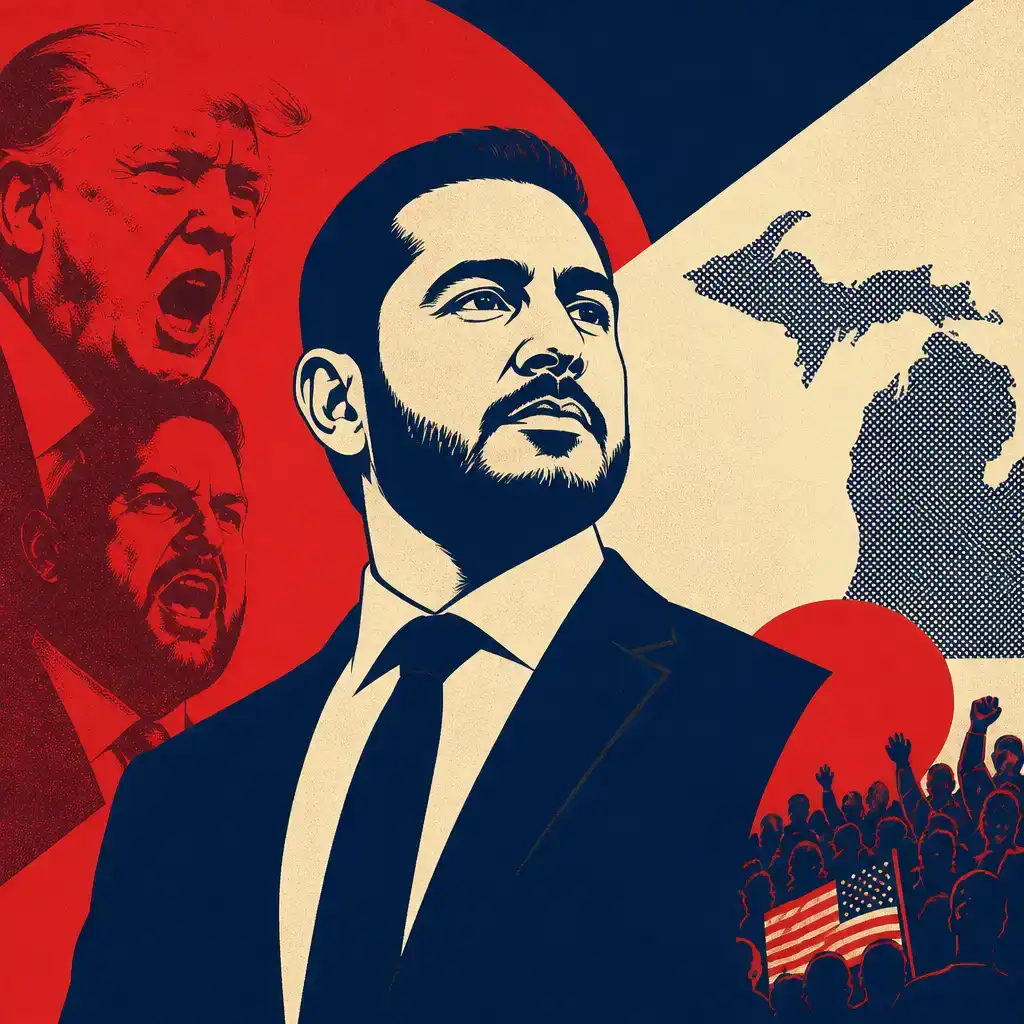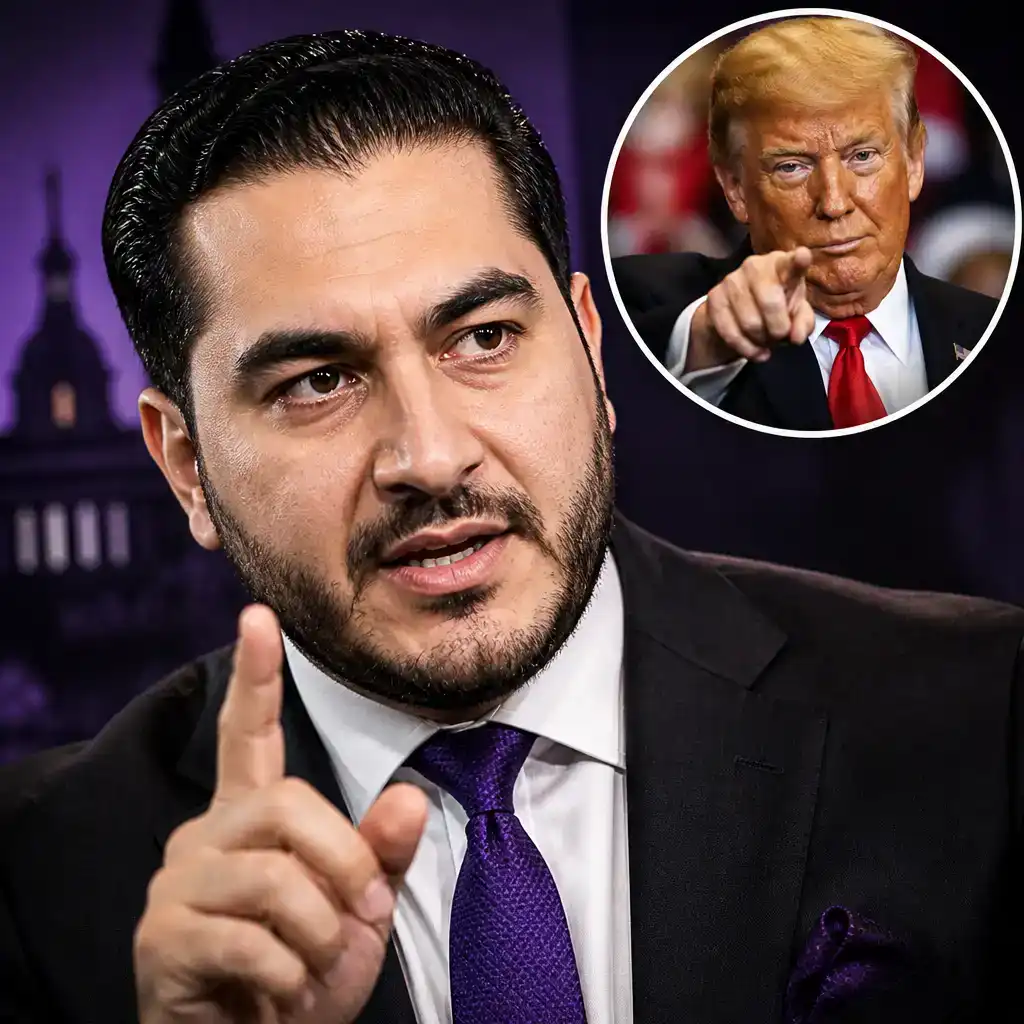
Michigan's newly elected Democratic senator, Abdul El-Sayed, has defended his confrontational approach to President Donald Trump, arguing that standing up to the president requires more than traditional political courtesy.
In a November 12 interview with NPR's Leila Fadel, El-Sayed was challenged over his previous description of Trump as the least intelligent person ever to occupy the White House. Rather than soften his criticism, the senator-elect reaffirmed it and explained why he believes Democrats should take a more aggressive approach.
His argument was straightforward: Trump, in El-Sayed's view, uses intimidation to gain political advantage, and responding with deference only encourages that behaviour.
Speaking during the NPR Newsmakers interview, El-Sayed described the president as a bully and a narcissist, insisting that confronting such behaviour is more effective than accommodating it.
He argued that the way to challenge a bully is to "bully back", because resistance removes the sense of power that intimidation is intended to create.
Why El-Sayed is taking a harder line against Trump
The exchange followed an election campaign in Michigan that had become intensely personal.
El-Sayed, a former Detroit public health official, defeated Republican Mike Rogers in the November 3 Senate election, becoming the first Muslim elected to the United States Senate.
During the campaign, Trump repeatedly attacked El-Sayed's religion and questioned his loyalty to the country. At an October 25 rally in Port Huron, the president accused the Democratic candidate of extremist sympathies, remarks that drew criticism from Arab American community figures.
As The Associated Press documented, El-Sayed rejected allegations linking him to extremist organisations and challenged the attacks on his American identity.
That campaign history provides important context for his latest comments. El-Sayed is not merely advocating a change in political language; he is describing a strategy shaped partly by the attacks he faced during his successful Senate campaign.
Despite his criticism, El-Sayed says he is willing to work with Trump
There is, however, a distinction between El-Sayed's willingness to confront Trump publicly and his approach to governing.
In the same NPR interview, the senator-elect made clear that he would meet with the president and work with Republicans if doing so could advance policies benefiting Michigan residents.
He identified healthcare, household costs and the automobile industry among his priorities, arguing that disagreements and personal attacks should not prevent elected officials from pursuing legislation.
During a separate November 8 appearance on ABC News' This Week, El-Sayed had already expressed a similar position, saying he would cooperate with Trump on meaningful policy while continuing to challenge decisions he considered harmful.
He even entertained the possibility of supporting universal healthcare legislation bearing Trump's name, provided the policy delivered the coverage he wants Americans to receive.
That combination of confrontation and potential cooperation is central to understanding his position. El-Sayed wants Democrats to challenge Trump's political tactics without allowing personal hostility to become an obstacle to legislation.
Having won his Senate seat, the Michigan Democrat will now have an opportunity to test that approach in Congress. His willingness to negotiate with political opponents is established; whether those negotiations produce results remains an open question.