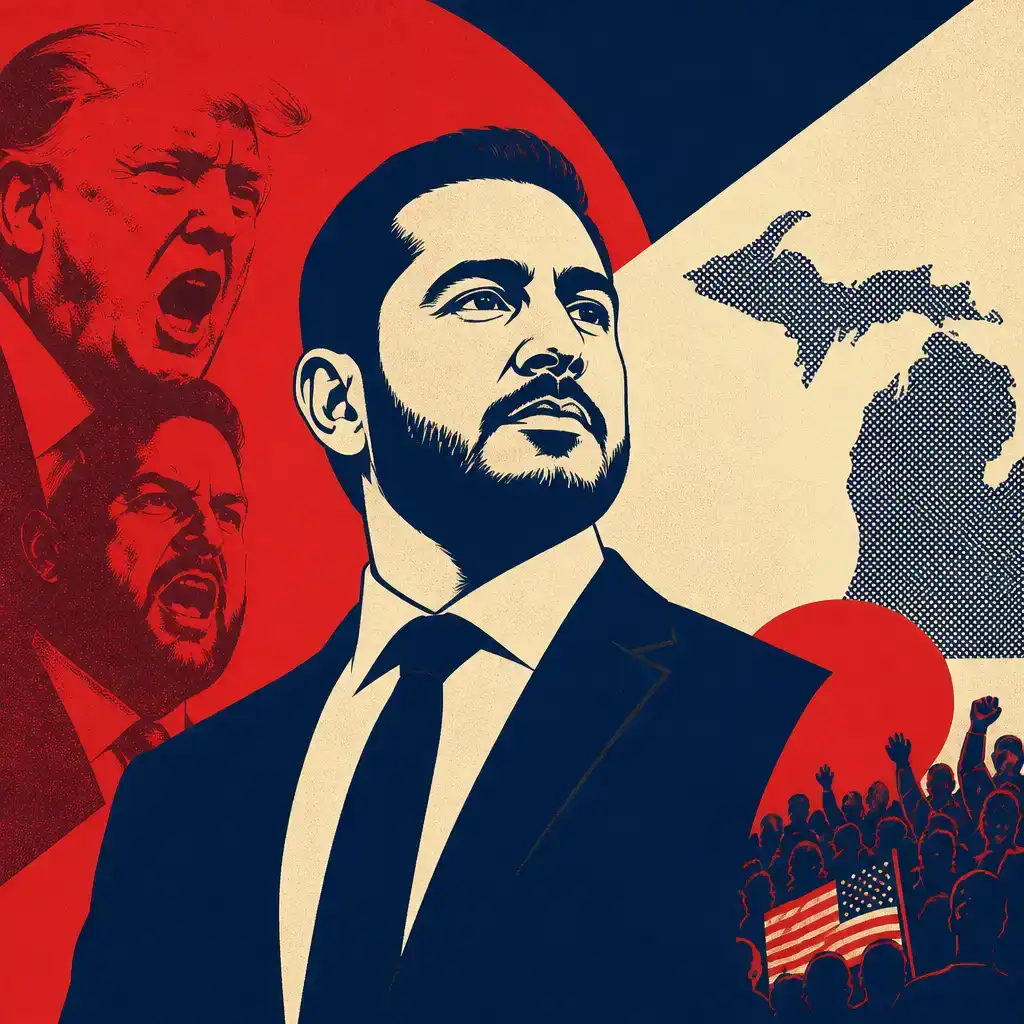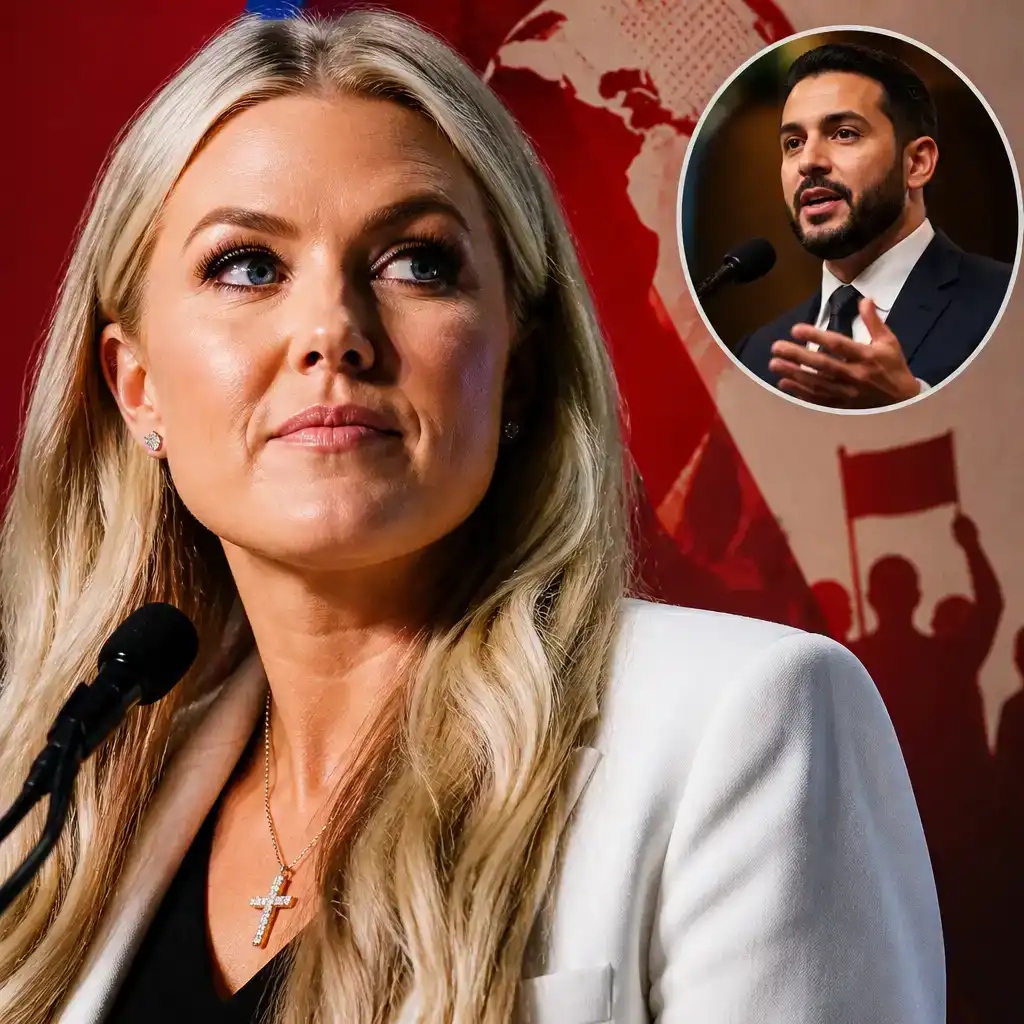
Erika Kirk's response to Michigan senator-elect Abdul El-Sayed has sparked a debate over American identity, but the exchange was not a face-to-face confrontation. It began with a speech about Arab American heritage and a subsequent social media post that challenged one of its most widely circulated remarks.
El-Sayed, who became the first Muslim elected to the US Senate after defeating Republican Mike Rogers on November 3, was speaking at the Arab America Foundation's CONNECT Empowerment Summit on November 6 in Chantilly, Virginia.
During his address, he described Michigan as the "capital of Arab America", referring to the state's substantial Arab American population.
Turning Point USA CEO Erika Kirk responded after a video clip circulated online, writing on X: "There is no 'Arab America.' There is only the United States of America."
The two statements quickly became opposing arguments in a discussion about whether celebrating a distinct cultural identity strengthens American society or risks dividing it.
What Abdul El-Sayed actually said about being American
The brief clip that prompted Kirk's response did not capture the full argument El-Sayed made during his appearance.
In another portion of the speech, documented in video coverage published by Fox News, El-Sayed explicitly connected Arab American heritage with national belonging.
"What unites us as Arab Americans is America," he told the audience.
He also addressed the suggestion that Americans with immigrant backgrounds should somehow be considered less American, arguing that their cultural heritage should not place limitations on their national identity.
That context matters because his reference to Michigan was part of a speech celebrating participation in American public life, rather than a proposal for a separate political territory.
The Arab America Foundation, which organised the summit, subsequently published its own explanation of the remarks on November 10.
The organisers said the description was intended to recognise the concentration and cultural influence of Arab American communities in Michigan, not to designate a literal capital or suggest that those communities existed outside the United States.
Why Michigan is associated with Arab American identity
Michigan's connection to Arab American culture is supported by demographic evidence, particularly in the Detroit metropolitan area.
Dearborn, a city neighbouring Detroit, has one of the country's most prominent Arab American communities, with its cultural institutions, businesses and community organisations reflecting generations of settlement.
According to US Census Bureau findings, 7.8% of Wayne County residents identified as Middle Eastern or North African, alone or in combination, in the 2020 Census. That was the highest proportion recorded for any US county. The classification is broader than Arab ancestry alone, but demonstrates the region's substantial connection to Middle Eastern communities.
El-Sayed's description therefore drew on an established cultural association, although Michigan has no official designation as the capital of an Arab American territory.
Two competing interpretations of American identity
Kirk's response emphasised a single national identity, rejecting language that appeared to distinguish one cultural community from the country as a whole.
El-Sayed's broader remarks presented a different interpretation: that Americans can identify with their ancestral heritage while remaining fully part of the United States.
Importantly, his complete comments did not reject American identity. They explicitly embraced it, a distinction that is easy to miss when the discussion is reduced to one sentence from a longer speech.
The disagreement is therefore less about the location of a capital than about the meaning of cultural belonging. Kirk rejected the expression "Arab America"; El-Sayed and the summit organisers used it to describe a community within America.
Those differing interpretations explain the controversy more accurately than portraying the exchange as a direct confrontation or suggesting that El-Sayed had called for a separate nation.