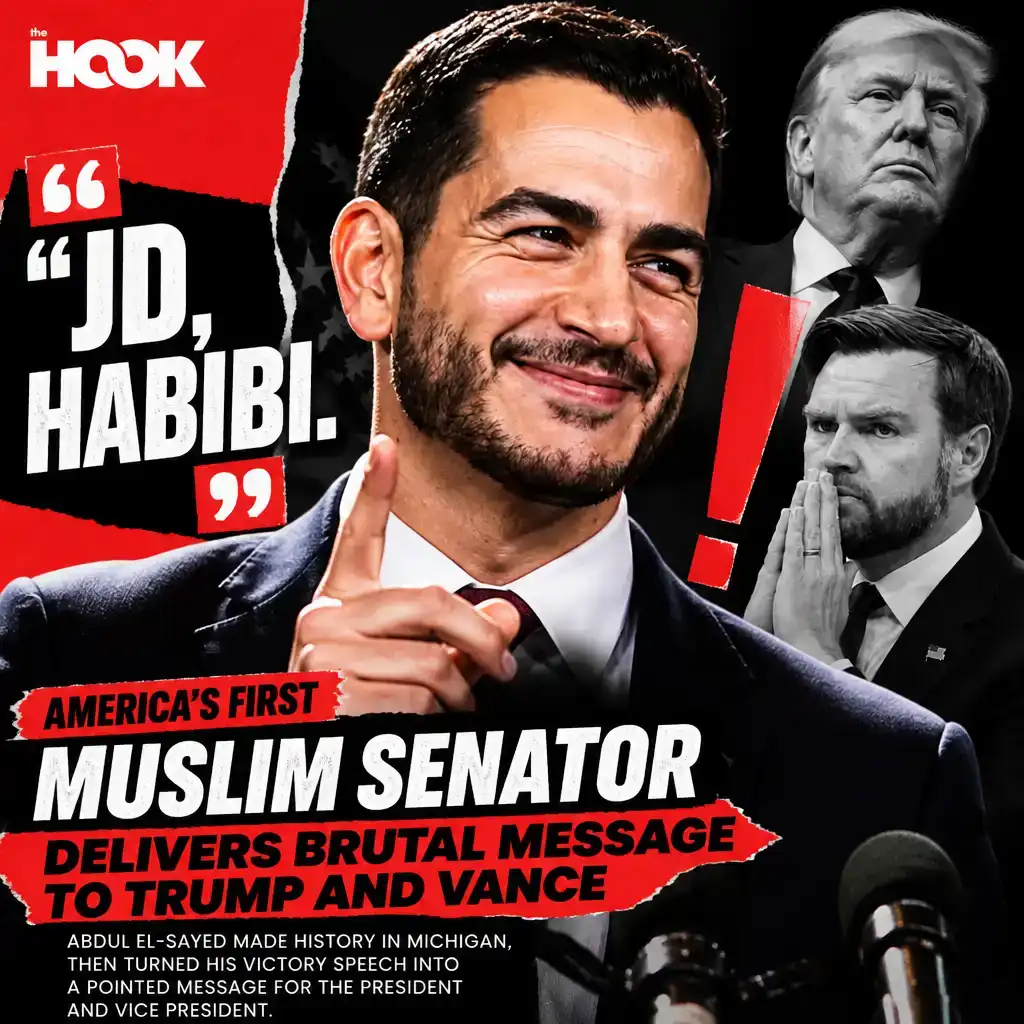
Abdul El-Sayed has made history as the first Muslim elected to the US Senate, and he used his victory speech to deliver a pointed message to two of his most prominent political opponents: Donald Trump and JD Vance.
Speaking to supporters in Detroit early on Wednesday, November 4, the 42-year-old Democrat celebrated defeating Republican Mike Rogers in Michigan's closely contested Senate election before turning his attention to the White House.
His message to the vice president came with an affectionate Arabic greeting and a reminder of the awkward ceremony that could await them in January.
"JD, habibi, there is this delicious irony in the fact that you're constitutionally obligated to swear me in in January," El-Sayed declared, drawing cheers from the crowd.
He then addressed Trump, who had repeatedly attacked him during the campaign, including over his name and Muslim faith.
"Donald, I know you struggle with my name," El-Sayed said, before delivering his preferred form of address for their next encounter: "You can go on and call me Senator."
The remarks, captured in footage of his victory speech published by Sky News, turned a historic election result into a direct response to months of political attacks.
Will JD Vance actually have to swear Abdul El-Sayed into the Senate?
El-Sayed's joke has a genuine constitutional basis, although there is an important distinction between the vice president's role and a personal obligation to conduct the ceremony.
Under the US Constitution, the vice president serves as president of the Senate. That position traditionally includes administering the oath of office to newly elected senators when a new Congress convenes.
However, the Constitution does not require Vance personally to swear in every incoming senator. According to the Senate's official explanation of the president pro tempore's responsibilities, another presiding officer can administer the oath when the vice president is absent.
Federal law also grants the Senate's presiding officer the authority to administer oaths. In other words, Vance could preside over El-Sayed's swearing-in, but the encounter is not constitutionally guaranteed.
What is certain is that El-Sayed will need to take the oath before beginning his legislative duties in January 2027.
A historic victory after a bitter Michigan campaign
Beyond the exchange with Trump and Vance, El-Sayed's victory represents a significant milestone in American politics.
As NPR reported following the Associated Press race call, the former public health official defeated Rogers in a closely watched battleground-state contest, securing the seat being vacated by retiring Democratic Senator Gary Peters.
El-Sayed, the son of Egyptian immigrants, had previously run unsuccessfully for Michigan governor in 2018. His successful Senate campaign focused on healthcare affordability, the cost of living and reducing corporate influence in politics.
His candidacy also became a target of criticism from Trump and Vance, with arguments over his religious identity and political positions attracting national attention.
During his victory speech, El-Sayed accused his opponents of running an especially hostile campaign and argued that voters had rejected attempts to make his name and religion central issues.
The result carries significance beyond the exchange with the White House. El-Sayed will become the first Muslim American to serve in the Senate, while his victory keeps Michigan's outgoing Democratic seat in the party's hands.
Whether Vance ultimately administers the oath himself remains to be seen. But the possibility gave El-Sayed an opportunity to turn an otherwise routine Senate tradition into one of the defining moments of his election-night celebration.