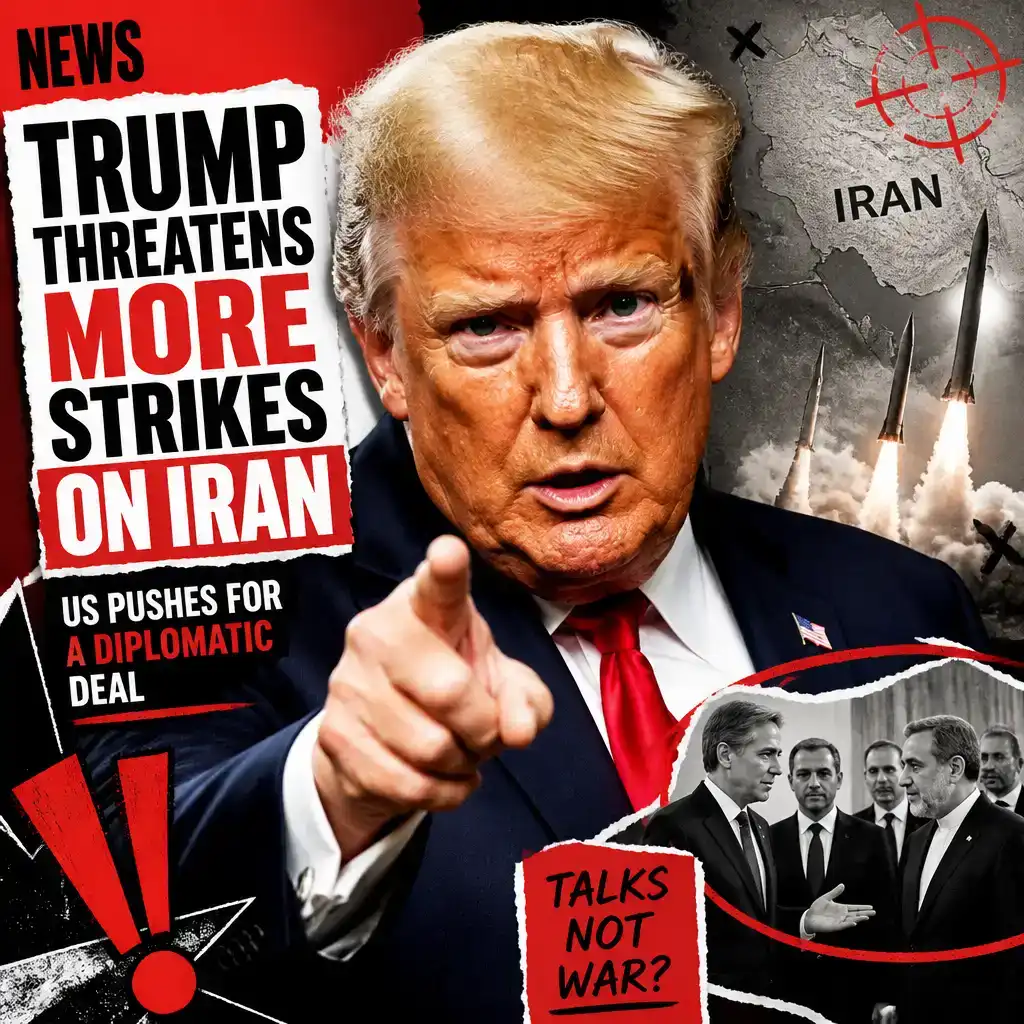
Donald Trump's warning that the United States could inflict further destruction on Iran has taken on new significance as Washington and Tehran pursue another attempt to negotiate an end to their conflict.
The US president made the remarks on November 5, 2026, suggesting that further military action remained an option. Four days later, however, diplomatic efforts are continuing, with Qatar's prime minister scheduled to meet Trump at the White House on Monday, November 9.
The developments raise an important distinction: Trump has threatened another major escalation, but he has not ruled out reaching an agreement that would prevent one.
What Donald Trump actually said about Iran
Speaking to reporters in the Oval Office on November 5, following a meeting with his national security advisers, Trump discussed whether the United States should take further action to prevent Iran from rebuilding its nuclear capabilities.
In remarks captured in the White House's official video recording, Trump said he believed Iran would need approximately 25 years to rebuild following the damage sustained during the conflict.
That figure was the president's own assessment, rather than an independently established reconstruction estimate.
He then delivered his warning:
"I would rather not destroy the rest of the country, if possible, but maybe I'll have to. You'll know soon enough."
Trump also indicated that American forces remained prepared for additional operations. But his comments did not constitute an announcement that another large-scale attack had been ordered.
According to reporting by Axios on November 5, US Central Command was preparing for the possibility of renewed major combat operations but had not received a new directive from Washington.
The administration was reportedly considering further strikes, continued economic pressure or a diplomatic agreement involving concessions.
Trump's latest comments suggest a diplomatic deal is still possible
On Sunday, November 8, Trump presented a more conditional position on renewed military action.
During a telephone interview with CNN, he said further attacks were "highly unlikely it's going to be necessary" if Iran agreed to a sufficiently strong deal.
As Reuters reported, Trump nevertheless continued to discuss potential military targets, making clear that the possibility of additional strikes remained part of Washington's approach.
The remarks do not amount to a reversal of his November 5 warning. Rather, they indicate that the decision on further military action remains tied to the outcome of negotiations.
Why Qatar's negotiations with Iran matter
The diplomatic focus has now shifted towards Qatar, which has been acting as an intermediary between Washington and Tehran.
Qatari Prime Minister Sheikh Mohammed bin Abdulrahman Al Thani is scheduled to meet Trump on November 9, with Vice President JD Vance also expected to hold discussions with the Qatari leader.
Iran has submitted a proposal through Qatari mediators intended to create the conditions for renewed peace and nuclear negotiations.
But the two countries remain divided over what must happen before substantive discussions can begin.
Tehran wants the United States to lift sanctions, end its naval blockade and address broader demands related to the conflict. Washington, meanwhile, insists that Iran's nuclear programme must form part of the negotiations.
On November 9, Iranian Foreign Ministry spokesman Esmaeil Baghaei defended a proposal to restart talks within two days, after US Secretary of State Marco Rubio criticised several Iranian conditions as unrealistic.
The disagreement was documented in Reuters' November 9 reporting.
One immediate obstacle is the Strait of Hormuz, a crucial shipping route for global energy supplies. Iran's demands include ending the US blockade, while maritime incidents involving commercial vessels have continued to raise concerns about regional security and international trade.
The central question is whether Washington and Tehran can agree on the steps required to begin negotiations before either side resorts to further military escalation.
Trump's November 5 threat is authentic and documented. His subsequent comments, however, show why treating that statement alone as proof of an imminent attack would misrepresent the current situation.