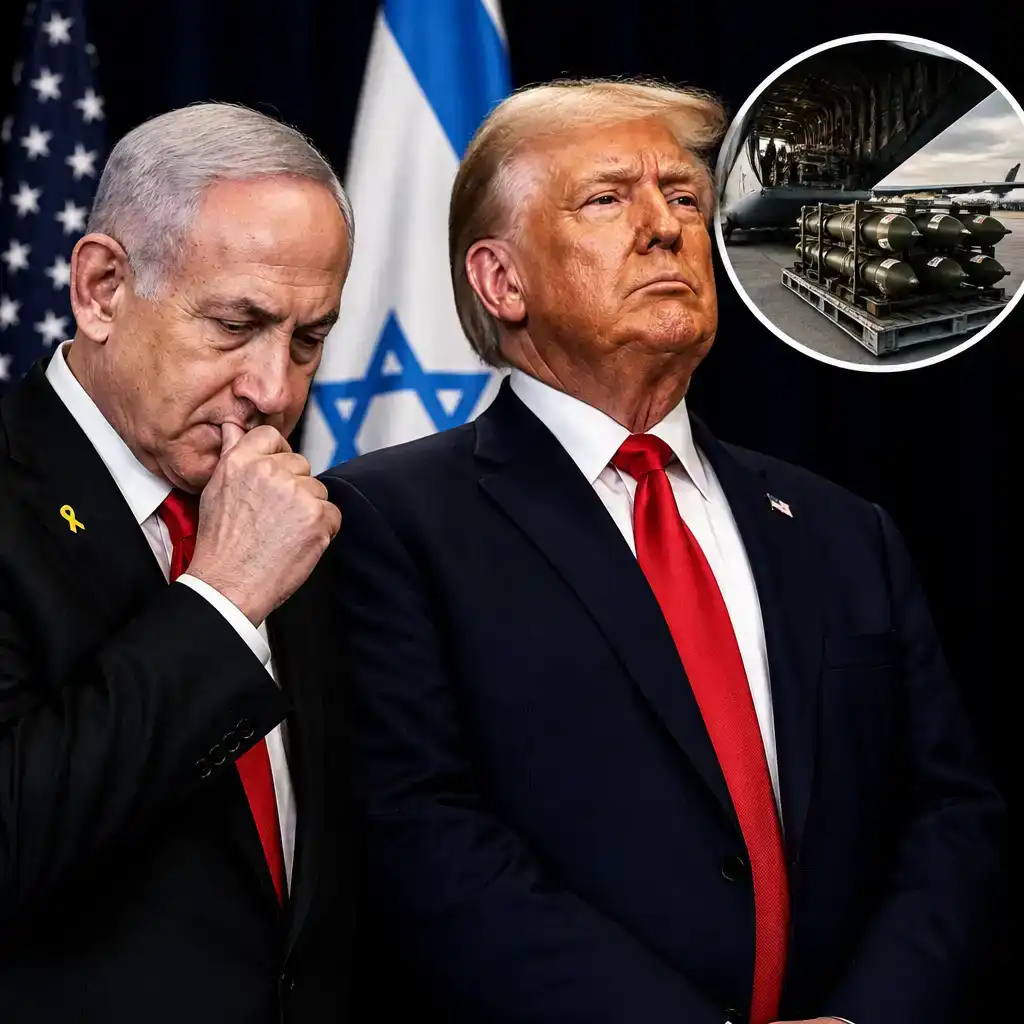
President Donald Trump says US aid to Israel will end after 2026 under an agreement with Israeli Prime Minister Benjamin Netanyahu. Subsequent reporting suggests the announcement concerns military grants, not Israel’s ability to purchase American weapons. That distinction leaves plenty of room for the security relationship, and the arms industry, to carry on.
Speaking to Fox News’ Fox & Friends as voting began in the midterm elections, Trump said the United States currently gives Israel about $4 billion annually.
“Bibi Netanyahu and I have made a deal that we give Israel $4bn a year, and we made a deal months ago that we’re stopping,” he said. “We’ve already agreed that by the end of this year we won’t be paying Israel. Now we’ll help Israel if they need it.”
The Associated Press later reported that grants would end in 2027 while Israel would remain free to buy US military equipment. Trump said the cutoff covered aid “in any way you want to define it,” but neither government had produced a written agreement or implementation plan.
Congress still controls the funding
Trump cannot cancel congressionally approved assistance by announcement alone. Congress controls appropriations, and the current US-Israel assistance agreement runs through fiscal year 2028.
Under a 2016 memorandum of understanding, Washington committed $38 billion for fiscal years 2019 through 2028. The annual package consists of:
- $3.3 billion in Foreign Military Financing
- $500 million for missile defence
The memorandum is a political commitment rather than a treaty, giving future administrations and lawmakers some flexibility. It does not, however, allow the president to simply delete appropriations already approved by Congress.
The Congressional Research Service also reported that lawmakers provided $202 million for cooperative Israeli defence programmes outside the agreement for fiscal 2026. In other words, the headline annual figure does not cover every strand of the relationship. Defence budgets rarely reward simplicity.
No formal confirmation came from Netanyahu’s office or Israel’s foreign minister after Trump’s remarks. The US Department of State also did not immediately comment.
Netanyahu had proposed a much slower withdrawal
Trump said Netanyahu initiated the discussion because US support had become politically contentious. Reuters and the Associated Press corroborated that Trump attributed the proposal to the Israeli leader.
Earlier reporting pointed to a less dramatic timetable. Axios reported that Netanyahu told Trump in July he wanted military grants reduced to zero over 10 years. Netanyahu also said in January that Israel had “come of age,” while describing a decade-long phaseout rather than an immediate cutoff.
That makes Trump’s year-end deadline difficult to reconcile with Netanyahu’s previous public position and the existing agreement through 2028.
Israeli opposition leader Yair Golan told the Associated Press that ending the assistance would deliver a “severe blow to Israel’s security” while the country was fighting on multiple fronts.
The shift may still preserve substantial business for US weapons manufacturers. The Congressional Research Service said the administration notified Congress of more than $12 billion in possible Israeli arms sales during 2025 and more than $7 billion in 2026. Those figures represent proposed sales, not grants or completed deliveries, but they show how subsidised procurement could give way to commercial purchases.
An academic study cited by the Associated Press calculated that the United States had supplied at least $21.7 billion in military assistance since the Gaza war began in 2023.
The announcement landed during an election
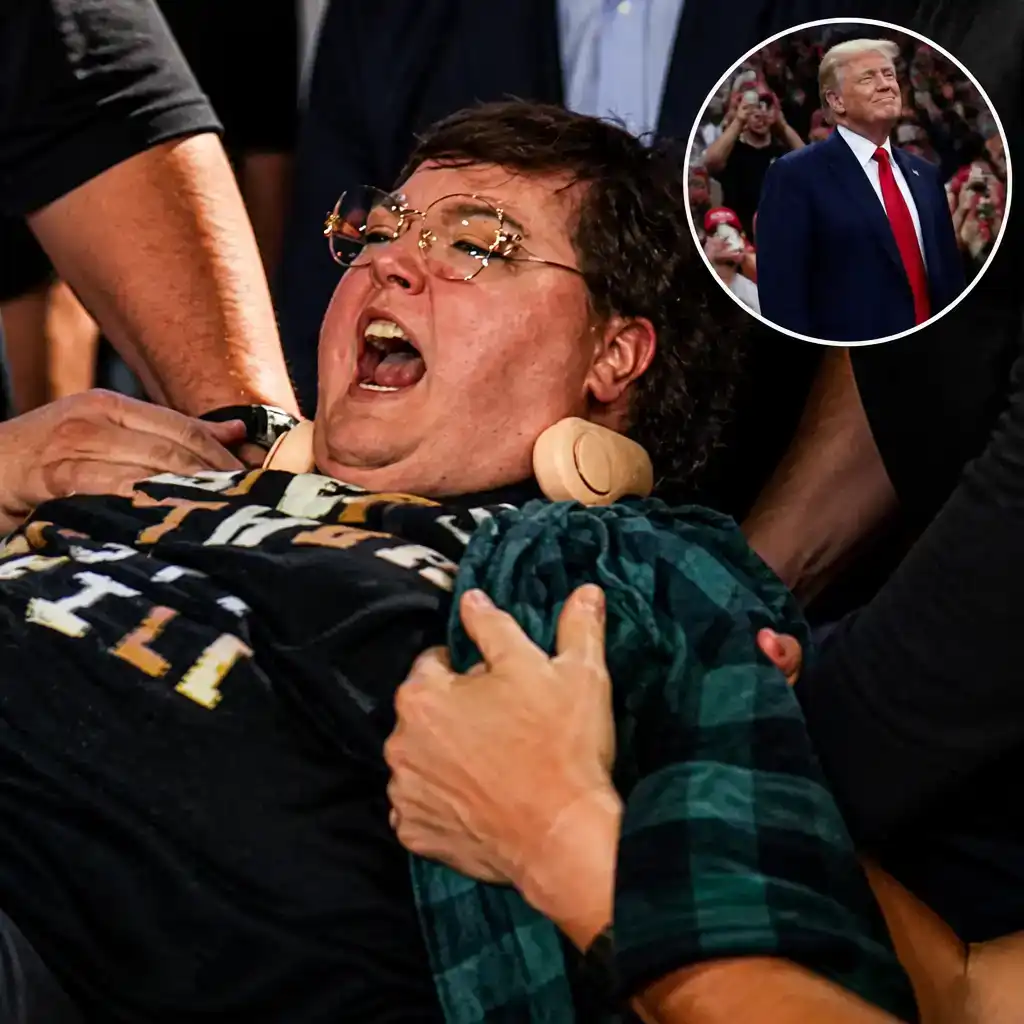
Trump linked the decision to criticism from Michigan Senate candidate Abdul El-Sayed, who opposes continued US support for Israel. He asked why Republicans should face attacks from figures such as El-Sayed over funding that Israel supposedly no longer needs.
Al Jazeera White House correspondent Kimberly Halkett said the timing appeared designed to blunt criticism from progressive Democrats and opponents within Trump’s own Make America Great Again movement. She also stressed that congressional control of the money leaves the practical effect uncertain.
Former Republican congresswoman Marjorie Taylor Greene, now a Trump opponent, dismissed the announcement as an Election Day manoeuvre. “Trump getting permission from Netanyahu to end annual aid to Israel isn’t going to change today’s election results,” she wrote on X.
Public opinion has shifted sharply since the Gaza war began. A Quinnipiac University poll in June found that 48 percent of US voters believed Washington was too supportive of Israel, including 66 percent of Democrats. In 2017, the respective figures were 16 percent and 20 percent.
Congress remains divided but has not abandoned the relationship. In July, the House of Representatives voted 314 to 104 against an amendment from Kentucky Republican Thomas Massie that would have cut off assistance, although nearly half of House Democrats backed it.
That same month, Congress passed the fiscal 2027 National Defense Authorization Act with a provision establishing the United States-Israel Defense Technology Cooperation Initiative. The measure deepened joint work on weapons research, production and technology, pointing towards greater military integration just as Trump announced that direct grants would stop.