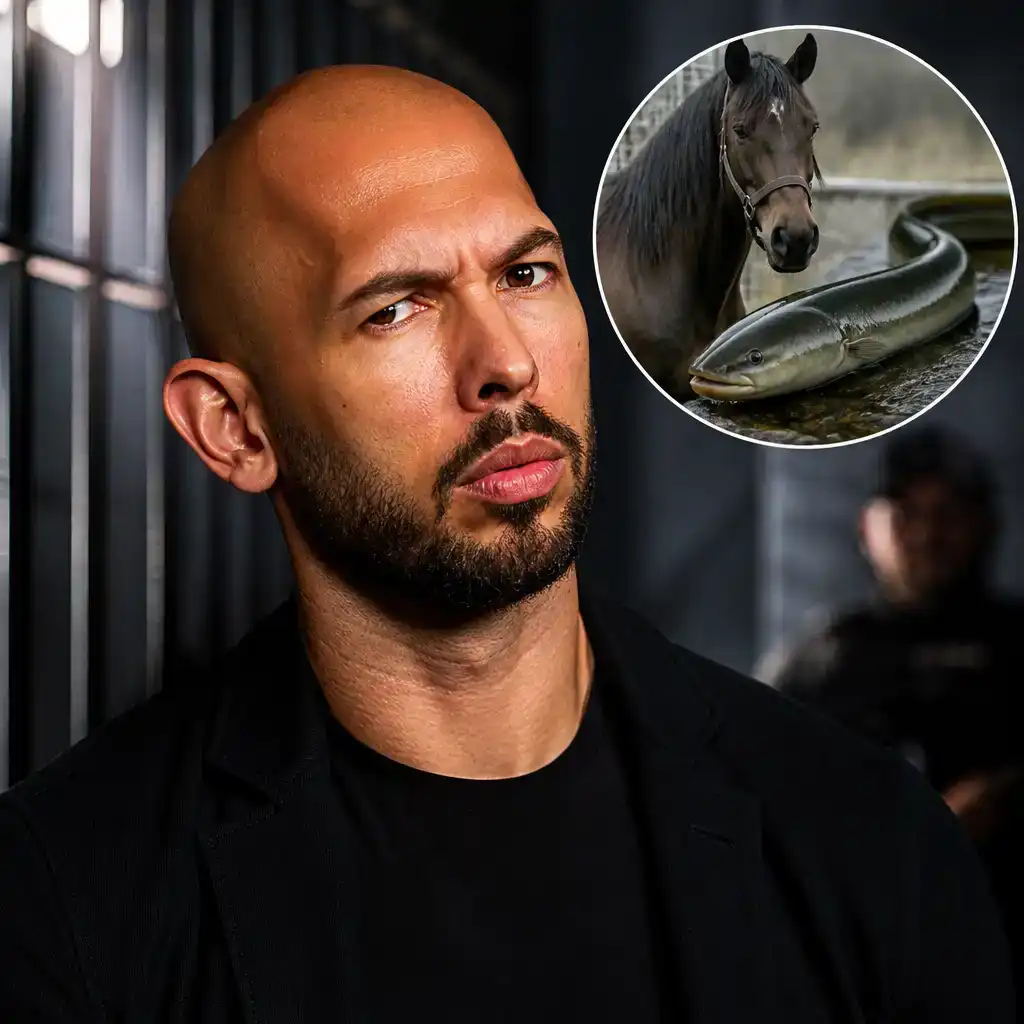
Andrew Tate has offered an unusual explanation for his legal troubles, suggesting that a greater interest in eels and horses might have spared him from ending up behind bars.
The controversial influencer made the remark on social media amid an ongoing legal dispute involving extradition proceedings connected to allegations of serious offences in the United Kingdom.
Rather than addressing the allegations directly, Tate chose to reflect on his personal interests, producing a statement that was as unexpected as it was provocative.
"I wish I was into eels and horses instead of little lying hoes, because then I probably wouldn’t be in jail," he wrote.
The post offers a revealing glimpse of how Tate has chosen to discuss his circumstances publicly, even as the legal questions surrounding him remain unresolved.
Andrew Tate's unusual take on his legal troubles
Tate has built a public reputation around controversial statements about relationships, masculinity and women. His latest comment follows that familiar pattern, combining a provocative description of women with an unexpected reference to animals.
The remark appears to suggest that his involvement with women, rather than his own decisions or the allegations being examined by the courts, is responsible for his predicament.
That is Tate's framing, however, not an established explanation of his legal situation.
The allegations and extradition proceedings concern matters that must be assessed through legal evidence and judicial decisions. A social media post, however memorable its choice of animals, does not change that process.
Nor does the statement provide any substantive response to the accusations themselves.
The UK extradition proceedings remain a serious matter
Behind the unusual social media commentary is a legal dispute involving British authorities and allegations of serious offences detailed in UK court filings.
According to the information available, extradition proceedings are continuing while Tate's legal representatives challenge the order seeking his return to Britain.
The distinction between the allegations and any proven criminal responsibility is essential. The existence of legal proceedings does not establish guilt, and the accusations must be evaluated through the appropriate judicial process.
The available account does not establish the precise status of every proceeding, the dates of the relevant court decisions or Tate's current custodial position. Those details cannot responsibly be inferred from his post.
His reference to being in jail should therefore be understood as part of his own statement rather than independent confirmation that he remains incarcerated at the time of reporting.
What can be said is that the extradition dispute presents legal questions considerably more substantial than the alternative hobbies Tate has proposed for himself.
Why the post fits Tate's public persona
The contrast between the seriousness of the allegations and the casual tone of Tate's message is particularly striking.
His statement turns a complicated legal situation into a personal complaint, using provocative language and an absurd comparison to redirect attention toward his interpretation of events.
It is a familiar form of communication for a personality whose public image has been closely associated with confrontation and deliberately divisive opinions.
The reference to eels and horses makes the post distinctive, but the underlying message is more conventional: Tate presents himself as someone whose troubles might have been avoided if his personal relationships had taken a different course.
Nothing in the supplied account establishes whether the remark was intended primarily as humour, a serious expression of regret or an attempt to provoke a reaction.
Those interpretations remain possible, but Tate's intentions cannot be determined from the statement alone.
Why Tate's explanation deserves scrutiny
In my view, the most revealing part of Tate's comment is not the bizarre choice between women and wildlife. It is the way he frames his legal difficulties as a consequence of dealing with supposedly dishonest women. That interpretation may appeal to people already sympathetic to him, but it does little to clarify the actual allegations or the evidence behind them. Whatever Tate intended, the legal proceedings deserve to be judged on their merits rather than reduced to a dispute about his personal relationships.
There is also a meaningful difference between publicly challenging allegations and suggesting that different romantic interests would have prevented legal scrutiny altogether.
The former can form part of a legitimate defence. The latter is a personal interpretation that does not, by itself, establish anything about the underlying case.
For readers following the proceedings, that distinction matters more than the theatrical quality of the post.
What happens next in the extradition dispute
The next meaningful developments will come from the legal process, including the outcome of efforts to challenge extradition and any subsequent decisions by the relevant authorities.
The supplied information does not identify a confirmed date for the next hearing or establish when the proceedings might conclude.
Until further details emerge, the allegations remain allegations, and Tate's public statements should be considered separately from the evidence assessed in court.
His latest message may attract attention because of its extraordinary wording, but it does not resolve any of the questions facing him.
Ultimately, the courts will have to deal with the legal arguments and evidence. Tate, meanwhile, has introduced eels and horses into a conversation in which neither appears to have any established relevance.