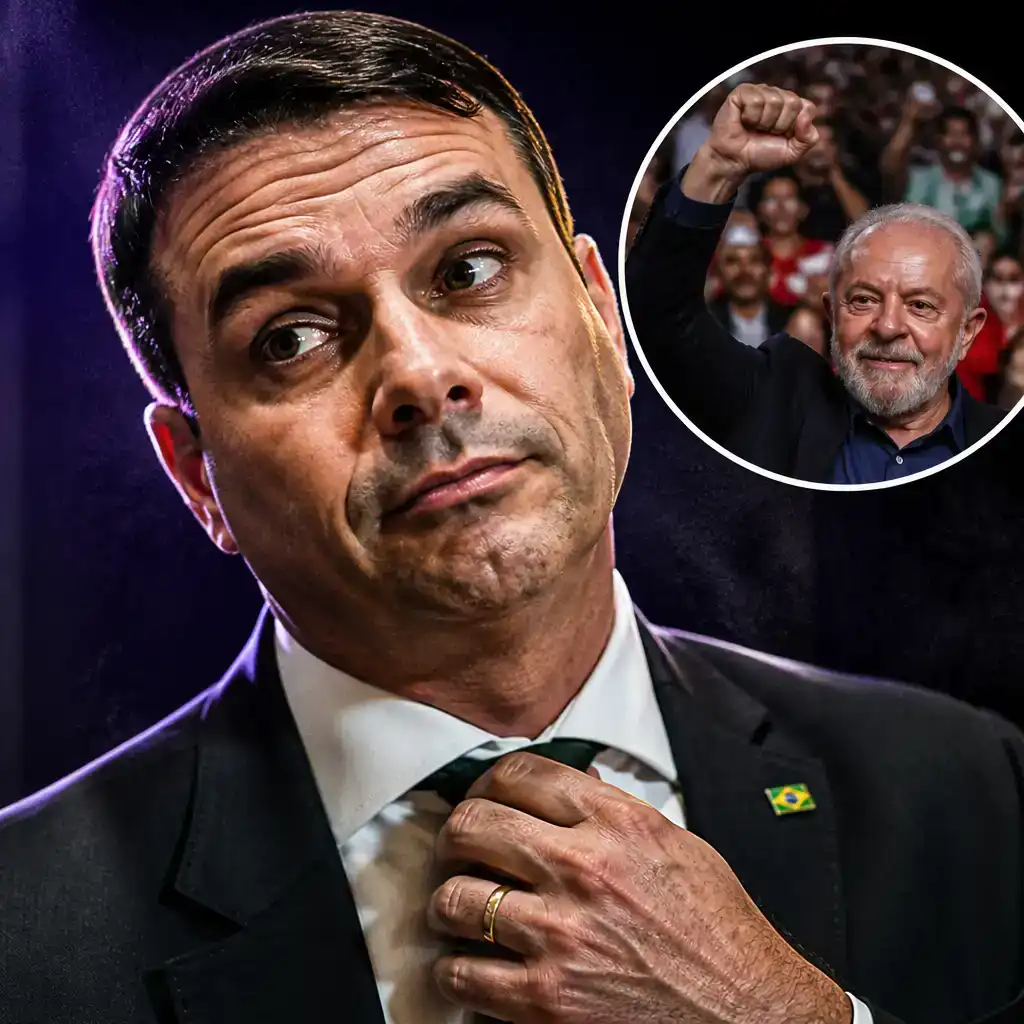
Flávio Bolsonaro has refused to recognise his defeat in Brazil's presidential election and vowed to seek its annulment. But the controversy surrounding his challenge has an important twist: his own campaign had also requested extra voting time before the last-minute court ruling he now condemns.
President Luiz Inácio Lula da Silva secured a historic fourth term in Sunday's runoff, winning 51.79% of valid votes against Bolsonaro's 48.21%. According to the official figures published by Brazil's Superior Electoral Court (TSE), Lula received 64,256,232 votes, finishing exactly 4,430,191 ahead of his conservative rival.
Speaking to journalists in Brasília on October 25, Bolsonaro challenged the legitimacy of the voting process after Supreme Court Justice Cristiano Zanin ordered an unprecedented two-hour extension at polling stations that had not yet closed.
"It is impossible to recognize the election results, given the circumstances under which things unfolded," Bolsonaro said, according to Reuters.
The senator announced that his legal team would pursue annulment, arguing that the late decision had created unequal voting conditions. That allegation remains a political and prospective legal challenge, not an established finding that the election result was invalid.
Both campaigns wanted more voting time, but for different reasons
The dispute began before polling stations were scheduled to close at 5pm on Sunday. Lula's campaign reported public transport problems that it argued were preventing voters from reaching polling stations, particularly in Bahia. After initially seeking extensions in specific areas, it requested an additional two hours nationwide.
Bolsonaro's campaign also sought an extension, but its request was narrower. According to Poder360's reporting published before the polls closed, his team requested extra voting time in 19 municipalities across São Paulo, Paraná and Santa Catarina, citing heavy rainfall, flooding, road closures and power outages.
That distinction matters. Bolsonaro's campaign did not request the same nationwide measure that Zanin ultimately ordered. Nevertheless, both sides had formally argued that exceptional circumstances justified keeping some polling stations open longer.
The timing of Zanin's intervention created another complication. With the original closing time already reached, thousands of electronic voting machines had been shut down and could not be restarted.
The court subsequently clarified that the extension until 7pm applied only to polling stations that were still operating. Locations that had already closed would remain closed, while their recorded votes would be counted normally.
In its post-election statement, the TSE acknowledged that the unexpected decision had caused technical and operational difficulties, including a temporary interruption to the vote-counting process.
Could Bolsonaro actually overturn Lula's victory?
Bolsonaro's objection centres on whether the uneven application of extended polling hours compromised equal voting opportunities. It is a question that would require judicial examination rather than simply accepting either campaign's interpretation.
But the scale of Lula's victory presents a significant challenge. With more than 4.4 million votes separating the candidates, a successful attempt to overturn the result would require a substantiated legal case, not merely evidence that election-day procedures were disrupted.
There is also an important distinction between announcing a challenge and formally filing one. As of October 26, the reporting reviewed confirms Bolsonaro's intention to seek annulment, but does not independently establish that a formal petition has been submitted or that a court has accepted his arguments.
The political significance extends beyond the disputed closing time. Lula's victory reversed the first-round result, in which Bolsonaro had finished ahead with 47.03% against Lula's 45.16%, making the incumbent's comeback an unprecedented achievement in Brazil's presidential runoff system.
For now, the official electoral result remains a Lula victory. What remains unresolved is whether Bolsonaro's lawyers can turn their objections about the voting extension into a legally sustainable challenge, and whether any evidence demonstrates that those procedural problems materially affected the outcome.