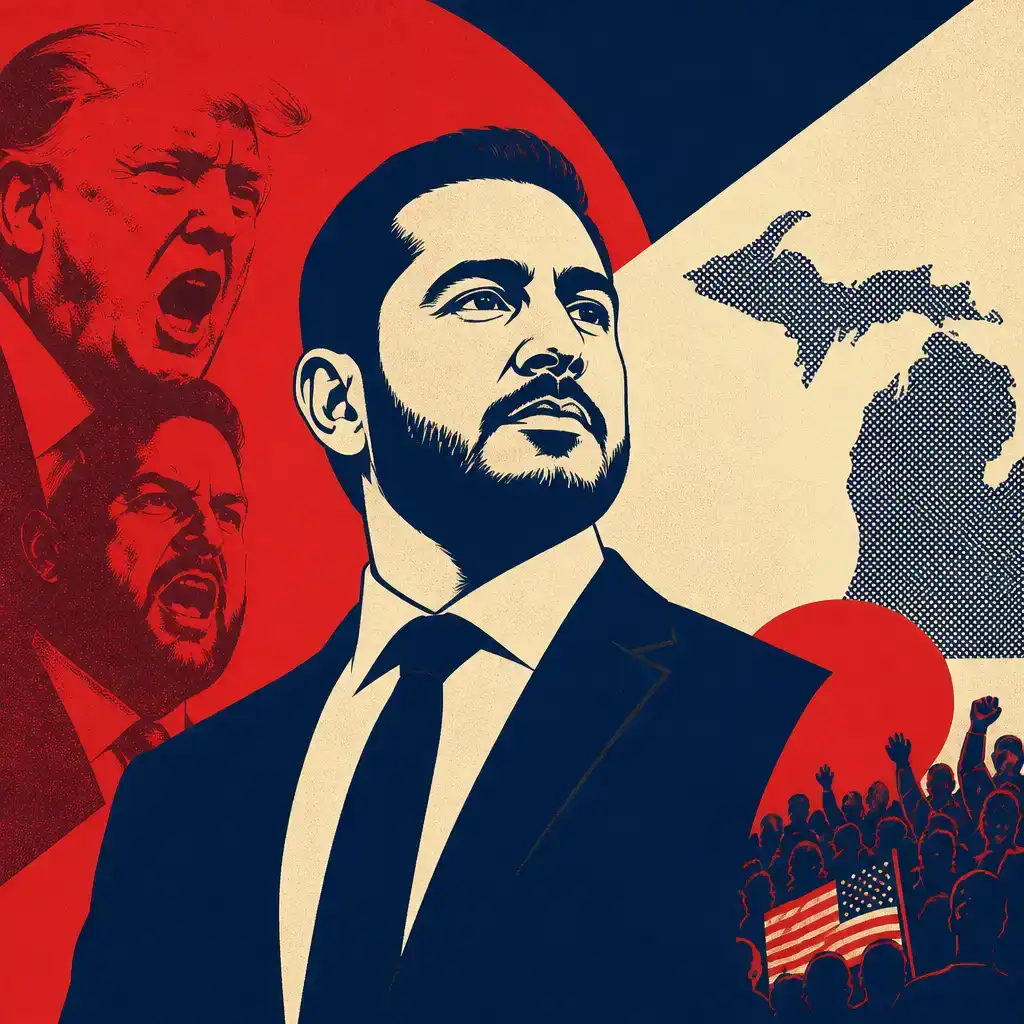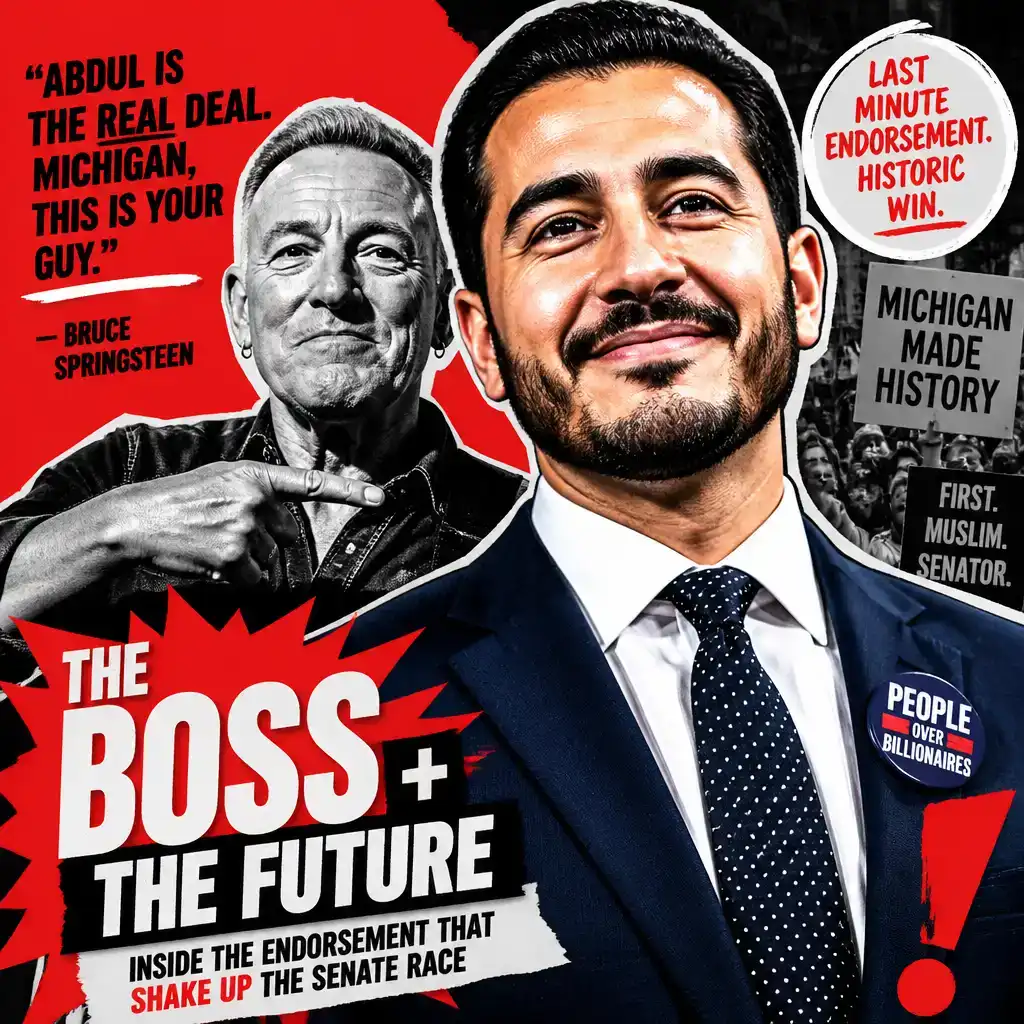
Bruce Springsteen's last-minute endorsement of Abdul El-Sayed in Michigan's US Senate race now has a significant post-election context: the progressive Democrat has defeated Republican Mike Rogers and is set to become the first Muslim elected to the United States Senate.
The legendary musician publicly backed El-Sayed on November 2, just one day before voters went to the polls. His intervention arrived during an unusually turbulent final stretch of the campaign, when a prominent Michigan Democrat had crossed party lines to support El-Sayed's Republican opponent.
In a statement published on his official website and shared across social media, Springsteen described El-Sayed as a defender of the US Constitution and American democracy. He also criticised the Trump administration, presenting his support as an explicitly political choice.
"That's why I'm in his corner 100%," Springsteen wrote.
Although El-Sayed campaigned extensively on healthcare and economic issues, Springsteen's endorsement focused specifically on democracy, constitutional principles and opposition to the White House rather than individual policy proposals.
Springsteen's endorsement came during a dramatic Democratic Party split
The timing made the musician's intervention particularly notable.
On November 1, Democratic Representative Haley Stevens, whom El-Sayed had defeated in the August primary, announced that she would support Republican Mike Rogers instead.
Stevens had initially backed El-Sayed following her primary defeat, but disagreements over the campaign's handling of concerns about Israel, political rhetoric and controversial associations eventually strained their relationship.
According to Reuters' reporting at the time, Stevens appeared alongside Rogers at a Detroit church two days before the election, disrupting plans for a Democratic unity appearance.
Springsteen's statement arrived the following day, offering El-Sayed a prominent endorsement from outside Michigan politics at a moment when one of his former Democratic rivals had publicly rejected his candidacy.
That contrast helps explain the significance of the timing. While Stevens' decision highlighted divisions within the Democratic coalition, Springsteen publicly emphasised his support for the party's nominee.
Abdul El-Sayed's historic Michigan Senate victory
On November 3, Michigan voters elected El-Sayed over Rogers, a former Republican congressman who had previously lost a closely contested Senate election in 2024.
The result, confirmed by the Associated Press, means El-Sayed will become the first Muslim senator in American history when he takes office.
A physician and former public health official, El-Sayed built his campaign around progressive proposals including Medicare for All, reducing the influence of money in politics and addressing the financial pressures facing working families.
His election also marked a significant political comeback. Eight years earlier, he had lost Michigan's Democratic gubernatorial primary. In 2026, he secured a Senate seat despite substantial outside spending against his campaign and disagreements within his own party.
Springsteen was not the only prominent figure to support El-Sayed. Former President Barack Obama, former Vice President Kamala Harris and progressive leaders including Bernie Sanders and Alexandria Ocasio-Cortez also supported his candidacy during the election campaign.
There is no reliable evidence establishing how many votes, if any, Springsteen's endorsement influenced. His statement came extremely late in the campaign, and voters had already been casting ballots before it was published.
What can be established is the sequence: Stevens endorsed El-Sayed's Republican opponent on November 1, Springsteen publicly backed the Democrat on November 2, and Michigan voters elected El-Sayed on November 3.
For Springsteen, whose political activism has long accompanied his music, the endorsement was another public expression of his opposition to Trump's administration. For El-Sayed, the election result was considerably more consequential: a historic victory in one of America's most closely watched Senate contests.