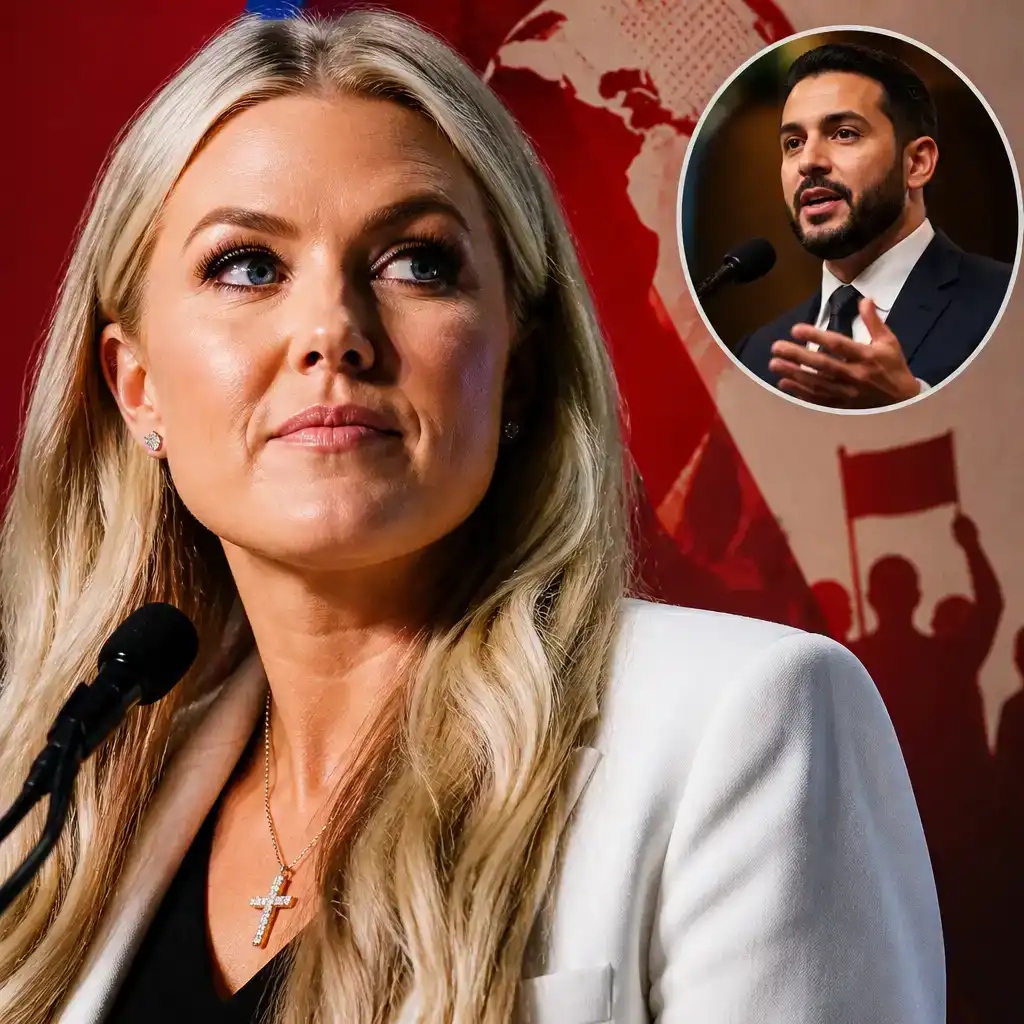
Senator John Fetterman has drawn an even sharper line between himself and the progressive wing of the Democratic Party over Israel, just days after a Palestinian-American candidate announced plans to challenge him for his Pennsylvania Senate seat.
Speaking on Fox News' "Saturday in America" on November 14, 2026, Fetterman said he saw little prospect of finding common ground with newly elected Democrats whose positions on Israel differ sharply from his own.
"I don't think there's going to be any more common ground," he told host Kayleigh McEnany, according to Fox News' account of the interview.
The remarks marked another escalation in a dispute that has followed Fetterman throughout 2026. But this time, the disagreement is no longer confined to television interviews and congressional arguments. It is becoming part of a potential fight over his political future.
From standing alone on Israel to facing a challenge at home
In an April 17 appearance on "The Ingraham Angle", Fetterman had already declared that he was prepared to remain Israel's most outspoken defender within his party, even if that left him politically isolated.
He acknowledged that Israel's popularity among Democratic voters had declined but insisted that changing public attitudes would not alter his position. He also defended US and Israeli military action against Iran and rejected suggestions that Israel had mishandled the conflict.
Seven months later, the political consequences of that position are becoming more tangible.
On November 9, Ahmed Moor, a Palestinian-American writer and businessman born in Gaza, announced that he would seek the Democratic nomination for Pennsylvania's Senate seat in 2028.
Moor, 42, lives in Philadelphia and has positioned himself in direct opposition to Fetterman's foreign-policy approach. He advocates ending US military support for Israel and pursuing sanctions until Palestinians have equal rights.
However, his campaign is not exclusively focused on the Middle East. In an interview with The Philadelphia Inquirer, Moor outlined proposals involving universal healthcare, affordable housing, childcare and government accountability.
Fetterman responded to his challenger during Saturday's Fox News appearance by characterising him as "pro-Hamas". Moor's campaign rejected that description, stating that he condemns violence against civilians and opposes both antisemitism and anti-Palestinian racism.
These opposing positions give voters a clearer picture of a political disagreement that could eventually become an electoral contest.
What the polls actually say about Democrats and Israel
Fetterman's concerns about changing attitudes within his party are supported by a measurable shift in public opinion, although that shift does not necessarily establish that Democrats have abandoned Israel altogether.
An April 2026 Pew Research Center survey found that 80% of Democrats and Democratic-leaning independents held an unfavourable opinion of Israel, compared with 69% in 2025 and 53% in 2022.
Across all American adults surveyed, 60% expressed an unfavourable view.
Those figures help explain the political environment Fetterman is confronting. They do not, however, establish that every Democrat who disapproves of Israel supports ending military cooperation, nor do they measure attitudes towards Jewish Americans.
That distinction matters because the senator's argument frequently links criticism of Israel with broader concerns about antisemitism within Democratic politics. His progressive critics, meanwhile, frame their opposition around Palestinian rights, civilian casualties and US foreign-policy priorities.
Could Fetterman leave the Democratic Party?
Fetterman's disagreements have also raised questions about his long-term relationship with the party.
In an August 5 interview with CNN, he acknowledged that he could reconsider his Democratic affiliation if the party formally adopted a platform rejecting military assistance to Israel or describing Israel as the aggressor in the regional conflict.
That was a conditional warning, not an announcement that he was leaving the party.
For now, the more immediate question concerns Pennsylvania's 2028 Senate election. Moor is the first Democrat to formally announce a challenge for the seat, while Fetterman has not publicly confirmed whether he intends to seek a second term.
With the next election still two years away, there is no established outcome to predict. What can already be documented is the progression from Fetterman's April pledge to stand alone on Israel, through his August warning about party affiliation, to a November dispute accompanied by an announced electoral challenge.
Whether that disagreement ultimately determines the Democratic nomination will depend on the candidates who enter the race and the choices Pennsylvania voters make in 2028.