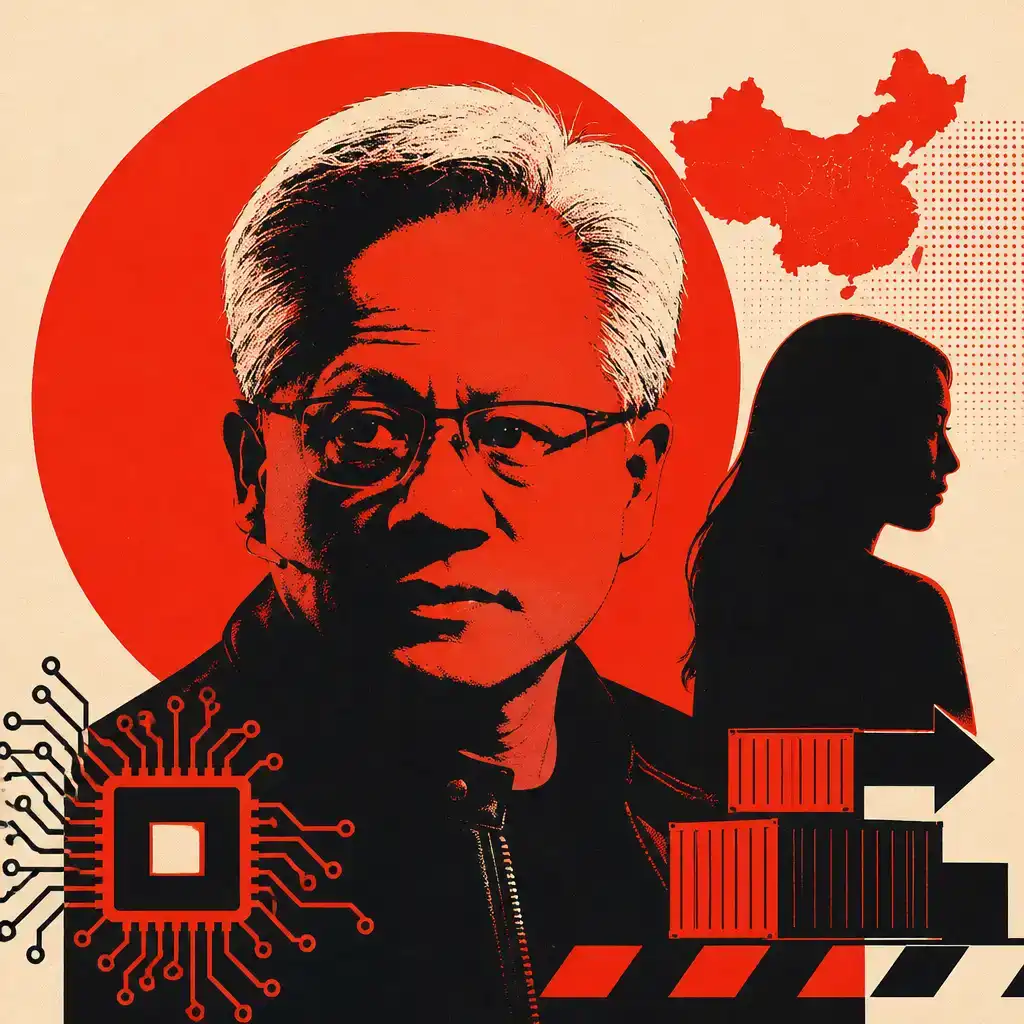
The Nvidia investigation into a reported foreign intelligence effort now includes an unusually personal complication: chief executive Jensen Huang has admitted he was unfaithful to his wife, Lori Huang. His employee letter did not identify the person involved, leaving a critical gap between a confirmed affair and reports linking him romantically to Alice Huang, an executive whom U.S. intelligence reportedly suspected of working with China.
The Associated Press obtained the internal message, corroborating earlier reporting by the Financial Times. Huang apologized to employees and his family in direct terms.
“I owe my family and all of you an apology,” he wrote. “I was unfaithful to my wife. My actions hurt her and our children. There is no excuse for what I did. I am deeply sorry.”
The admission settled one question while creating several more, which is rarely the efficient outcome companies prefer.
What has Nvidia’s board agreed to examine?
Nvidia’s board launched an independent inquiry after reports that Huang had been targeted in a foreign recruitment operation. It said there was no current reason to believe national security or company information had been compromised, but promised to examine the available evidence.
“The board prioritizes US national and economic security, which is paramount to the interests of Nvidia and its shareholders,” its statement said. “While the board has no reason to believe that either national security or Nvidia secrets were compromised, the board’s inquiry will examine all available information.”
Company spokesperson John Rizzo said Huang will remain chief executive during the review and continue leading Nvidia “without interruption.” That assurance matters because Huang is not merely the public face of the chipmaker. He founded the company and has retained unusually close control over its operations.
Axios has reported that Huang manages roughly 60 direct reports and has no publicly groomed successor. A personal scandal is one problem. A counterintelligence inquiry involving a company central to the global artificial intelligence industry is another. Combining both with limited succession planning gives the board a fairly crowded agenda.
Who is Alice Huang, and what do the reports allege?
Alice Huang is a former Chinese television reporter who later became an executive at Megaspeed, a Singapore-based data-center company. According to the Associated Press, Megaspeed bought more than $4.8 billion in Nvidia chips over two years, making it one of the chipmaker’s largest customers in Southeast Asia.
The Financial Times and The New York Times reported that a classified U.S. intelligence memo identified Alice Huang as a possible recruit of China’s Ministry of State Security. The Associated Press said U.S. intelligence believed she was gathering information for Beijing. NBC News, however, said it had not independently confirmed those intelligence claims.
None of those reports changes the key limitation in Huang’s letter: he did not name his affair partner. The public record therefore supports two separate facts, not one fully established conclusion. Huang admitted infidelity, and multiple outlets reported intelligence concerns about Alice Huang. Whether the two are directly connected has not been publicly confirmed.
Before the apology, Huang told Bloomberg News in October that his dealings with Alice Huang were related to Megaspeed and were “all completely normal and not unusual.” The later admission places that explanation under fresh scrutiny, but does not by itself disprove it.
Why are Megaspeed’s chip purchases under scrutiny?
The concern extends beyond Huang’s private conduct. The New York Times, in reporting summarized by ABC Australia, said Megaspeed was being examined over the possible diversion of export-controlled Nvidia chips to China.
Washington has restricted China’s access to advanced semiconductors that can power artificial intelligence systems and other high-performance computing. Southeast Asian intermediaries have consequently attracted attention as U.S. officials look for possible routes around those controls.
Megaspeed’s scale makes the questions difficult to dismiss as a minor compliance matter. Its purchases placed billions of dollars of Nvidia hardware into a region already under scrutiny for potential transshipment. At the same time, Nvidia occupies an exceptional position in the technology market. The Associated Press reported that the company posted $59.69 billion in quarterly profit in August, illustrating the economic stakes surrounding its chips, customers and security controls.
No public finding has established that Megaspeed illegally diverted processors or that Nvidia secrets were compromised. The board’s inquiry will need to separate documented business transactions from intelligence allegations, personal relationships and export-control concerns. That is less glamorous than the gossip, but considerably more important.
Congress wants answers on Nvidia’s safeguards
Three House committee chairs, Brian Mast, John Moolenaar and Rick Crawford, have asked Huang to attend a classified briefing on November 18. They want information about Nvidia’s security procedures and his interactions with Alice Huang, and requested that he accept the date or offer another by November 11.
The request shifts the matter from an internal corporate review toward formal congressional oversight. Lawmakers are likely to focus on whether Nvidia’s counterintelligence protections were adequate, how executives handle contacts involving major foreign customers, and whether the company can detect attempts to move restricted chips through third countries.
Secretary of State Marco Rubio declined to discuss the allegations “because of the nature of it.” President Donald Trump was more expansive. He called Huang “an honorable guy,” said he “probably has an excuse,” and indicated that he would still consider including the Nvidia chief on an upcoming trip to Asia.
China has rejected the intelligence claims. Foreign Ministry spokesperson Guo Jiakun described them as “groundless speculation and slander.” That denial directly conflicts with the accounts attributed to U.S. intelligence, although the underlying classified material has not been released publicly.
Nvidia’s review must now determine whether this was solely a personal failure, a corporate security lapse, an attempted intelligence operation, or some combination of the three. Until investigators report, the most consequential allegations remain allegations, even if the chief executive’s apology has made them much harder to treat as routine business.