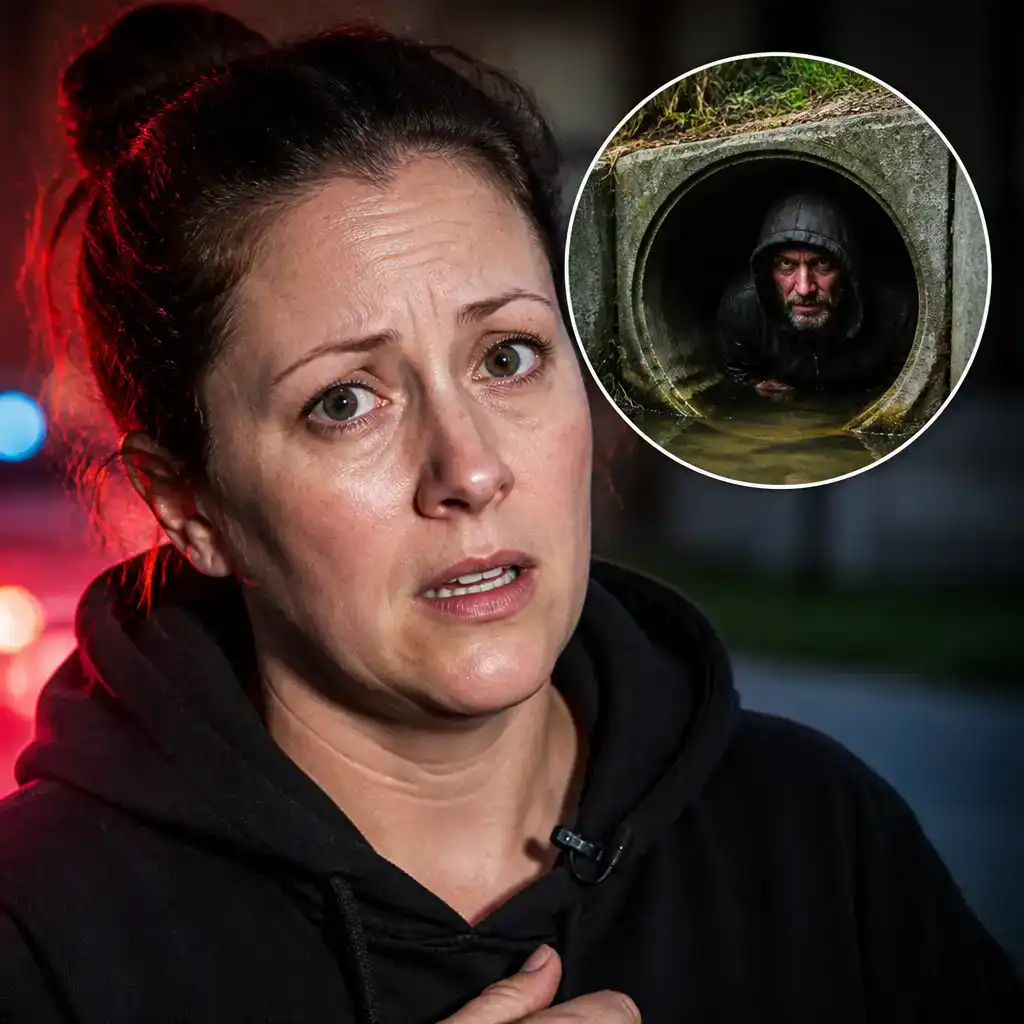
A Maryland mother's terrifying account of a man allegedly chasing her children from an underground drain has drawn comparisons to Stephen King's IT. But behind the bizarre Pennywise headlines is a real neighbourhood safety dispute, and police have clarified several details that change how the story should be understood.
Unique Wiggins, who lives in Baltimore County, said her children repeatedly complained about a man speaking to them from what they described as a sewer. At first, she struggled to believe them. That changed when her 21-year-old daughter called in a panic after an encounter near their home.
According to Wiggins, the man had told her daughter she could not walk through the area and ordered her to leave. Similar complaints had reportedly occurred at least four times.
Wiggins eventually investigated herself. In an interview with CBS Baltimore, she described hearing someone singing from underground before confronting the man and demanding that he stop bothering her children.
She also alleged that he had chased her children along the street. Those allegations prompted police involvement, although the publicly available accounts do not establish that the man has been charged with chasing or harassing them.
Police reveal what was actually happening underground
The most widely shared versions of the story describe someone living in Baltimore's sewers. However, information provided by Baltimore County Police offers a different picture.
As People reported on October 26, police supplied a photograph showing that the location was a drainage culvert, rather than an underground sewer line. Officers also clarified that no manhole was involved.
That distinction matters because the location has become central to the viral horror-film comparisons, even though the family's concerns involve alleged intimidation rather than anything resembling a fictional clown.
Police also provided a more detailed account of their previous involvement with the unidentified man.
According to information the department supplied to People, he was arrested on a trespassing charge in July 2026 and subsequently released on his own recognisance. A separate peace order, unrelated to that arrest, was served on October 22.
A court hearing was scheduled for October 26, although the outcome has not been established in the available reporting. The earlier arrest and the more recent allegations should not be treated as the same incident.
Authorities have installed a warning sign, but questions remain
Wiggins has questioned whether enough is being done to protect her family. She told CBS Baltimore that she wanted officials to install no-trespassing signs and secure the openings around the drainage area.
Police have since confirmed that a no-trespassing sign has been installed. County officials also said they had attempted to connect the man with available support services, without success, and would continue coordinating public safety and outreach efforts.
Baltimore County's wider response acknowledged the importance of protecting residents while emphasising that people experiencing homelessness or behavioural health difficulties should also be treated with dignity. Officials have not publicly established whether the unidentified man has any particular medical or mental health condition.
The distinction between a viral horror story and a genuine public safety complaint is particularly important here. Wiggins' account raises serious concerns, but the allegations against the man remain separate from the confirmed legal actions described by police.
For residents, the outstanding questions are more practical than cinematic: whether the drainage area has been adequately secured, what happened at the scheduled court hearing, and whether the measures already introduced will prevent further unwanted encounters.