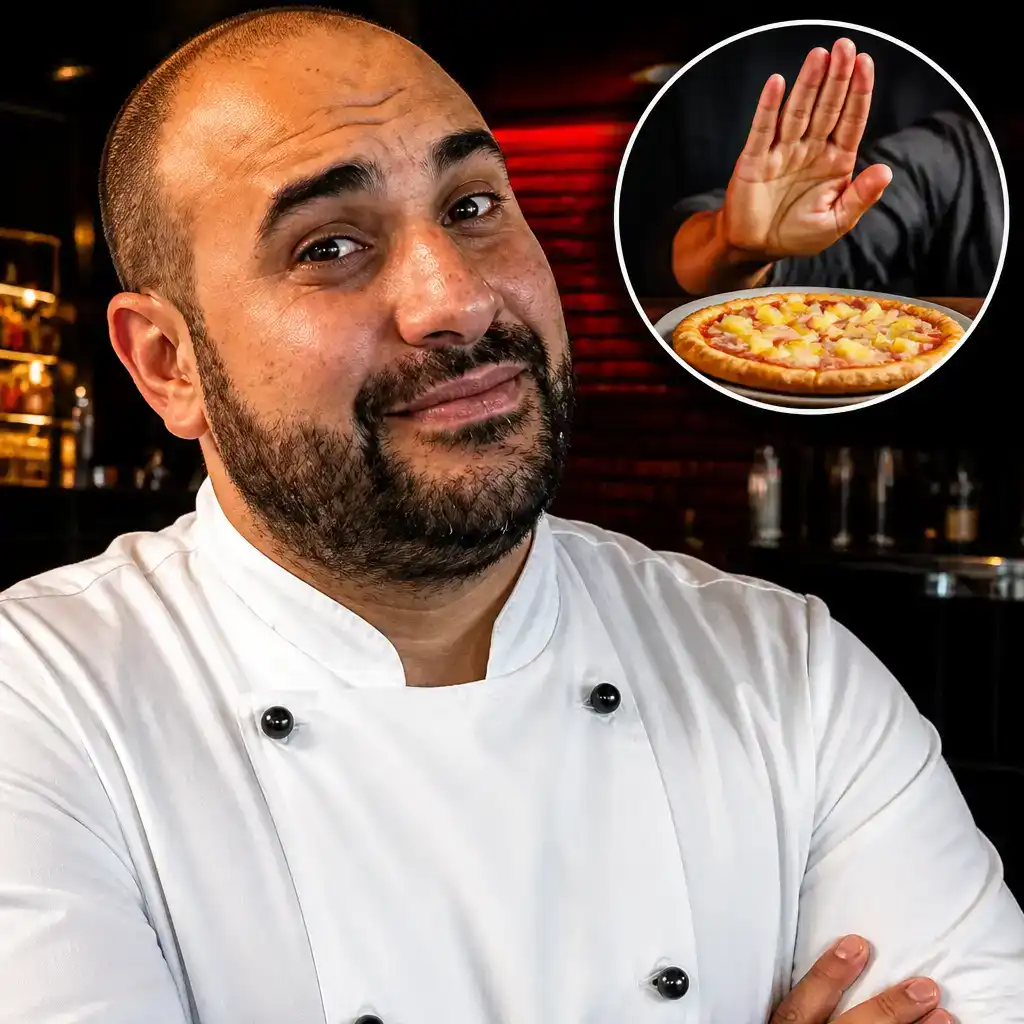
An Italian chef in Brisbane lost his job after repeatedly refusing to put pineapple on pizza, saying the topping insulted his culture. But the workplace dispute was not a simple showdown between Italian tradition and canned fruit, however convenient that version may be.
Davide Tamburella was dismissed from La Costa Restaurant and Bar on May 20 after declining to prepare ham-and-pineapple pizzas on three occasions across four years. Management also raised concerns about foul language, poor communication and escalating frustration during service.
His legal challenge did not establish whether the restaurant acted fairly. Australia’s Fair Work Commission rejected the application because Tamburella filed it after the statutory deadline and failed to show exceptional circumstances for the delay.
What happened at the private function?
The order at the centre of the case came during a private event whose guests were spending more than A$15,000, according to La Costa managing director Elliot Ingram.
When instructed to make a ham-and-pineapple pizza, Tamburella argued that the direction did not need to be followed because it was “offensive to his culture”. The commission heard that he considered the topping, as an Italian, “an insult to his culture”. He also encouraged Ingram to investigate how strongly Italians supposedly opposed pineapple on pizza.
This was not his first refusal. Tamburella acknowledged rejecting the same instruction three times over four years. He also admitted using inappropriate language and allowing the situation to escalate during service.
Ingram later said there was “more to this story than a pizza topping”. He added that working in hospitality had taught him to “pick your battles”. Apparently, a high-value private function was not management’s preferred setting for an international conference on fruit placement.
Why did the Fair Work Commission reject his claim?
Tamburella filed a general-protections application in July, beyond the 21-day deadline that followed his May 20 dismissal. Commissioner Jennifer Hunt found no exceptional circumstances that justified extending the filing period.
That distinction matters. The commission did not rule that La Costa’s decision to dismiss him was fair, nor did it decide that refusing pineapple justified termination by itself. The case ended on procedural grounds before those questions could be fully tested.
Tamburella alleged that a hand injury may also have influenced the restaurant’s decision. The ruling recorded that he fractured two bones in his right hand after striking a metal handrail on April 24. He was also reportedly concerned about the possible effect of losing his employer-sponsored position on his residency status.
None of those arguments overcame the missed deadline. Workplace law, unlike pizza service, rarely offers much flexibility once the statutory clock runs out.
Was pineapple the only problem?
Reports from the BBC, Guardian Australia and the Daily Mail indicate that management cited a broader pattern of performance and conduct concerns. These included:
- repeated refusals to prepare requested food
- inappropriate or foul language
- poor communication with colleagues and managers
- frustration escalating during service
That fuller account complicates the more entertaining headline that an Italian chef was fired solely for defending pizza from pineapple. His objection was certainly part of the dispute, but management presented it as one example in a longer list.
La Costa later closed when its lease expired in July. Tamburella subsequently became head chef at another Italian restaurant in Brisbane. The BBC reported that the new restaurant’s menu contains no pineapple, so at least one workplace disagreement has been removed in advance.
No appeal, later ruling or public response from Tamburella has emerged since the case attracted wider attention.
Is pineapple really forbidden in Italian pizza culture?
Tamburella presented his refusal as a matter of Italian cultural principle, but prominent Italian chefs have not reached anything close to unanimous agreement.
Celebrity chef Carlo Cracco has asked, “Why not put pineapple on a pizza?” Gino Sorbillo, a well-known pizzaiolo from Naples, went further and created a pizza topped with caramelised pineapple as a challenge to what he called food prejudice.
The Hawaiian pizza was not invented in Hawaii or Italy. Greek-born restaurateur Sam Panopoulos created it in Canada in 1962. Queensland, where this dispute unfolded, grows most of Australia’s pineapples, adding a minor agricultural irony to the proceedings.
People remain free to dislike the topping, of course. The case mainly shows that personal taste, cultural identity and workplace instructions become a costly combination when a customer has placed an order and the legal paperwork arrives late.