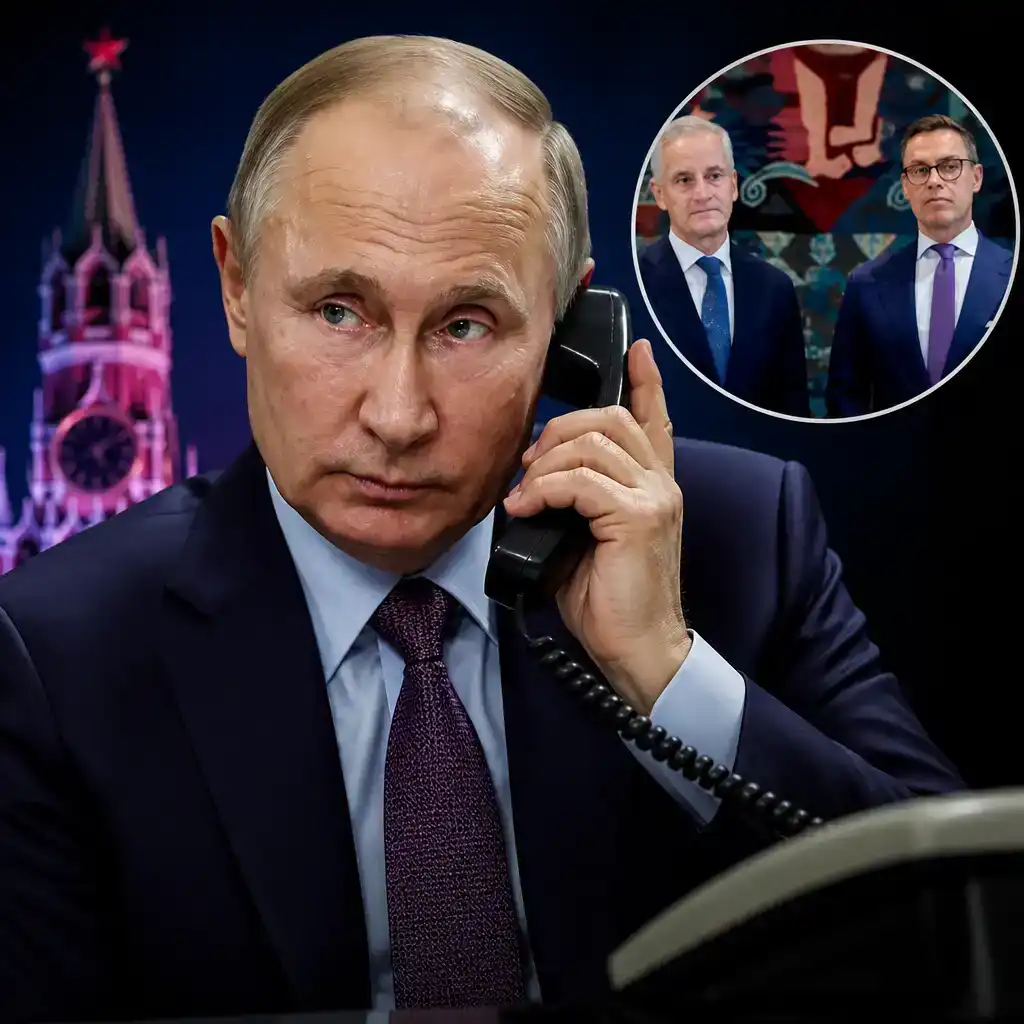
The Nordic leaders' call with Putin lasted 90 minutes and exposed what Norwegian Prime Minister Jonas Gahr Støre described as major differences over Russia’s war in Ukraine. Finnish President Alexander Stubb joined Støre for the conversation from Helsinki on Tuesday.
Their offices said the discussion focused on possible future negotiations to end the war and promote stability in Europe. Finland and Norway, both of which border Russia, initiated the contact but stressed that they were not speaking for Europe as a whole.
Russian President Vladimir Putin used the call to argue that the “confrontational” policies of the European Union and NATO were prolonging the conflict. Russia began the war with its full-scale invasion of Ukraine in 2022.
What the three leaders said
Stubb called the conversation “frank and substantive”, adding that the outcome of the war would directly affect Finnish and wider European security.
Støre emphasized the human consequences. “The war comes with enormous human and material costs,” he said. “The suffering and destruction will impact generations.”
According to the Kremlin, Putin told the leaders that a “just and lasting peace” would only be possible if Russia’s interests were taken into account. All three agreed to maintain direct telephone contact.
Støre said Finland and Norway had informed their allies before the call. Danish Prime Minister Mette Frederiksen was nevertheless “very sceptical”, telling broadcaster DR that the initiative had not been coordinated with Denmark or other partners.
Polish Prime Minister Donald Tusk offered a somewhat warmer assessment. He said Stubb had briefed him and described Europe’s position ahead of planned negotiations in the United Arab Emirates as “moderately optimistic”. Diplomatic enthusiasm remains carefully rationed.
How the call fits into renewed Ukraine talks
Ukrainian President Volodymyr Zelensky spoke with Stubb and Støre after their conversation with Putin. He thanked both leaders for their “active support” and said part of the discussion concerned trilateral talks planned for November in Abu Dhabi.
Zelensky said they also considered different ways for Ukraine to work with European partners in support of diplomacy, defence and shared security.
The call followed a meeting in Oslo last week involving Zelensky, Stubb, Støre and United States special envoy Steve Witkoff. Witkoff then travelled to St Petersburg for talks with Putin.
After those meetings, Ukraine, Russia and the United States agreed to restart three-way negotiations that Moscow had suspended for months.
The renewed diplomatic activity comes as relations between Washington, Kyiv and European governments have grown more strained. United States President Donald Trump recently agreed to remove some sanctions on Russia, allowing Russian oil exports to the US.
Stubb and Støre are the first European leaders known to have contacted Putin since French President Emmanuel Macron spoke with him in July 2025. Several European leaders have argued for reopening direct channels with the Kremlin as the Trump administration adopts a softer position toward Moscow.
Russia has routinely mocked European leaders and accused the European Union of extending the war by supplying weapons to Ukraine. Even so, Kremlin spokesman Dmitry Peskov said last weekend that including a European negotiator in peace talks would be “good”.