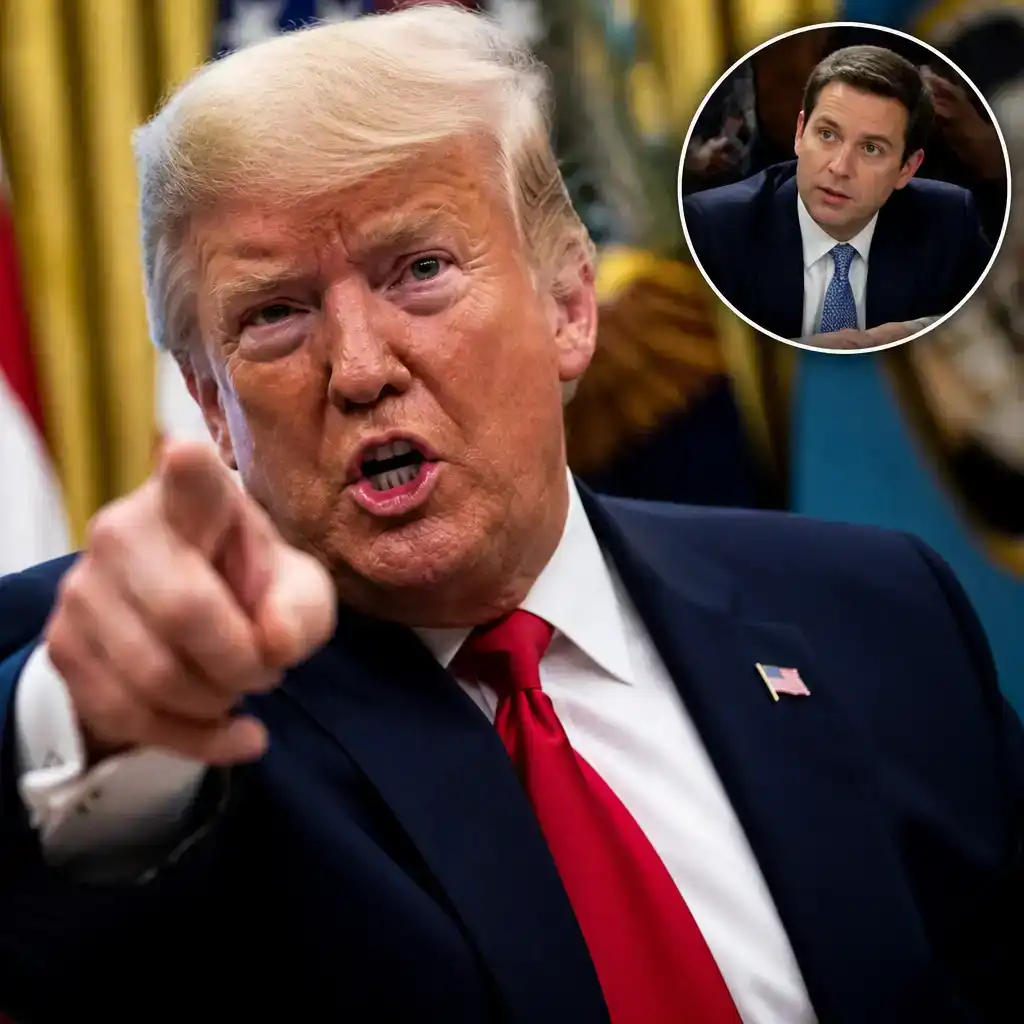
Donald Trump snaps at reporter Andrew Feinberg in footage from an October 20 Oval Office event, ordering the White House correspondent to be quiet before the confrontation became considerably more personal.
The exchange took place as the president announced a $25 million federal program offering rewards for information about fraud against the government. Initial coverage suggested Feinberg was trying to ask about that initiative. Later reports from TheWrap and the Daily Beast said he was apparently asking about Trump’s proposed golf course at East Potomac Park.
Feinberg said Trump warned him, “You better be careful,” called him a “sick person” and claimed something was wrong with him. Trump also said he did not know the journalist, although Feinberg said he had identified himself only minutes earlier.
Official accounts joined the confrontation
The dispute did not remain inside the Oval Office. The White House Rapid Response account later attacked Feinberg using a slur aimed at people with Down syndrome. Vice President JD Vance’s official account called the reporter an “imbecile.” Apparently, the communications strategy required several government accounts to finish an argument with one journalist.
“For doing my job, I became the target of Trump and his team,” Feinberg wrote afterward. He said he would return to work the following day.
Feinberg also responded directly to Vance: “If you’re going to insult me at least have the guts to tag my account.”
The escalation matters because it moved beyond an irritated answer from a president. Official government channels were used to direct personal abuse at an identifiable White House correspondent after he attempted to ask a question.
The reward program has conflicting descriptions
The event launched the Fraud Whistleblower Incentive Program, a $25 million initiative that the Justice Department will administer. According to the Associated Press, information resulting in a fraud conviction or significant federal enforcement action may earn a whistleblower as much as $30,000.
Trump gave a different account of how rewards would work. He said tipsters could receive 1% of the fraud they uncovered and suggested he would personally settle disputes when multiple people claimed credit for the same information.
Those descriptions do not fit neatly together. A 1% commission could exceed the stated $30,000 ceiling when a case involves more than $3 million, and the president’s proposed role in deciding disputed payments was not explained in the formal details reported by the Associated Press.
The administration had already established a federal fraud task force in March and placed Vance in charge. At the October event, Vance said whistleblowers would be able to “share in the rewards.” Influencer Nick Shirley, who appeared at the announcement, added: “When you expose fraud, you help save America.”
The program may yet produce useful tips. Its launch instead drew attention to contradictory reward terms, an unexplained presidential arbitration process and a coordinated attack on a reporter asking an inconvenient question.